

Hunting in Africa has halved the number of primates, according to estimates, but that is not the extend of the problem. Primates help with dispersal of seed and the reduction in primates has led to a reduction in the numbers of fruit trees, say biologists from Lund University in Sweden.

Felling and clear-cutting is not the only problem in Africa; the researchers studied rainforests in Nigeria, where the local population hunts for food, and found that the animals that are hunted include almost all mammals, including gorillas and chimpanzees and some small species of monkey.

In my previous blog post, Introduction to the 555 Timer IC , you learned how to build an optical Theremin using a 555 Timer. The original Theremin used radio frequency interference caused by the movement of the player's hand to change the pitch of the instrument. The optical Theremin depends on the intensity of light that falls on a photo resistor also controlled by the movement of the player's hand.

The amount of light that fell on the photo resistor changed the resistance in the circuit. When more light fell on the photo resistor, it reduced the resistance in the circuit and this made the pitch higher. Less light increased the resistance and made the pitch lower.

Thanks to a supersensitive space telescope and some sophisticated supercomputing, scientists from the international Planck collaboration have made the closest reading yet of the most ancient story in our universe: the cosmic microwave background (CMB).

Today, the team released preliminary results based on the Planck observatory's first 15 months of data. They show that the universe is 100 million years older than we thought with more matter and less dark energy.  

Decoding the Cosmos

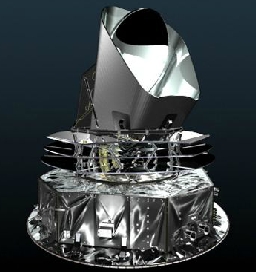
The mission of the ESA Planck satellite is to observe the Universe of the past, seeing back in time, right after the Big Bang.

The image that the Planck scientists revealed today is that of the Universe as a child, dating back to about 380,000 years after the Big Bang, when its temperature was similar to that of the most external layer of a star today.

Mandates and subsidies have created an artificial green energy industry. In the case of ethanol, that has led to escalating corn prices. Higher prices have encouraged some farmers to switch to growing corn continuously and they are seeing unusually high yield reductions.

 A six-year study has identified three key factors affecting yield in continuous corn (CC) systems.

The handling of "incidental findings" in clinical genome and exome sequencing has been addressed by the American College of Medical Genetics and Genomics (ACMG). 

Incidental findings are health-related interpretations of a patient's genetic code that are unrelated to the primary reason for ordering the genetic testing. For example, if a clinician orders exome or genome sequencing to analyze genes related to a patient's cardiac condition, the laboratory will already have information about all the other genes in hand and could examine genes for something like cancer predisposition with relative ease. 

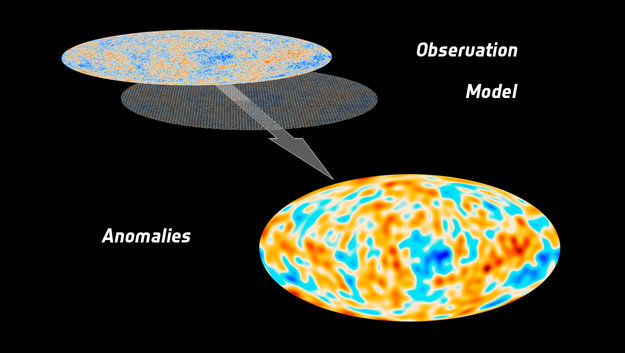
The most detailed map ever created of the cosmic microwave background – the relic radiation from the Big Bang – found something a little odd. 

The information extracted from Planck’s new map provides an excellent confirmation of the standard model of cosmology at an unprecedented accuracy, setting a new benchmark in our manifest of the contents of the Universe - but because precision of Planck’s map is so high, it also made it possible to reveal some peculiar unexplained features that may well require new physics to be understood.
The Planck collaboration has released today data from the first 16 months of operation of their space instrument (see left). There will be a live streaming of their announcements to the public in 1.5 hours at this link.

In the early 1950's, a 66-year-old woman with colon cancer received a blood transfusion - but she suffered a severe rejection of the transfused blood. When writing the case study, the medical journal Revue D'Hématologie identified her only as "Patient Vel."

It was determined that Mrs. Vel had developed a potent antibody against some unknown molecule found on the red blood cells of most people in the world—but not found on her own red blood cells. But the molecule was unknown, nobody could find it. A blood mystery began, and, from her case, a new blood type, "Vel-negative," was described in 1952.

Thomas Nagel wrote one lucky paper back almost half a century ago, titled “What Is it Like to Be a Bat?”.  That title went down so well, he has basically made a living from this alone ever since.  Recently, he went fully down the path trodden by many a noble prize winner: Pseudoscience!  I did also not believe this initially, but do read outtakes (e.g.

