




Using 160 high-resolution tungsten leaves and dramatically faster leaf movement, Elekta’s new Agility multi-leaf collimator (MLC) radiation therapy treatment for cancer patients recently received 510(k) clearance (K121328) from the U.S. Food and Drug Administration (FDA), enabling U.S. medical centers to use it for patients with cancer. 

An MLC is device made up of numerous, individual tungsten “leaves,” which shape beams of therapeutic radiation that are delivered from different angles around the patient. Using twice the number of leaves typical of many standard MLC’s, Agility precisely delivers radiation to the unique contours of the tumor, while reducing the risk of exposure to healthy tissue. 
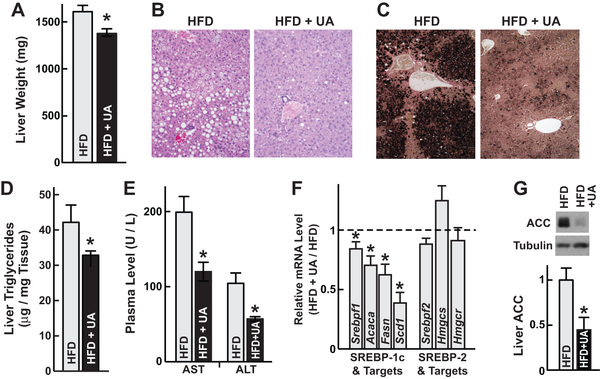
A new study shows that ursolic acid, a natural substance found in apple peel, can partially protect mice from obesity and some of its harmful effects. 
Americans are being beat by Asians again.  Asians do better on international standardized tests, their economies are better; heck, they are even robbing us of that last stronghold of American dominance - obesity. The Chinese have gotten a level of fat in one generation that it took Americans 200 years to accomplish.  Typical overachievers.

Takeda Pharmaceutical Company Limited and AMAG Pharmaceuticals, Inc. today announced the granting of marketing authorization by the European Commission (EC) for ferumoxytol, a new intravenous (IV) iron therapy to treat iron deficiency anemia (IDA) in adult patients with chronic kidney disease (CKD). The marketing authorization follows a positive opinion issued on April 19, 2012, by the Committee for Medicinal Products for Human Use (CHMP) of the European Medicines Agency (EMA). 

Takeda Pharmaceutical Company Limited and NPS Pharmaceuticals, Inc. , jointly announced today that the Committee for Medicinal Products for Human Use (CHMP) of the European Medicines Agency has adopted a positive opinion, recommending the granting of a marketing authorization for the medicinal product teduglutide (Revestive in Europe) as a once-daily treatment for adult patients with short bowel syndrome (SBS). 

It seems European countries are discovering the issue Science 2.0 has discussed about America for many years. Granting student visas and then denying them work ones after their degrees under the guise of job protectionism means educating the best people and then sending them abroad to be competitors.

 The study, "Mobile Talent? The Staying Intentions of International Students in Five EU countries", published by the Research Unit of the Expert Council of German Foundations on Integration and Migration (SVR), compared European frameworks for international students and investigated the staying intentions of 6,239 non-EU international students in the UK, France, Germany, the Netherlands, and Sweden. 

Plant compounds from a South African daffodil may be used to treat depression, according to a University of Copenhagen study, where they tested those substance in a laboratory model of the blood-brain barrier.

Substances from the South African plant species Crinum and Cyrtanthus – akin to snowdrops and daffodils, respectively – have characteristics that enable them to negotiate the defensive blood-brain barrier, a key challenge in all new drug development.

Obviously you should not run out and start eating daffodils just yet.  The lab test does not show which compounds can be used in drug development. 
What does it take for Fritz Vahrenholt, a professor in the Department of Chemistry at the University of Hamburg, a former German environment minister and one of the fathers of the German environmental movement (and, unlike everyone at Desmogblog.com, who simply write character assassinations the moment people deviate from their worldview, has actually devoted a lot of time and money to replacing fossil fuels) to lose faith in the Intergovernmental Panel on Climate Change (IPCC)?

It took working with the IPCC.  
Stonehenge is interesting, though any mystical (or downright alien) symbolism is lost when you visit much larger sites, like Avebury Henge, that are clearly not mystical at all. Because of its fame, people have long sought answers as to why Stonehenge was built.

A group of archaeologists now contend it was indeed symbolic - but not religious symbolism, it was more political.
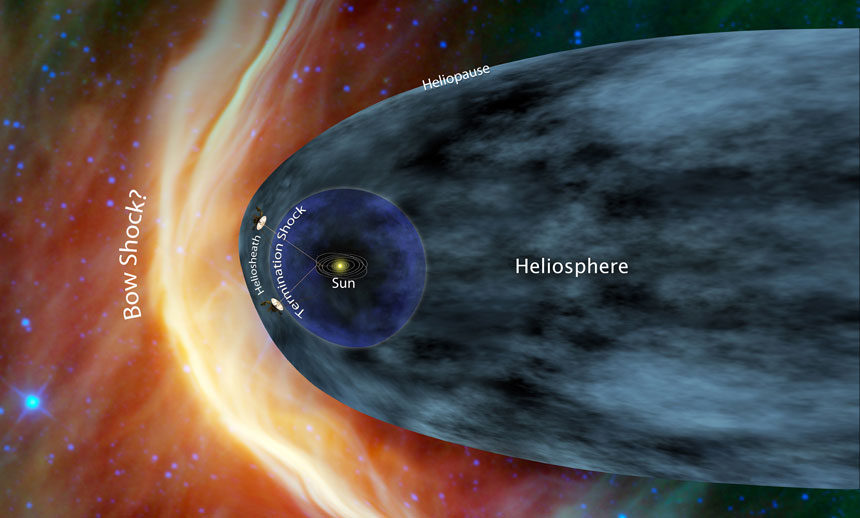
NASA's Voyager 1, launched in 1977, was propelled into deep space with the help of Jupiter's and Saturn's gravity. Now it is about to leave the solar system. But exactly when is unclear.

Voyager 1 is traveling at a speed of about 3.6 Astronomical Units (AU) per year - one 'AU' equals the distance between the Sun and the Earth, or 93 million miles.

