


Will you lose weight and keep it off if you diet? No, probably not, UCLA researchers report in the April issue of American Psychologist, the journal of the American Psychological Association.

"You can initially lose 5 to 10 percent of your weight on any number of diets, but then the weight comes back," said Traci Mann, UCLA associate professor of psychology and lead author of the study. "We found that the majority of people regained all the weight, plus more. Sustained weight loss was found only in a small minority of participants, while complete weight regain was found in the majority. Diets do not lead to sustained weight loss or health benefits for the majority of people."

On a Greek mountainside, sensors in the walls of a high-tech villa will record stresses and vibrations, temperature and humidity levels. Nothing out of the ordinary there.

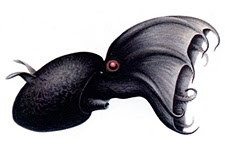
Vampyroteuthis infernalis, the vampire squidIts deep velvety black colour, huge red eyes and a webbing of skin connecting eight arms earned this animal the name Vampyroteuthis infernalis, which literally translated means ‘Vampire squid from hell’. It is a small, deep-sea animal, neither an octopus or a squid but a relative and phylogenetic relic or living fossil first described in 1903 by Carl Chun.


For all that Darwin did, Evolution as yet has no explanation for puzzling animal behavior.

Social insects provide some of the most fascinating examples of altruism in the natural world, with sterile workers sacrificing their own reproduction for the greater good of the colony.

That isn't the case with all insects - in some cases, there is a very real battle of the sexes going on, even in their larvae.

It's been generally believed that sterile 'soldier' larvae act in positive ways, by protecting them from attack by other species of parasitoids.

Researchers at Delft University of Technology can predict how nanostructuring – the extreme reduction of structure – will affect the performance of Li-ion batteries. The nanostructuring of battery materials is likely to be common practice in the future, but it is not always performance-enhancing. The research findings have recently been published in the Journal of the American Chemical Society.

Bacteria must talk to each other, in a sense. They use signals to inform neighbors whether to switch certain genes on or off and this allows them to adapt to changing circumstances.

What exactly do bacteria learn from the signal substances between them? There have been two theories: the release of signal substances is understood to be either a cooperative strategy to determine the cell density (quorum sensing) or – alternatively – a non-cooperative strategy in which the signal substance is only used to determine the dimensions of the space surrounding the cell (diffusion sensing). However, both theories have not been shown to work under natural conditions, which usually are much more complex than those in laboratory.

Intimidation and threats are common throughout society, whether it’s in the school playground, sporting arena or boardroom. Threatening behaviour is equally widespread among non-human animals.

Individuals signal their superior strength to competitors to obtain food, resolve territorial disputes and acquire mates. Current theory insists that signals of strength should be honest. Surprisingly researchers have found that dishonest signals are used routinely during dominance disputes by male Australian crayfish.

Scientists at the University of Nevada, Reno are at the forefront on a number of seismological fields, including helping the world better determine whether an earthquake is big enough to generate an ocean-wide tsunami.

Through work at the Nevada Seismological Laboratory on the Nevada campus, important data on seismological events throughout the world is compiled, including Monday’s fatal occurrence in the Solomon Islands, where at least 13 people were killed. Tsunamis triggered by an undersea earthquake crashed ashore and wiped away entire villages and set off alerts from Australia to Hawaii.

In the event of a nuclear or radiological catastrophe -- such as a nuclear accident or a “dirty bomb” -- thousands of people would be exposed to radiation, with no way of quickly determining how much of the deadly substance has seeped inside their bodies. Scientists at Duke University Medical Center have developed a new blood test to rapidly detect levels of radiation exposure so that potentially life-saving treatments could be administered to the people who need them most.

There appears to be a critical window of 48 to 72 hours for administering treatments aimed at halting the devastating effects of radiation, said senior study investigator John Chute, M.D., an associate professor of medicine in the Duke Adult Bone Marrow and Stem Cell Transplant Program.

A new study coordinated by the New York-based Wildlife Conservation Society and other groups found that Central Africa’s increasing network of roads – which are penetrating deeper and deeper into the wildest areas of the Congo Basin – are becoming highways of death for the little known forest elephant. The study, which appears in the journal Public Library of Science, concludes that forest elephants are severely impacted by ivory poachers who use roads to gain access into their remote jungle home. In addition, roads serve as conduits of advancing human settlement fragmenting previously intact forests where elephants live.



