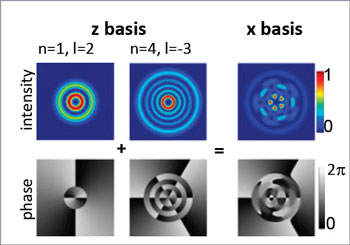



In a recent PNAS paper, scientists have described how they managed to achieve a quantum entanglement with a minimum of 103 dimensions with only two particles.

103 dimensions rather than 3? Is that a typo?

Elementary particles such as photons can produce superpositions - where they exist in many possible quantum states simultaneously. In addition, when two particles are entangled a connection is generated so measuring the state of one (whether they are in one place or another, or spinning one way or another, for example) affects the state of the other particle instantly, no matter how far away from each other they are.

Silicon has been very good to us. It has given us Angry Birds and virtual protests we can participate in from the comfort of our home, but it may be time to enter the Age of the Biological Computer.

Writing in the journal Materials Today,researchers reveal details of logic units built using living slime molds, which might act as the building blocks for computing devices and sensors.

Soda taxes and beverage portion size restrictions mandated by government are the poster children for social authoritarian efforts to control behavior but a recent survey in Preventive Medicine finds that the public is not willing to believe that a 15 ounce soda is okay but banning a 17 ounce soda will cure obesity.

PRINCETON, N.J.—In a study of 14,000 U.S. children, 40 percent lack strong emotional bonds — what psychologists call "secure attachment" — with their parents that are crucial to success later in life, according to a new report. The researchers found that these children are more likely to face educational and behavioral problems.

HOUSTON – (March 27, 2014) – National efforts in the last decade to clear the air of dangerous particulate matter have been so successful that most urban areas have already attained the next benchmark, according to new research by Rice University.

Atmospheric researchers at Rice studied the state implementation plans (SIPs) from 23 regions mandated by the Environmental Protection Agency to reduce particulate matter (PM) smaller than 2.5 microns (PM 2.5) to less than 15 micrograms per cubic meter by 2009.

The Rice analysis appears this week in the Journal of the Air and Waste Management Association.

Researchers have pinpointed a new mechanism of how natural variation in our DNA alters an individual's risk for developing heart disease by interfering with the ability of a developmental gene to interact with a specialized type of RNA. This work expands on previous work identifying the "hidden" causes of complex disease risk, with the goal of unlocking new pathways and potential drug targets for cardiovascular disease.

This latest study led by Thomas Quertermous, MD at Stanford University and Georg Sczakiel, PhD at the University of Lübeck (Germany) was a joint effort between human geneticists and molecular biologists. Postdoctoral scholar, Clint Miller, PhD was the lead author of the study published online in PLOS Genetics on Mar 27.

Washington, DC (March 27, 2014) — A drug currently used to treat autoimmune disease may also help prevent the kidney-damaging effects of diabetes, according to a study appearing in an upcoming issue of the Journal of the American Society of Nephrology (JASN). The findings suggest that clinical trials should be designed to test the drug in diabetic patients.

Kidney disease is one of the most serious complications of diabetes. Diabetics who develop kidney disease, or diabetic nephropathy, due to high blood glucose levels may eventually require dialysis or a kidney transplant.

WASHINGTON (March 28, 2014) — People who are married have lower rates of several cardiovascular diseases compared with those who are single, divorced or widowed, according to research to be presented at the American College of Cardiology's 63rd Annual Scientific Session. The relationship between marriage and lower odds of vascular diseases is especially pronounced before age 50.

"These findings certainly shouldn't drive people to get married, but it's important to know that decisions regarding who one is with, why, and why not may have important implications for vascular health," said Carlos L. Alviar M.D., cardiology fellow, New York University Langone Medical Center, and the lead investigator of the study.

Only about 1/6th of the world bans smoking and a new paper in The Lancet seeks to increase that, and implied causality is the way to do it.

Implied causality is fine, of course. No one knew smoking was bad until there was implied causality and then real causality, but in the culture war that seeks to control choice, population statistics are being used to sillier and sillier effect and it begins to border on pseudoscience, like third-hand smoke, and then sociology, like that banning smoking will cut premature births by 10 percent.

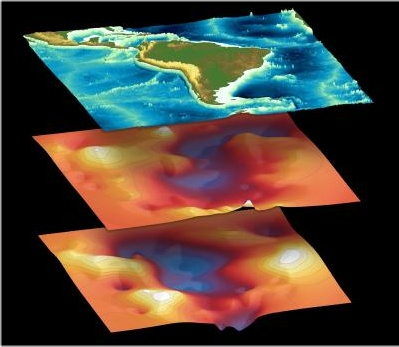
The largest earthquakes occur where oceanic plates move beneath continents. Obviously, water trapped in the boundary between both plates has a dominant influence on the earthquake rupture process.

Writing in
Nature Geoscience (28.03.2014), a group of scientists from the GFZ German Research Centre for Geosciences and from Liverpool University analyzed the Chile earthquake of February, 27th, 2010 and found that the water pressure in the pores of the rocks making up the plate boundary zone was key.


