

Natural history, the study of organisms in the environment, is in steep decline and for good reason.

A large part of the modern chemophobia that has undermined science acceptance in America is due to natural history - it became a haven for weak observational studies that got media headlines or, in the case of Rachel Carson and "Silent Spring", a book of anecdotes and observations. Modern scientists prefer experiments rather than observations and so the primary use of natural history has been for 'spray and count' practitioners who need to demonize pesticides or BPA or whatever the scare journalism of the week is.

Researchers with the U.S. Department of Energy Joint BioEnergy Institute have identified the genetic origins of a microbial resistance to ionic liquids, based on a pair of genes discovered in a bacterium native to a tropical rainforest in Puerto Rico, and successfully introduced this resistance into a strain of E. coli bacteria.

Yes, it's Frankenfuel, but hopefully anti-science zealots won't make creating an abomination of nature that leads to less fossil fuels.

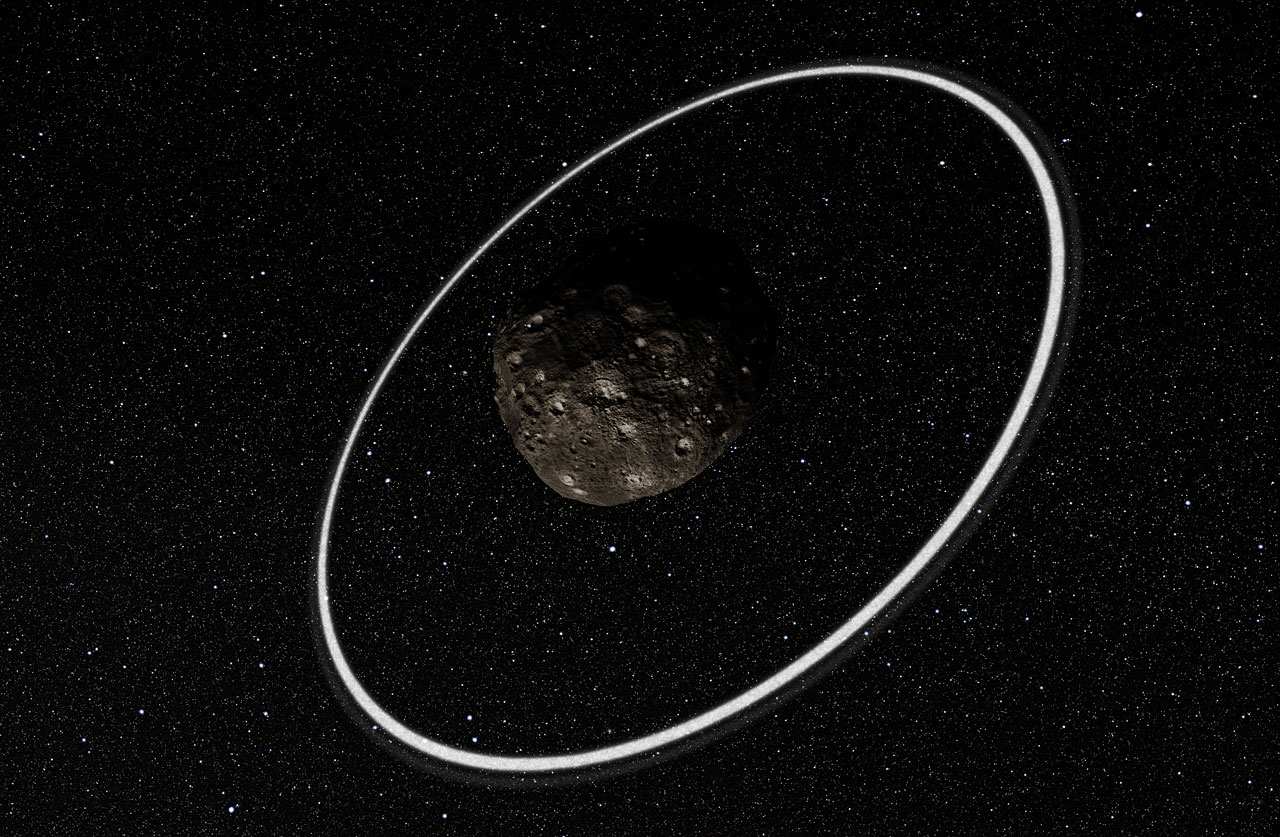
Astronomers have announced the surprise discovery that the asteroid Chariklo is surrounded by two dense and narrow rings, by far the smallest object to have rings. 

The rings of Saturn are, of course, one of the most spectacular sights in the sky. Despite many careful searches, no rings had been found around smaller objects orbiting the Sun in the Solar System. Now observations of the distant minor planet (10199) Chariklo as it passed in front of a star have shown that it is surrounded by two fine rings. Minor planet? Yes, the IAU which demoted Pluto has generally made a mess of things and so asteroid and minor planet are interchangeable in common parlance.
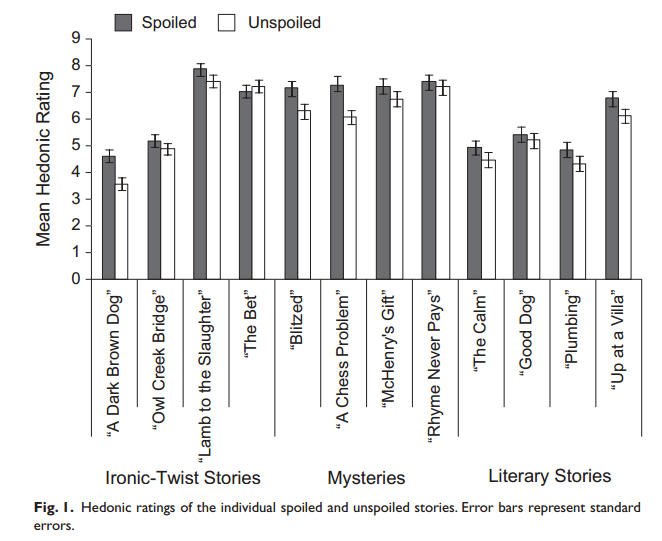
You want to know what movies are about - and that is why spoilers related to the upcoming "Star Wars" movie and "Avengers 2" and whatever else are so popular.

Hey, you knew how the RMS Titanic met its demise, and you still watched a movie about it, notes Rich Goldstein in The Daily Beast.  I didn't, but most of you did. And Shakespeare knew you wanted to know, that is why you read The Tragedy of Romeo and Juliet and not The Mystery Of Romeo and Juliet.

I know how The Grapes of Wrath is going to end, I still read it over and over again.

Health officials say that holding in your urine when you really have to go can be harmful. But every public pool has signs that prohibit peeing in the pool.

Yet a lot of Olympic swimmers admit to doing it anyway and if you are visiting a public water park and it's not 20 percent urine, count yourself lucky. 

In season 5 of Seinfeld, George and Jerry had this very discussion:

George Costanza: It's not good to hold it in. I read that in a medical journal.
Jerry: Did the medical journal mention anything about standing in a pool of somebody else's urine?

The popular TV series "CSI" may be fiction but real-life crime scene investigators and forensic scientists have been collecting and analyze evidence to determine what happened at crime scenes almost as long as there have been crime scenes.

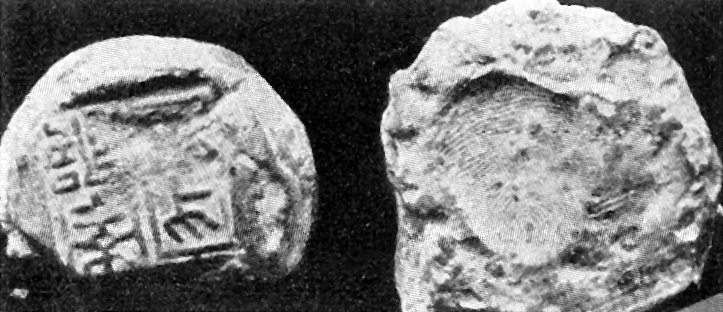
There is evidence during the Qin dynasty that the Chinese used handprints as evidence in crimes as far back as 2,200 years ago and by the 1860s the process for lifting fingerprints from evidence was developed. As guns became more common, gunpowder residue became a way to know if a weapon was fired.

Sausage experts know that the key to perfect meat is simmering in beer first - and in Science 2.0's definitive article on outdoor cooking, The Science Of Grilling, we learned that beer has multiple uses in cuisine, and an article in the Journal of Agricultural and Food Chemistry adds to this important body of work, noting that a beer marinade helps reduce the formation of potentially harmful substances in grilled meats.

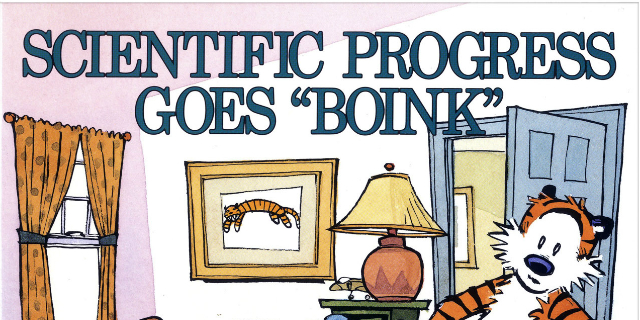
Gary Larson tapped into the universal absurd. Charles Schulz helped us identify with the underdog in us all. And Bill Watterson accurately represented a father’s profound and boundless knowledge of the universe, as in Calvin’s dad’s explanation that ice floats because, “It’s cold. Ice wants to get warm, so it goes to the top of liquids in order to be nearer the sun.” Or his explanation of relativity: “It’s because you keep changing time zones. See, if you fly to California you gain three hours on a five-hour flight, right?”

Would the existence of B-modes in the cosmic microwave background (CMB) radiation be an evidence for inflation? Many influential colleagues claim that this is indeed the case. But their arguments are based on standard cosmological schemes.

Actually, pre-Big Bang patterns beyond conventional cosmology do not require inflation and can generate CMB B-modes.

Two papers by the BICEP2 Collaboration :

BICEP2 I: Detection Of B-mode Polarization at Degree Angular Scales, arXiv:1403.3985

A decades old space mystery has been solved by an international team of astronomers who investigated hot, young, white dwarfs — the super-dense remains of Sun-like stars that ran out of fuel and collapsed to about the size of the Earth. 

It has been known that many hot white dwarfs atmospheres, essentially of pure hydrogen or pure helium, are contaminated by other elements – like carbon, silicon and iron. What was not known, however, was the origins of these elements, known in astronomical terms as metals.

