
New research led by the University of Exeter suggests that rising global temperatures will increase the quantity of the key greenhouse gas methane emitted from freshwater ecosystems to the Earth's atmosphere – which could in turn lead to further warming.

The collaborative study, led by Dr Gabriel Yvon-Durocher from the University of Exeter, collated data from hundreds of laboratory experiments and field surveys to demonstrate that the speed at which methane fluxes increase with temperature was the same whether single species populations of methanogens, microbial communities or whole ecosystems were analyzed.

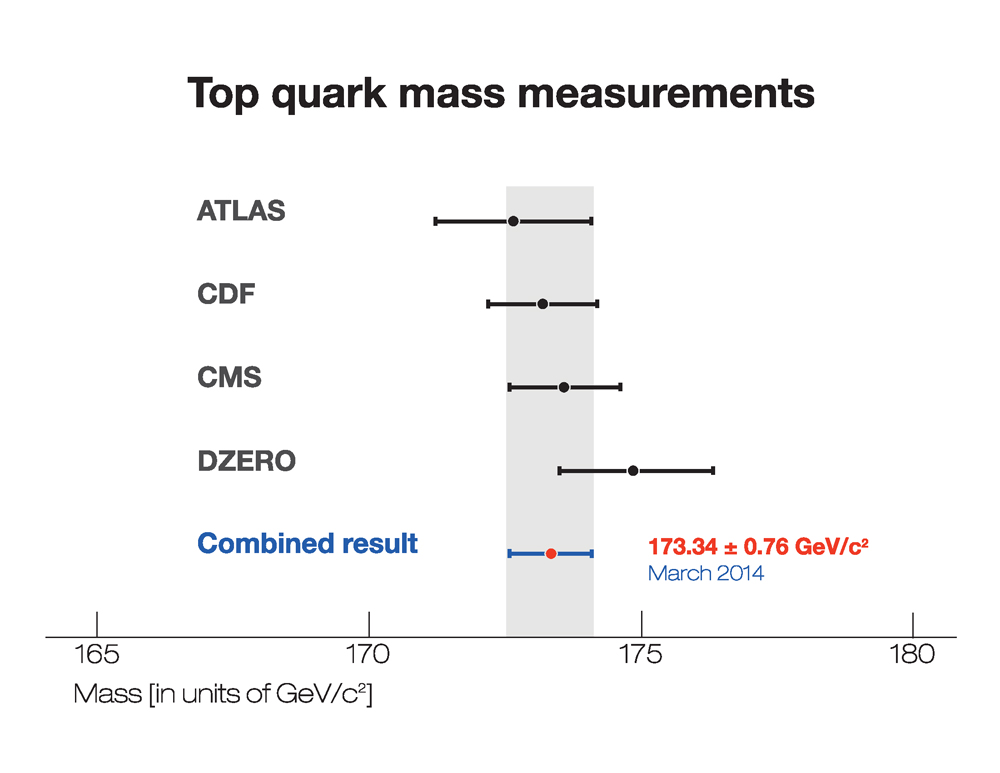
The world's leading particle collider experiments, Fermilab's Tevatron and CERN's Large Hadron Collider (LHC), have joined forces. Scientists from the four experiments involved — ATLAS, CDF, CMS and DZero — announced their joint findings on the mass of the top quark today at the Rencontres de Moriond international physics conference in Italy. 

They pooled their data analysis power to arrive at a new world's best value for the mass of the top quark of 173.34 plus/minus 0.76 GeV/c2.

Building a strong connection to a social group helps clinically depressed patients recover and helps prevent relapse, according to a new study.

For the paper, Canadian Institute for Advanced Research (CIFAR) Senior Fellow Alexander Haslam, lead author Tegan Cruwys and their colleagues at the University of Queensland conducted two studies of patients diagnosed with depression or anxiety. The patients either joined a community group with activities such as sewing, yoga, sports and art, or partook in group therapy at a psychiatric hospital.

The genome of the loblolly pine is truly massive, aound seven times bigger than the human genome, making it the largest genome sequenced to date and the most complete conifer genome sequence ever published.

The achievement, described in GENETICS and Genome Biology, marks the first big test of a new analysis method that can speed up genome assembly by compressing the raw sequence data 100-fold.

Loblolly pine is the most commercially important tree species in the United States and the source of most American paper products. The tree is also being developed as a feedstock for biofuel. The genome sequence will help scientists breed improved varieties and understand the evolution and diversity of plants.

Rutting stags and clawing bears are but two examples of male animals fighting over a mate, but research in New Phytologist has uncovered the first evidence of similar male struggles leading to the evolution of weaponry in plants.

The team, led by Dr. Andrea Cocucci from the Instituto Multidisciplinario de Biologia Vegetal of Argentina, studied a species of milkweed (Apocynaceae), found in tropical climates. While plants do not mate like animals, but rather reproduce via pollinators such as insects or birds, competition between individuals to exploit those pollinators can result in confrontation between the plants.

Infections caused by a concerning type of antibiotic-resistant bacteria are on the rise in U.S. children, according to a new study published in the Journal of the Pediatric Infectious Diseases Society and available online. Although still uncommon, the bacteria are increasingly found in children of all ages, especially those 1-5 years old, raising concerns about dwindling treatment options.

If people need to reduce salt intake, relying on them to do it is less effective than teaching them how to flavor food with spices and herbs, according to research presented at the American Heart Association's Epidemiology&Prevention/Nutrition, Physical Activity & Metabolism Scientific Sessions 2014.

In the first phase of the study, 55 volunteers ate a low-sodium diet for four weeks. Researchers provided all foods and calorie-containing drinks. Salt is the main source of sodium in food.

In the second phase, half of the study volunteers participated in a 20-week behavioral intervention aimed at reducing their sodium intake to 1,500 mg/day by using spices and herbs. The other half reduced sodium on their own.

Scientists have discovered a new, persistent structure in one of two radiation belts surrounding Earth  - high-energy electrons in the inner Van Allen radiation belt display a persistent pattern that resembles slanted zebra stripes.

Surprisingly, this structure made of high-energy electrons is produced by the slow rotation of Earth, previously considered incapable of affecting the motion of radiation belt particles, which have velocities approaching the speed of light.

Genetic analysis of ancient poop found off the coast of Mexico suggests bighorn sheep may be native to Tiburón Island, the largest island in the Gulf of California and Mexico.

Bighorn sheep were not thought to inhabit Tiburón Island prior to their introduction in 1975 but scientists discovered fossilized dung in the mountains of Tiburón Island that challenges that assumption. Scientists compared the pellet-shaped poop to fecal pellets of other large mammals and extracted DNA to sequence and determine the origin.

An ancient stick insect species,
Cretophasmomima melanogramma from in Inner Mongolia at the Jehol locality, may have mimicked plant leaves for defense as far back as 126 million years ago, during the Cretaceous period, according to a new study.


