




Comments on anti-smoking public service announcements (PSAs) in online forums like YouTube degrade the persuasiveness of the videos - even if the comments are positive. PSAs lose their effectiveness when the public being protected is allowed to discuss.

Comments are controversial, and even science media is not immune. The problem is not spam, organizations can get rid of that by requiring a login. Contradictory comments are also a concern and so some popular websites that prefer to talk at the audience have banned comments by the public entirely.

Why does beer transform from a liquid to a foamy state after an impact? Science is on the wave propagation case.

As you know, if you shake a carbonated beverage, it will foam over when you open it. But one messy and slightly dangerous bar trick involves hitting a bottle on the opening and watching the base explode. It can happen unintentionally also. Home brewers of beer call this a bottle bomb.

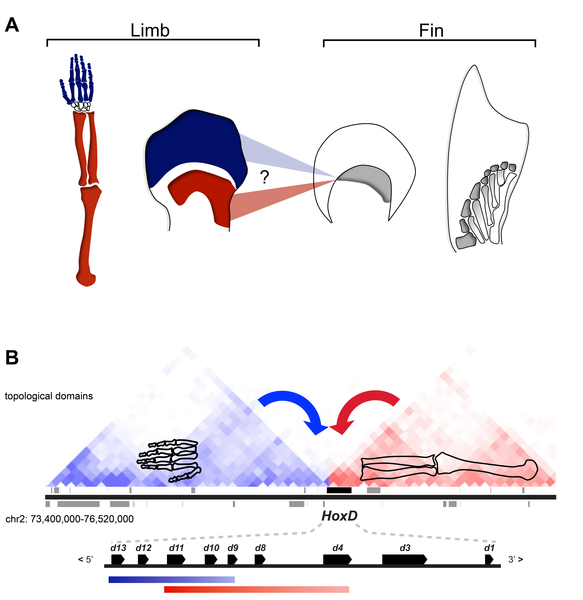
How did we get limbs from ancestral fish fins? It's a fascinating topic, a science enigma.

Our first four-legged land ancestor came out of the sea about 350 million years ago. Watching a lungfish, our closest living fish relative, crawl on its four pointed fins gives us an idea of what the first evolutionary steps on land may have looked like. However, the transitional path between fin structural elements in fish and limbs in tetrapods remains elusive. 

There is a looming drug crisis approaching and the results of a new paper about the FDA understanding of clinical trials is only going to make it worse.

Right now, the private sector conducts drug development and they are vilified by the media, the public and their competitors in government-funded academia. But drug development fails 95% of the time before getting to market, it costs billions, has to undergo rigorous testing and then has a short window for sales, during which time everyone complains that greedy companies charge too much. As a result of a hostile business climate and increased regulation, drug development is disappearing rapidly, to be replaced by...nothing. Government-controlled science can't do applied research.

What if nearly half of the cars on the road today were replaced by the electric kind, those vehicles that environmentalists and electric vehicle marketing groups claim are "90% efficient" and worth the extra cost? How much better would our emissions scenario be?

It wouldn't make much difference. Even a sharp increase in the use of electric drive cars (hybrid, plug-in hybrid and battery electric) by 2050, up to as much as 42 percent of passenger vehicles in the U.S., would not significantly reduce emissions of high-profile pollutants like carbon dioxide, sulfur dioxide or nitrogen oxides.

Cocaine users display worse memory performance, concentration difficulties, and attentional deficits. They have difficulties understanding the perspective of others, show less emotional empathy, find it more difficult to recognize emotions from voices, behave in a less prosocial manner in social interactions and report fewer social contacts.

So why is it the second most popular drug in Europe, after marijuana? 

Scholars at the Psychiatric Hospital of the University of Zurich say the worse emotional empathy was correlated with a smaller social network and the social cognitive deficits contribute to the development and perpetuation of cocaine addiction.

Do you understand the complexities of the brain's working memory? No one really does. Yet everyone knows how much RAM is in their phone or tablet or PC.

Using the RAM analogy, researchers say that working memory - a temporary memory system that keeps information readily accessible for a few minutes - in the brains of primates is a lot like a computer. But it's also in simpler mammals like rodents. RAM does not work like the brain, the brain works like RAM. Ray Kurzweil's singularity just came a little closer after you read that sentence.

Relic moss samples exposed by modern Arctic warming have been found to date as far back as 44,000 years ago, according to radiocarbon dating. 

How bad is pollution in China? So bad you can see it from space.

Wait, can't you do that in the US? Anyone who has flown into Los Angeles in the morning surely sees pollution. 

This is different. And worse. Plumes of several anthropogenic pollutants, especially particulate matter and carbon monoxide, at ground level over China can now be detected from space - something that was only possible higher up previously. The team used measurements by the Infrared Atmospheric Sounding Interferometer on board the MetOp satellite and the findings represent a crucial step towards improved monitoring of regional pollution and forecasting of local pollution episodes, especially in China.
Conservationists and animal activists have created a mythology that poaching is mostly illegal hunting for trophies or something like ivory for decoration.

It's not the case at all, and that confusion is why anti-poaching efforts are about as effective as the 'War on Drugs' in America.

