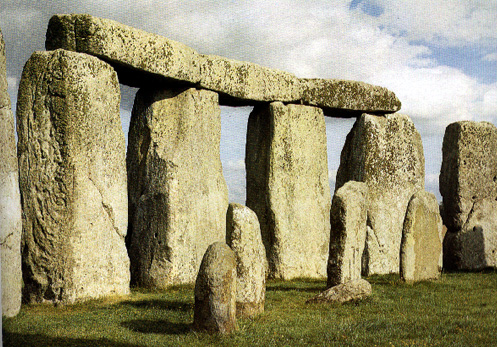




Stonehenge is interesting, though any mystical (or downright alien) symbolism is lost when you visit much larger sites, like Avebury Henge, that are clearly not mystical at all. Because of its fame, people have long sought answers as to why Stonehenge was built.

A group of archaeologists now contend it was indeed symbolic - but not religious symbolism, it was more political.
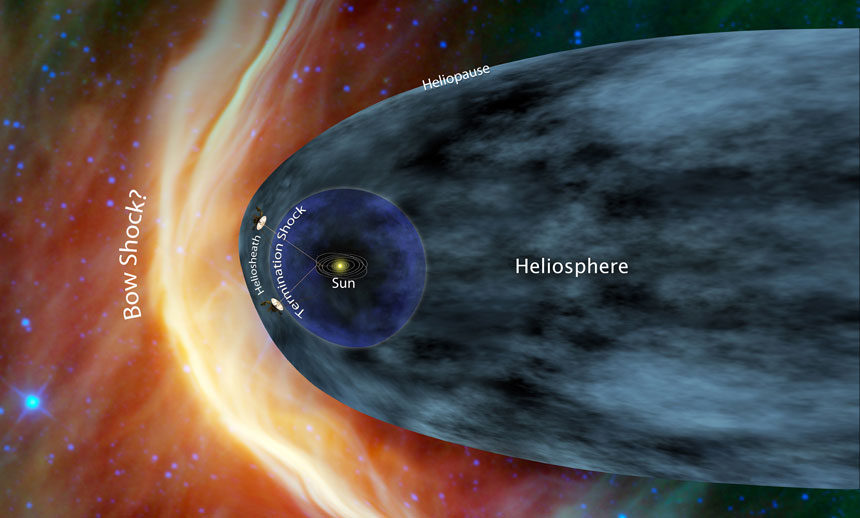
NASA's Voyager 1, launched in 1977, was propelled into deep space with the help of Jupiter's and Saturn's gravity. Now it is about to leave the solar system. But exactly when is unclear.

Voyager 1 is traveling at a speed of about 3.6 Astronomical Units (AU) per year - one 'AU' equals the distance between the Sun and the Earth, or 93 million miles.
A new review of studies suggests that fructose may not be as bad for us as previously thought - it may even provide some benefit. 

Fructose, which is naturally found in fruit, vegetables and honey, is a simple sugar that together with glucose forms sucrose, the basis of table sugar. It is also found in high-fructose corn syrup, the most common sweetener in commercially prepared foods.
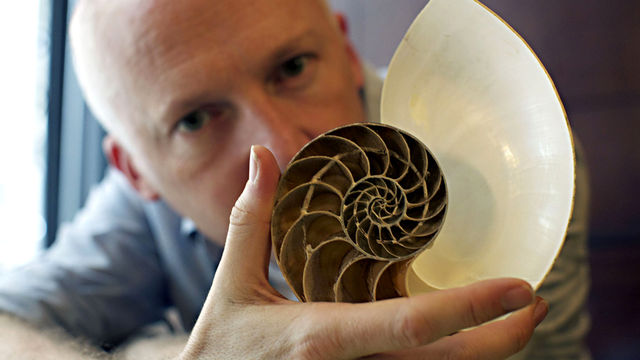
I make fun of numerology but I kind of like it. I can like it and still make fun of it because I don't take it too seriously.

Want to claim there is a mathematical secret, far beyond human intelligence, buried in religious texts?  Sure, I will listen, if it's on TV and well produced. It's fun to speculate that prayers and rituals have a pattern that contains some sacred rhythm and people 3,000 years ago were super smart about it and we are not.  It can get a little funky if you take it too seriously, though. Words no longer have meaning if they are instead numerical combinations.  Change a word, or add one, and you would apparently allow sleeping with your neighbor's wife or whatever in the Ten Commandments.

A report from market research agency Conquest into the social media habits of 14-24 year olds claims that Facebook's core audience - teenagers - are starting to fall out of love with the website and that activity may have peaked amid a groundswell of dissatisfaction and concerns over privacy and even bullying. 

20 years ago in America, members of Congress, armed with studies showing that a college degree meant more lifetime earnings on average than a high school diploma, decided the way to boost income for everyone was to make sure everyone got a college degree.

What changed?  Very little.  The best and richest students still go to the top universities while everyone else does not; but student loan debt has climbed as universities, able to charge unlimited amounts, did just that and hired more people and built more buildings.

The tirade below (a bit over the top, admittedly, but I'm in the middle of a stressful week) is inspired by a post written today by Chad Orzel in his blog, Uncertain Principles. It is a breath of fresh air to hear that scientists outside high-energy physics (Orzel works in condensed matter) actually see things for what they are:

The Dropa Stones are puzzling artifact #2 on the 10 Most Puzzling Ancient Artifacts list.

These are “The” Dropa Stone images.

What are the Dropa Stones?

Last week I wrote about the anti-science campaign being waged by opponents of the use of genetically modified organisms in agriculture. In that post, I promised to address a series of questions/fears about GMOs that seem to underly peoples’ objections to the technology. I’m not going to try to make this a comprehensive reference site about GMOs and the literature on their use and safety. I’m compiling some general resources here, and a list of all FAQs here.

