





It seems obvious that when a culture can eat more than it needs to survive, many people will.. When even the poorest people can afford to be fat, they are happy.

Researchers
from Rice University and the University of Colorado did an analysis of survey results and found that while growth of developing countries may improve conditions such as malnutrition and infectious disease, it may also increase obesity among people with lower socio-economic status.  This troubles them, though it is unclear why. Being fat is better than starving.
The most logical and intuitive place to seek the mind is in the human brain. Neuroscience can observe the workings of perception, memory, thinking, and emotions by using imaging devices to see which sections of the brain light up while it’s performing different functions. 

Do Imaging Devices tell us about Subjective Experience?

We see chemical and electric signals, in oscillating and bursting patterns, sending communications throughout the brain as study subjects perform mental functions. But, there has been no way to find out what subjective experience is, other than studying how it seems to correlate with these brain images and electrical signals.

You may have heard about certain potential dangers of nanotechnology; I like to write about some of them on occasion; and you probably know about the almost lost battle against so called superbugs, those pesky bacteria that evolved in hospitals to become resistant against all our drugs. Now combine these for something a little more scary: Fast-track evolution towards superbugs.

There have been several implementations of two wheeled balancing robots [example]. And several which can read sheet music via a camera [example]. Others can ‘sing’ [example] – but the number of two-wheeled balancing robots that can autonomously read music and sing songs is low – possibly numbering just one.
Archaea, one of the three "domains of life" on Earth - the other two being bacteria and eukaryota (plants and animals) - strangely do not seem to be part of any food chain.

But maybe they soon will be - and it just might help solve future climate change issues. Archaea, a type of single-celled microorganism, perform many key ecosystem services including being involved with nitrogen cycling, and they are known to be the main mechanism by which marine methane is kept out of the atmosphere. 
A new high-precision 3-D printer at TU Vienna is orders of magnitude faster than similar devices and opens up completely new areas of application, such as in medicine. "Two-photon lithography" means tiny structures on a nanometer scale can be fabricated quicker than ever.

Their 3-D printer uses a liquid resin, which is hardened at precisely the correct spots by a focused laser beam. The focal point of the laser beam is guided through the resin by movable mirrors and leaves behind a polymerized line of solid polymer, just a few hundred nanometers wide. This high resolution enables the creation of intricately structured sculptures as tiny as a grain of sand.

 Researchers from the University of California, San Diego School of Medicine are contending that  consumption of dietary trans fatty acids (dTFAs) is associated with irritability and aggression. 

Their survey of 945 men and women led them to link dTFAs with adverse behaviors that impacted others, ranging from impatience to overt aggression.  Dietary trans fatty acids are primarily products of hydrogenation, which makes unsaturated oils solid at room temperature. They are present at high levels in margarines, shortenings and prepared foods. Adverse health effects of dTFAs have been identified in lipid levels, metabolic function, insulin resistance, oxidation, inflammation, and cardiac health.

Might a person’s preferences for a mate vary according to whether they feel hungry or not?

 Some believe so, prompting professor Terry F. Pettijohn II from the Coastal Carolina University (along with colleagues from Miami University and West Virginia University) to investigate. For, according to the Environmental Security Hypothesis (ESH) individuals’ interpersonal preferences may partially depend on how secure or insecure they feel regarding their surroundings at any given time.

For my book Brain Trust, I chatted with Ian Stewart, mathematician, prolific puzzle author and very fun person to shoot the mathematical breeze with, who explains the following best card trick I’ve ever seen, invented by mathemagician Art Benjamin of Harvey Mudd College.

First, Stewart says, prepare a stack of sixteen cards so that cards 1, 6, 11, and 16 are the four aces. Now deal them facedown in four rows of four. Turn up cards 3, 8, 9, and 14 to make the arrangement shown here.

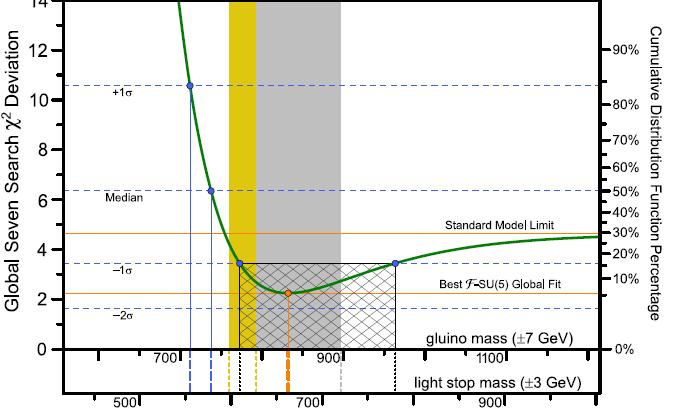
It is a gloomy winter for most SUSY phenomenologists: as they sit and watch, the LHC experiments continue to publish their search results for Supersymmetric particles, producing tighter and tighter direct bounds on the masses of squarks and gluinos for a variety of possible choices of the many free parameters defining the models under test. It looks as if the general feeling is "Today it's your preferred model going down the drain, tomorrow it might be my own".

