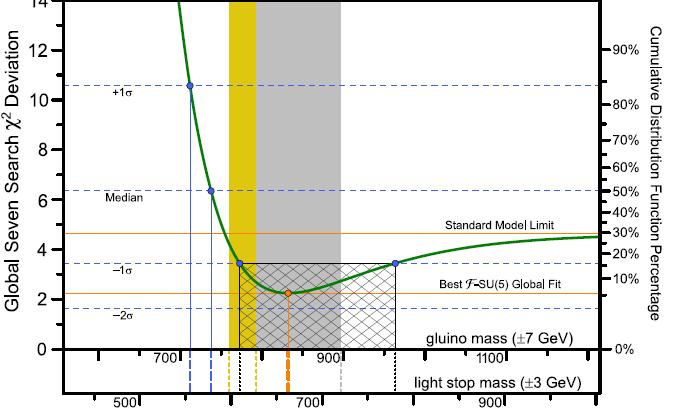


It is a gloomy winter for most SUSY phenomenologists: as they sit and watch, the LHC experiments continue to publish their search results for Supersymmetric particles, producing tighter and tighter direct bounds on the masses of squarks and gluinos for a variety of possible choices of the many free parameters defining the models under test. It looks as if the general feeling is "Today it's your preferred model going down the drain, tomorrow it might be my own".

The question as to how many meanings a word can have came up in the discussion that followed "The Intelligence Paradox". Two excited respondents found the whole thing so alarming that they volunteered the following helpful hints to improve my approach; “hogwash” “pseudo questions” “vacuous sophistry” and “hogwash” again, just in case I missed it the first time. I was also told that intelligence could not be cooperation because cooperation is cooperation.

So let’s see if a word can have two meanings, and a good place to start would be that emotion-charged hot-potato that we know as life.

Put a hand on your widow's peak. About an inch below your fingertips in your medial prefrontal cortex is the home of your sense of self. Julian Keenan, director of the Cognitive Neuroimaging Lab at Montclair State University, did a nifty trick: He used what is effectively an electric Ping-Pong paddle to zap this region in healthy subjects, overexciting every neuron within range, and thus for about a fifth of a second, knocking that one-cubic-centimeter area of the brain off the grid.

And while he did this, he flashed pictures of faces. Blasted subjects retained the ability to recognize faces of loved ones or even learned strangers, but for this fifth of a second, they failed to recognize themselves.

Even one year after the disaster at the Daiichi nuclear plant in Fukushima, Japan, it is still unfolding. It was locally surpassing the severity of Chernobyl relatively soon in the first few weeks. Four out of the six facilities were already no more than a pile of radioactive trash just like Chernobyl and it was clear since then that the future will be also similar to that of Chernobyl: A radioactive monument, still for our grand children’s grandchildren to be concerned about.

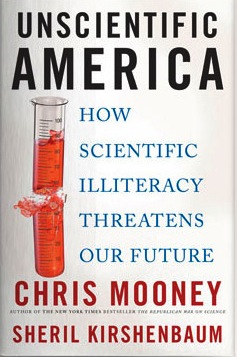
Increasingly, science is failing to influence public policy. Facts, statistics and data appear insufficient to change highly politicized minds...

Hermes is the son of Zeus. He is the messenger. He wears winged sandals, a winged hat,and a magic wand. He is the fastest of the gods. He is the god of thieves and he is the god of commerce. Even when he steals, he does it so gracefully. He is the guide for the dead to go to the underworld. He invented, the pipes, the musical scale, astronomy, weights and measures, boxing, gymnastics and the care of olive trees (*).

Our attentiveness and our concentration are pilfered from us by the proceedings [which] take place around us in the world in recent times.

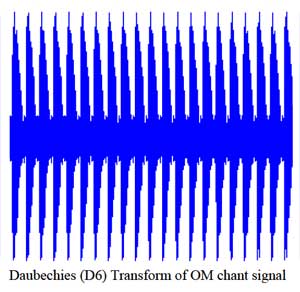
According to research from Sipna’s College of Engineering&Technology, Amravati University, Maharashtra, India, this pilfering might be reduced, if not entirely eliminated, by regularly chanting ‘OM’.
Professors Ajay Anil Gurjar and Siddharth A. Ladhake point out that :

Is the Age of Exploration long dead? At The Last Word on Nothing, Richard Panek made the point that there's no longer anywhere on Earth people haven't been. Even the South Pole, which many would consider the most remote spot on the planet, is a regular tourist destination.

Ah! But what about the deep sea? Humans obviously haven't seen every inch of it--not even close. And the deepest spot in the ocean, the Challenger Deep, is much harder to visit than the South Pole. In fact, only one manned expedition has ever touched bottom, making it more like the moon than the pole.
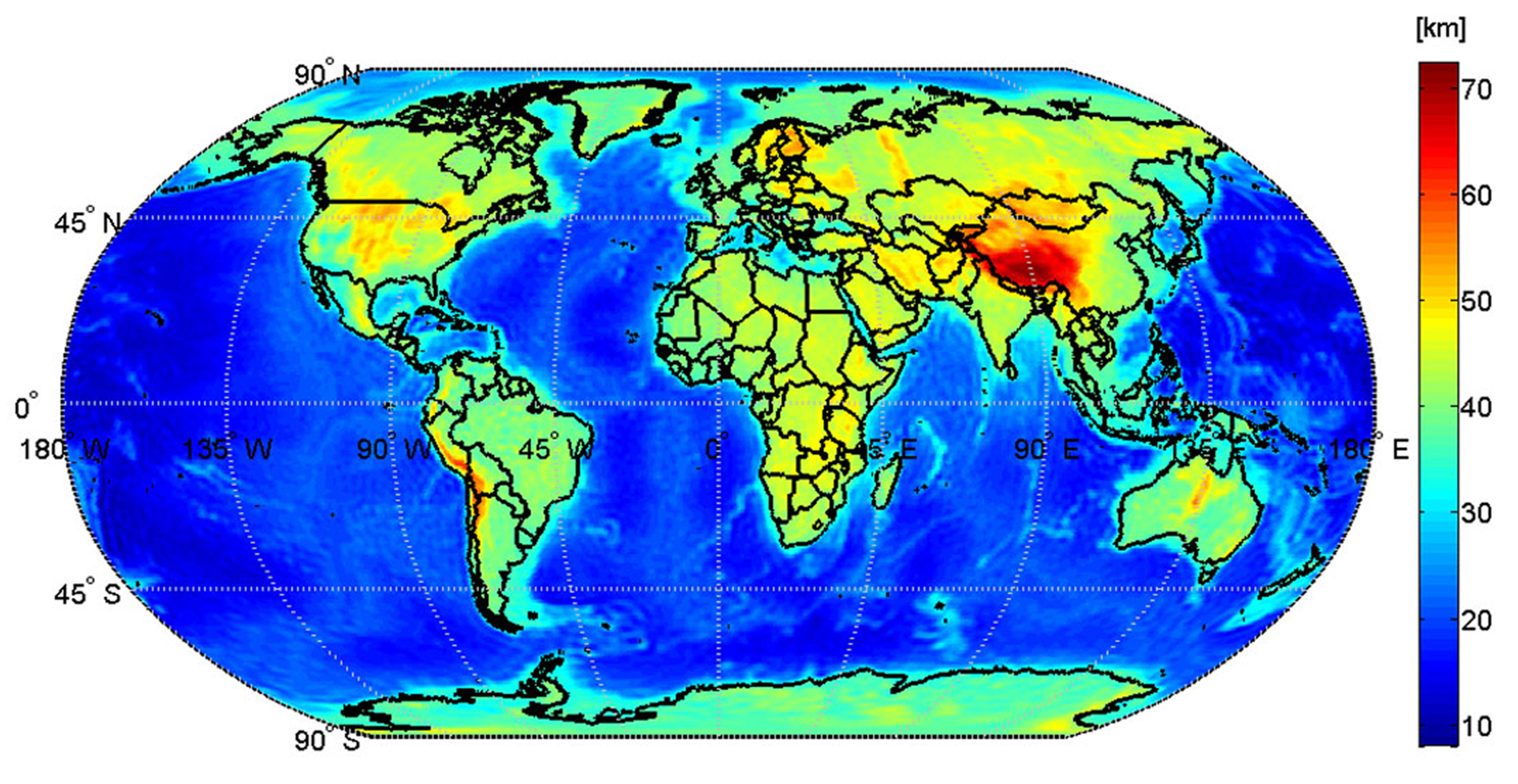
ESA’s GOCE gravity satellite has provided us with the first high-resolution map of the boundary between Earth’s crust and mantle – the Mohorovičić discontinuity, or Moho.

Earth’s crust, as you know, is the outermost solid shell of our planet. Even though it makes up less than 1% of the volume of the planet, the crust is exceptionally important not just because we live on it, but because is the place where all our geological resources like natural gas, oil and minerals come from. The crust and upper mantle is also the place where most geological processes of great importance occur, such as earthquakes, volcanism and orogeny.

