If someone in 2012 wants to criticize Henry Ford because he didn't know everything about automobiles a century ago, it's a little silly. He knew what he knew given the science and the technology of his day - he revolutionized his field. Freud got a lot wrong about psychology but he created the only unified theory of psychology recognized by people today. Criticizing him is as quaint and pointless and irrelevant as someone criticizing a 19th century analysis of Coleridge - any researcher doing it is likely to get a "someone paid for them to write this?" response.
While I've been strangely silent, the space industry is surging ahead. I have, off the record, been told of small companies looking to invest $10s of millions into launchers, of new picosatellite designs (like Cubesat and Tubesat) being bandied about, of a possible new East Coast space port. NASA is publically funding multiple potential launch providers.
The Freeport News--"Grand Bahama's First Newspaper"--ran an article today that was a mix of highly detailed biology and complete bone-headed confusion.
Could there be a healthy squid population living in local waters? has a fantastic opening:
Is it a possibility that there is a healthy squid population in waters around Grand Bahama?
Although, at this point, there is no official answer to the question from the proper authority, this daily will continue to search and keep our readers updated.
Mystery! Intrigue! The authorities may be ignoring the situation, but never fear, the journalists will poke and prod until it all comes out.
I am pleased to present once again an interesting TED talk. O.K., the talk is a little on the slow side, but Jack Horner’s Shape Shifting Dinosaurs is worth watching, for it shows yet again something that cannot be repeated often enough: Scientists have a big huge ego and are therefore some of the easiest fooled people around.

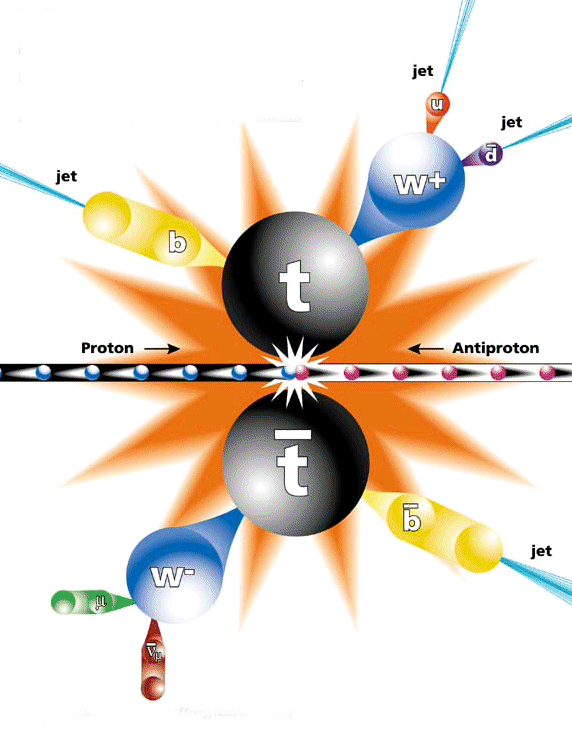
A new result by the CMS collaboration has been produced today on top quark physics. For those of you who only get triggered by the search of new particles or new forces, the study of "yesterday's signals", such as top quarks, is boring and uninformative; but high-energy physics is a rich field of research, and we extend our understanding of subnuclear physics no less by getting to know how exactly top quarks get produced in proton-proton collisions, than we do by placing limits on ephemeral particles (SUSY ones, e.g.).
So I salute the new measurement as an important advance. Using over one inverse femtobarn of data collected in 2011 (about a hundred trillion proton-proton collisions), CMS was able to study top quark pairs in great detail.
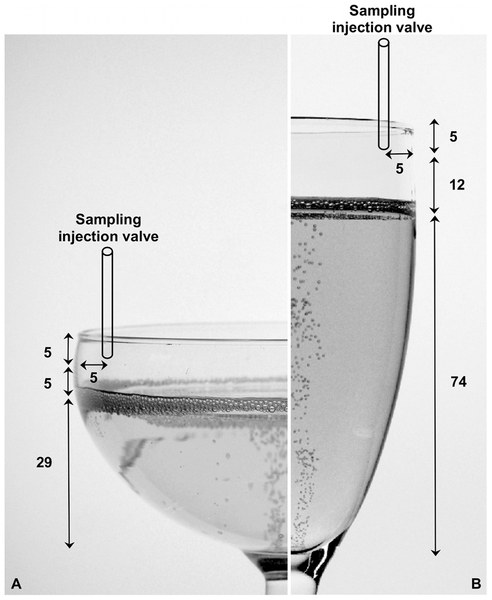
In time for Valentine's Day, researchers have determined which champagne glass size will give drinkers the optimal experience.
Lately, my wife and I have been staring slack-jawed at elementary school options, little ropes of drool hanging zombie-like from the corners of our mouths – and so we’ve decided to cede our choice to the numbers.
But when you peel back the data, things like high test scores mean next to nothing about school quality – isn’t it likely that socioeconomics and not the school itself created these high test scores? My wife and I want education causation and not just correlation – a school that creates more education than should be predicted by our (reasonable) genetics and (low) income.
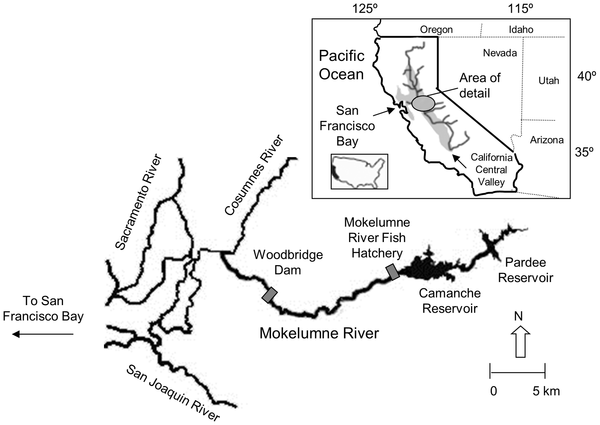
While anti-science politicians in Washington, D.C. block science solutions to harvesting more fish, a crucial piece of information about salmon isn't being considered; the numbers without a science solution only look good because of the massive influx of hatchery-raised fish that return to spawn in the wild. Only about ten percent of the fall-run Chinook salmon spawning in California's Mokelumne River are naturally produced wild salmon.
Recent research examined suicide rates north and south of the border between 1960 and 2008 and revealed the widening gap in suicide rates between Scotland and England and Wales is largely due to the number of young Scottish men taking their lives.
The suicide rate for both men and women was lower in Scotland than the rest of the United Kingdom until around 1968 when it overtook the other two but suicide rates among men continued to rise on both sides of the border until the early 1990s when rates in England and Wales began to fall. The gap between north and south widened markedly.
Efforts at obfuscation and fomenting false concerns by kooky anti-science food activists aren't working. They spent the better part of the last decade blocking science advancements in food security insisting 'the science isn't settled' and muttering Frankenfood denialist jingoisms, but it seems to be failing.
Farmland devoted to improved crops went up over eight percent last year, to 395 million acres. Agriculture strongholds like Brazil, India and Canada join the U.S. in picking science over advocacy.