







With improved resolution, tissue-specific molecular markers and precise timing, a group of scientists say they have possibly overturned a long-standing assumption about the origin of embryonic cells that give rise to connective and skeletal tissues that form the base of the skull and facial structures in back-boned creatures from fish to humans.

University of Oregon biologist James A. Weston and co-authors from the Max Planck Institute of Immunology in Germany and the French National Scientific Research Centre at the Curie Institute document their potentially textbook-changing case in an article appearing in the Proceedings of the National Academy of Sciences.

The cells in question, they argue, do not come from a portion of embryonic neural epithelium called the neural crest, as widely believed, but rather from a distinct thin layer of epidermal epithelial cells next to it. "Our results," Weston said, "could lead to a better understanding of the etiology of craniofacial defects, as well as the evolution of the head that distinguishes vertebrates from other creatures."

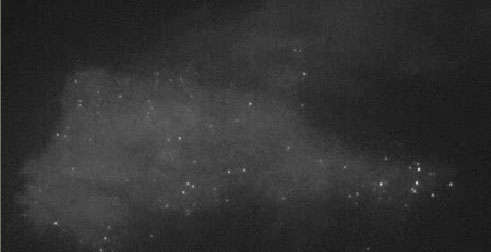
By using a specialized microscope that only illuminates the cell’s surface, a virologist and a biophysicist at Rockefeller University have made history by becoming the first to see, in real time and in plain view, hundreds of thousands of molecules coming together in a living cell to form a single particle of the virus that has, in less than 25 years, claimed more than 25 million lives: HIV.

This work, may not only prove useful in developing treatments for the millions around the globe still living with the lethal virus but the technique created to image its assembly may also change the way scientists think about and approach their own research.

“The use of this technique is almost unlimited,” says Nolwenn Jouvenet, a postdoc who spearheaded this project under the direction of HIV expert Paul Bieniasz and cellular biophysicist Sandy Simon, who has been developing the imaging technique since 1992. “Now that we can actually see a virus being born, it gives us the opportunity to answer previously unanswered questions, not only in virology but in biology in general.”

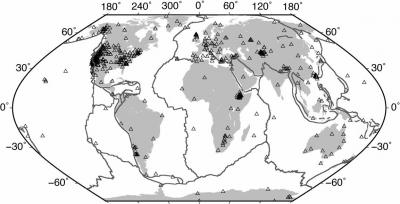
Until 1992, when California’s magnitude-7.3 Landers earthquake set off small jolts as far away as Yellowstone National Park, scientists did not believe large earthquakes sparked smaller tremors at distant locations. Now, a definitive study shows large earthquakes routinely trigger smaller jolts worldwide, including on the opposite side of the planet and in areas not prone to quakes.

“Previously it was thought seismically active regions or geothermal areas were most vulnerable to large earthquake triggers,” says Kris Pankow, a seismologist at the University of Utah Seismograph Stations and a co-author of the new study.

But Pankow and colleagues analyzed 15 major earthquakes stronger than magnitude-7.0 since 1992, and found that at least 12 of them triggered small quakes hundreds and even thousands of miles away.

NASA's Phoenix spacecraft landed in the northern polar region of Mars Sunday to begin three months of examining a site chosen for its likelihood of having frozen water within reach of the lander's robotic arm.

Radio signals received at 4:53:44 p.m. Pacific Time (7:53:44 p.m. Eastern Time) confirmed the Phoenix Mars Lander had survived its difficult final descent and touchdown 15 minutes earlier. The signals took that long to travel from Mars to Earth at the speed of light.

Mission team members at NASA's Jet Propulsion Laboratory, Pasadena, Calif.; Lockheed Martin Space Systems, Denver; and the University of Arizona, Tucson, cheered confirmation of the landing and eagerly awaited further information from Phoenix later Sunday night.

Scientists like order and structure and methodology. Repeatability is even better, though that often requires additional grant funding. It's no different when it comes to weekends, bars and picking up science groupies.

But it's not so simple, even for scientists. The perfect world of methodology and repeatability is instead replaced by linguistic voodoo and trial and error regarding alcohol. Science, as always, is here to help.

There are rules, you see, but they are unwritten. By taking a broad cross-section of shared experiences we can establish a baseline and go from there. That is good science.

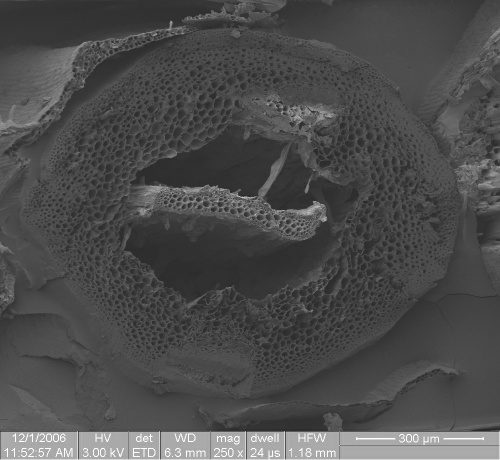
Maize, commonly called corn in the US, is the third most important cereal in the world. It has a great number of advantages for molecular agriculture such as its capacity to express recombinant proteins in the seeds, its widespread cultivation and its genetic diversity, along with being anti-allergenic and non-toxic.

Now scientists from the Universidad de Lleida (University of Lleida) have published a study (1) confirming that maize seeds are an effective and sure platform within molecular agriculture to alleviate diseases. Over the next few years AIDS could be one of the first diseases to benefit from these results, although regulations for this technology are being developed at the same time as research is being undertaken.

In March, transgenic maize became the first plant to be developed commercially for medical use. The PNAS article (2) published the following findings: a maize seed with genes from the 2G12 antibody (already known for its capacity to neutralise infection from the virus) could produce antibodies against the transmission of HIV. Researchers from the Departamento de Producción Vegetal y Ciencia

When it comes to the original migration to the Islands of Southeast Asia (ISEA - namely, the Philippines, Indonesia and Malaysian Borneo), the prevailing theory has been the "out of Taiwan" model - a Neolithic expansion from Taiwan driven by rice agriculture about 4,000 years ago.

Researchers say they have discovered genetic evidence that overturns that theory and takes the timeline back by nearly 10,000 years.

The international research team, led by the UK’s first Professor of Archaeogenetics, Martin Richards, has shown that a substantial fraction of their mitochondrial DNA lineages (inherited down the female line of descent), have been evolving within ISEA for a much longer period, possibly since modern humans arrived some 50,000 years ago.

Biologists have discovered that a fundamental building block in the cells of flowering plants evolved independently, yet almost identically, on a separate branch of the evolutionary tree--in an ancient plant group called lycophytes that originated at least 420 million years ago.

Researchers believe that flowering plants evolved from gymnosperms, the group that includes conifers, ginkgos and related plants. This group split from lycophytes hundreds of millions of years before flowering plants appeared.

The building block, called syringyl lignin, is a critical part of the plants' scaffolding and water-transport systems. It apparently emerged separately in the two plant groups, much like flight arose separately in both bats and birds.

CARLSBAD, California, May 24 /PRNewswire/ --

- Novel Catheter Ablation System also delivers remarkably shorter procedure times

Ablation Frontiers, Inc. today announced that four presentations at the Heart Rhythm Society's 2008 Scientific Sessions reported positive early results using its novel Catheter Ablation System, and that these findings aligned well with each other and supported previous experience from the field.

NEW YORK, May 23 /PRNewswire/ --

After his astonishing first season in Formula 1 Lewis Hamilton started the 2008 Championship with an encouraging victory in the Australian GP. Ferrari rivals then hit back and took four consecutive wins, two each for Massa and Raikkonen, but the excellent second place obtained by Hamilton in the Istanbul Grand Prix gave new energy to the British driver, who is now ready for the challenge at the iconic Monaco Grand Prix.

(See video from Diageo at http://media.medialink.com/WebNR.aspx?story=35131 )

