




STOCKHOLM, Sweden, May 1 /PRNewswire/ -- In March 08 LightAir was exhibiting at the International Home + Housewares Show held in Chicago. Twenty-five innovative products were named as 2008 Design Defined Honorees; LightAir IonFlow 50 air purifier was one of the selected.

(Photo: http://www.newscom.com/cgi-bin/prnh/20080312/297040 )

Teams of young designers, experienced practitioners and educators called Design Finders researched hundreds of exhibitors. A Design Defined Honoree 2008 is an innovative product that has exemplified a commitment to design while achieving an environmentally friendly solution to common household cleaning, storage and home décor issues.

HONG KONG, May 1 /PRNewswire/ --

The clinical impact of the first-ever pro-healing stent, OrbusNeich's Genous Bio-engineered R stent, is the subject of a symposium at next month's 16th Annual Scientific Congress of the Hong Kong College of Cardiology.

Scheduled for May 3 at the Sheraton Hong Kong Hotel, the one-hour session will include:

LONDON, May 1 /PRNewswire/ -- Cattle at Bixley Farms in Norfolk were today (1 May) the first animals in the country to be vaccinated against Bluetongue serotype 8 as over one million doses are delivered for animals in the Protection Zone on the first day of the vaccine roll-out.

Intervet, the animal health company behind this new vaccine, isolated the Bluetongue serotype 8 virus in September 2006, soon after the first European outbreak, and started an emergency programme to develop a suitable vaccine. The vaccine has gone from research & development to full-scale production in a record-breaking 20 months rather than the usual five to ten years and its delivery is ahead of schedule.

WILEN, Germany, May 1 /PRNewswire/ --

- Technology Leader in Lab Diagnostics Software Achieves Europe-Wide Market Penetration With Acquired Division

WILEN, Germany, May 1 /PRNewswire/ --

As marine pollution continues to rise, various interesting solutions have been proposed to remove toxic contaminants.

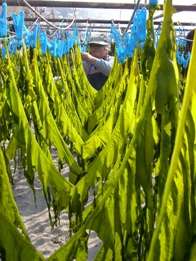
Various species of seaweed are able to extract toxic compounds from seawater, says Shinichi Nagata of the Environmental Biochemistry Group, at Kobe University, Japan, and colleagues at Shimane University and Nankai University, China.

They point to the brown seaweed, Undaria pinnatifida, known as wakame in Japan, and note that it has been the focus of research in this area for almost a decade.

Biomedical research in developing countries is the kind of ethical condundrum we all think about.

On one hand, infectious diseases may cause up to half of all deaths in undeveloped nations(1), so no one needs advanced treatments more. On the other hand, these are human clinical trials of experimental drugs and socio-economic status does not make you a lab monkey in any sort of culture we want to call civilized.

So what is the solution? Americans are primarily distrustful of government, the bigger the worse, so a global body dictating clinical trials would be treated with a lot of skepticism but the perfect solution can't be moving ethical targets determined by various nations, funding sources or institutions as is done now.

Scientists probing volcanic rocks from deep under the frozen surface of the Arctic Ocean have discovered a special geochemical signature until now found only in the southern hemisphere. The rocks were dredged from the remote Gakkel Ridge, which lies under 3,000 to 5,000 meters of water; it is Earth’s most northerly undersea spreading ridge.

The Gakkel extends some 1,800 kilometers beneath the Arctic ice between Greenland and Siberia. Heavy ice cover prevented scientists from getting at it until the 2001 Arctic Mid-Ocean Ridge Expedition, in which U.S and German ice breakers cooperated.

This produced data showing that the ridge is divided into robust eastern and western volcanic zones, separated by an anomalously deep segment. That abrupt boundary contains exposed unmelted rock from earth’s mantle, the layer that underlies the planet’s hardened outer shell, or lithosphere.

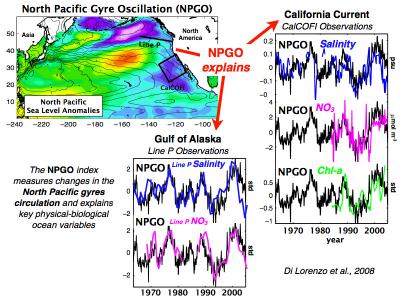
Scientists at the Georgia Institute of Technology have discovered a new climate pattern called the North Pacific Gyre Oscillation.

This new pattern explains changes in the water that are important in helping commercial fishermen understand fluctuations in the fish stock. They also believe that as the temperature of the Earth warms, large fluctuations in these factors could help climatologists predict how the oceans will respond in a warmer world.

“We’ve been able to explain, for the first time, the changes in salinity, nutrients and chlorophyll that we see in the Northeast Pacific,” said Emanuele Di Lorenzo, assistant professor in Georgia Tech’s School of Earth and Atmospheric Sciences.

The electromagnetic fields produced by incubators alter newborns’ heart rates, says a small study published in the Fetal and Neonatal Edition of Archives of Disease in Childhood.

The research team assessed the variability in the heart rate of 43 newborn babies, none of whom was critically ill or premature.

The risks of developing Alzheimer’s disease differ between the sexes, with stroke in men, and depression in women, critical factors, according to research published in the Journal of Neurology Neurosurgery and Psychiatry.

French researchers based their findings on almost 7000 people over the age of 65, drawn from the general population in three French cities. None had dementia, but around four out of 10 were deemed to have mildly impaired mental agility (mild cognitive impairment) at the start of the study.

Their progress was assessed two and four years later. In all, just over 6.5% of those deemed to be cognitively impaired developed dementia over the next four years. In just over half, no change was seen. Just over one in three reverted to normal levels of cognitive agility.

