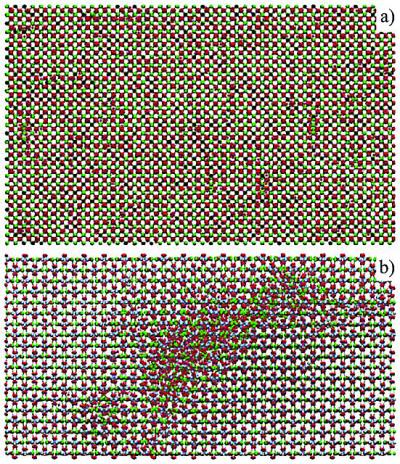





Researchers at the Department of Energy's Pacific Northwest National Laboratory found that the restless movement of oxygen atoms heals radiation-induced damage in the engineered ceramic yttria-stabilized zirconia.

This may lead to development of radiation-resistant materials for nuclear power plants and waste storage.

Scientists Ram Devanathan and Bill Weber modeled how well that ceramic and other materials stand up to radiation. "If you want a material to withstand radiation over millennia, you can't expect it to just sit there and take it. There must be a mechanism for self-healing," said Devanathan.

Your contact lenses of the future could be completely biodegradable. A soft contact lens is a hydrogel - a solid, gelatinous mass consisting of water incorporated in a polymer network.

Now Berkeley researchers have developed a technique for the formation of hybrid materials from synthetic polymers and proteins, fusing the biological functions of proteins with the processing properties of plastics.

Aaron P. Esser-Kahn and Matthew B. Francis say they have successfully synthesized a green-fluorescing biodegradable gel that responds to changes in pH value and temperature. These polymer-protein hybrid materials can also be used in sensors, nanomachine parts, or drug-delivery systems.

BEIJING, April 18 /PRNewswire/ --

BioDuro & The National Center for Safety Evaluation of Drugs (NCSED, the "Center") in Beijing announce their receipt of full AAALAC accreditation. BioDuro and the Center collaborate to offer preclinical toxicology and large animal DMPK for clients worldwide.

Dean Rodwell, BioDuro's Vice-President of Toxicology stated "Although we have been operating under this standard for over a year, it is exciting to receive this important, internationally recognized official accreditation. BioDuro is now working closely with the Center to attain US FDA GLP certification and expects to be operating at this level by the third quarter of 2008."

MORRIS TOWNSHIP, New Jersey, April 18 /PRNewswire/ --

-- Organic Revenue Growth Across All Regions -- Cash from Operations and Free Cash Flow Up 25% -- Continued Aggressive Repositioning to Benefit Future Periods -- Major Contract Wins with Embraer, Gulfstream, and Airbus -- Full-Year Earnings per Share Guidance Moved to High End of Previous Range

LONDON, April 18 /PRNewswire/ -- Manpower Software plc, a leading provider of workforce optimisation solutions, is pleased to announce that the new P&O cruise ship, Ventura, will be using MAPS Maritime Suite to provide operational efficiencies across crew scheduling.

Ventura is the latest addition to the P&O Cruise fleet and will launch its service this week in Southampton. The Ventura will set a new standard in 21st century cruising introducing new features, more choice and new experiences for her passengers. Weighing in at 115,000 tonnes, with a 3,600 passenger capacity, it is the largest superliner built for the British market.

HANNOVER, Germany, April 18 /PRNewswire/ -- The rising price of gasoline and concern about greenhouse gas emissions (GHG) are bringing fuel efficiency to the forefront in Germany. Fuel efficiency and alternative fuels will be topics of an expert panel at the Clean Moves Exposition during the Hannover Messe on April 23, 2008 at 10:30am.

Alternative fuels are playing a significant role in reducing auto emissions. Research is developing biofuels from non-food crops (i.e. "second generation") such as biomass-to-liquid or cellulosic ethanol and it is likely that additional sources such as biomethane or hydrogen could be available for automobiles in the near future.

Increased carbon dioxide in the Earth's atmosphere is causing microscopic ocean plants to produce greater amounts of calcium carbonate (chalk) - with potentially wide ranging implications for predicting the cycling of carbon in the oceans and climate modelling.

That is the conclusion of an international team of scientists led by investigators based at the UK's National Oceanography Centre, Southampton and the University of Oxford, published in Science, on 18 April 2008.

Co lead-author, Dr M Debora Iglesias-Rodriguez, of the University of Southampton's School of Ocean and Earth Science at the National Oceanography Centre, Southampton said:

A connection between vitamin D level and the risk of developing breast cancer has been implicated for a long time, but its clinical relevance had not yet been proven.

Sascha Abbas and colleagues from the working group headed by Dr. Jenny Chang-Claude at the German Cancer Research Center (Deutsches Krebsforschungszentrum, DKFZ), collaborating with researchers of the University Hospitals in Hamburg-Eppendorf, have now obtained clear results: While previous studies had concentrated chiefly on nutritional vitamin D, the researchers have now investigated the complete vitamin D status. To this end, they studied 25-hydroxyvitamin D (25(OH)D) as a marker for both endogenous vitamin D and vitamin D from food intake.

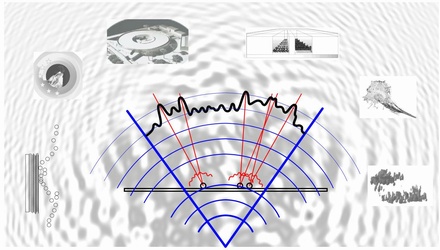
When a hypothetical, quantum-scale balloon is popped in a vacuum, do the particles inside spread out as predicted by classical mechanics or do something else, since matter at the infinitesimally small quantum scale is both a wave and a particle, and its location cannot be fixed precisely because measurement alters the system?

The question is deceptively complex, since quantum particles do not look or act like air molecules in a real balloon. Theoretical physicists at the University of Southern California have an answer Heisenberg would be proud of.

Quantum-scale chaos exists … sort of.

Supporters of legalizing euthanasia and those who wish to develop better palliative care services can help rather than combat each other, according to a study published on bmj.com.

Palliative care concerns itself with the relief of the pain, symptoms and stress of serious illness while improving the quality of life for patients and their families. Euthanasia is where a third party causes the death of a patient. But the traditional view that palliative care and euthanasia are two alternative and antagonistic causes is not necessarily the case, say researchers.

Jan Berheim and colleagues from the End-of-Life Care Research Group of the Vrije Universiteit Brussel, reviewed historical, regulatory and epidemiological evidence from Belgium, which was the second country to legalise euthanasia in 2002, and has some of the best developed provisions for palliative care, third only to Iceland and the UK.


