









Generic drugs and biosimilar drugs are conceptually equivalent, though a biosimilar drug is not a generic drug.

Generics drugs are equivalent copycats - exact copies of molecules that were developed at great cost by companies that are now outside the patent window. Biosimilars are instead copies of molecules of a protein nature involving biological processes and materials, like cell culture or the extraction of products using living organisms, which is why there is no product that is exactly the same as the other. Basically, that is why the name 'biosimilar' exists, because unlike generics they are not 'bioequivalent' to the drugs that have survived rigorous testing and approval. 

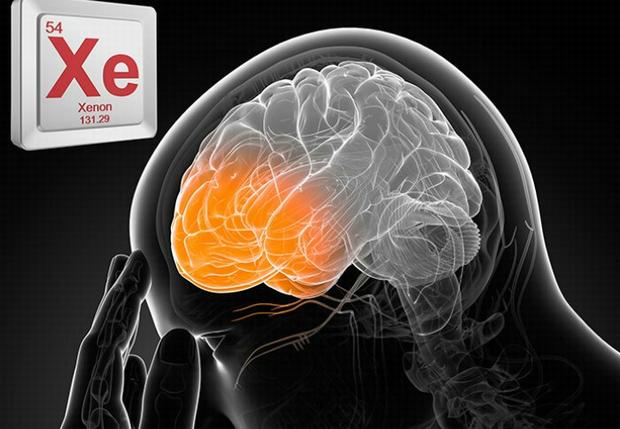
Treatment with xenon gas reduces the extent of brain damage after a head injury reduces the extent of brain damage, according to a new study.

Head injury is the leading cause of death and disability in people under 45 in developed countries - due primarily to falls and road accidents. The primary injury caused by the initial mechanical force is followed by a secondary injury which develops in the hours and days afterwards. This secondary injury is largely responsible for patients' mental and physical disabilities, but there are currently no drug treatments that can be given after the accident to stop it from occurring.

Tiny single-cell organisms living underground could help with the problem of nuclear waste disposal, according to a paper in the ISME (Multidisciplinary Journal of Microbial Ecology) Journal.
  This is good news for Americans, since the Obama administration has lost the Yucca Mountain nuclear waste repository application even more often than the U.S. Internal Revenue Service has lost the emails showing they targeted political opponents.

Bacteria with waste-eating properties have been discovered before, but in relatively pristine soils. This is the first time finding microbes that can survive in the very harsh conditions expected in radioactive waste disposal sites.

Reducing hyperactivity in kids may be as simple as getting them out to play.

Kids are full of energy so having them trapped in a classroom all day from a young age isn't easy. For some, it is bordering on impossible and many of those have been saddled with the  Attention Deficit Hyperactivity Disorder (ADHD) label. Rather than putting kids on expensive - and in the case of Ritalin, dangerous - medications, the solution may be as simple as some play time before school starts.

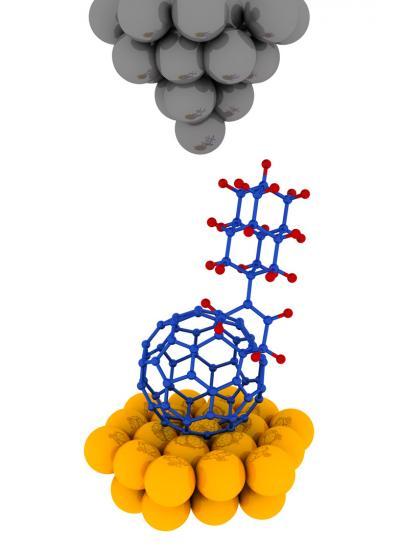
By pairing two unconventional forms of carbon – one shaped like a soccer ball, the other a tiny diamond – scientists have created a molecule that acts as a rectifier - it conducts electricity in only one direction, which means it could be possible to cheaply shrink computer chip components down to the size of molecules.

Positive results from its final preclinical toxicology study of SYN-004 have led Synthetic Biologics to get ready for clinical trials of the anti-infective, second-generation product candidate for Clostridium difficile (C. difficile).

Synthetic Biologics is in the final stages of preparing its SYN-004 IND application for submission to the FDA, with the expectation of initiating Phase Ia and Ib clinical trials in the fourth quarter of 2014, and a Phase II efficacy study in the first half of 2015.


Dora grows up. Credit: Lisa West Photography, CC BY-NC-ND

By Bruce Fuller, University of California, Berkeley


The Orion Nebula. Image credit: NASA http://bit.ly/1rTTyeC

By: Marcus Woo, Inside Science

(Inside Science) -- Interstellar space can be a dusty place, filled with tiny flecks no bigger than a bacterial cell.

But now astronomers have detected particles as big as pebbles, possibly a previously unknown type of dust that may kick-start the production of planets. The presence of these big particles may also suggest that star formation is more efficient than previously thought.


Ideally lollipops, cookies, sugar-sweetened drinks, potato chips and processed meats will never appear in your shopping cart.  

Want to stack the nutrition odds in your favor? The key is good food so here are five things to never let into your shopping trolley: candies, cookies, sugar-sweetened drinks, potato chips and processed meats.

Known as discretionary foods, all five are high in either added sugars, saturated fat or salt. Discretionary foods provide calories but not many nutrients.

