


Even though arsenic is toxic for many organs in the human body, it is used in therapeutic medicine and the treatment of some forms of cancer, and is an active component of drugs against parasitic diseases.
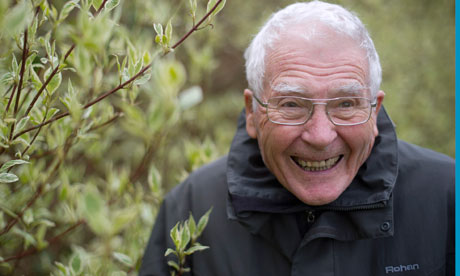
James Ephraim Lovelock, CH, CBE, FRS, Ph.D, aged 92, is a chemist and creator of the Gaia Hypothesis. He is called the 'Godfather of Global Warming'. 

What he was, to most people, was an alarmist more on the order of President Obama's Science Czar John Holdren, a doomsday zealot. And I don't mean 'alarmist' in the American political sense, i.e., anyone who accepts the science of climate change - I mean a real End Of The World Is Nigh prophet.  So silly even the hysterical poster child of Think Progress, Joe Romm, believed Lovelock was over the top.
Wikipedia's user-generated content has made it the world's largest, and most derided, encyclopedia.

Part of the openness model has also led to 'edit wars' when the anonymous "editors" disagree with each other. The dynamics of these conflicts provide an interesting window into collaborative content production and the emergence and resolution of conflicts in an online environment, say researchers led by Taha Yasseri of the Budapest University of Technology and Economics.
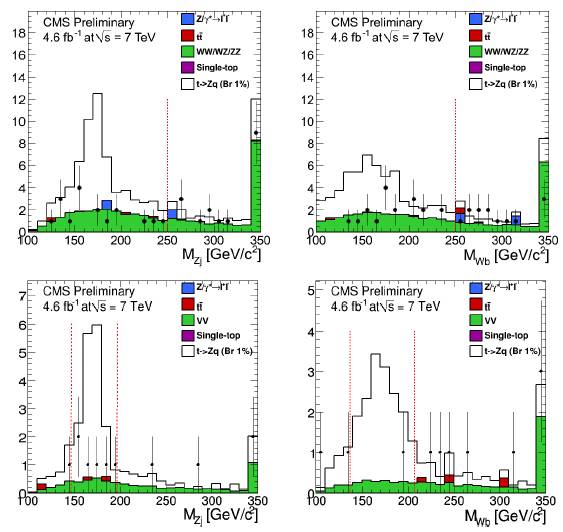
As we near the first week of July, with the start of the International Conference of High-Energy Physics in Melbourne (July 2nd-8th) and the July 4th press release at CERN on the new results of Higgs boson searches by ATLAS and CMS, the attention to new particle searches is understandably increasing. And the question is what the new 8-TeV data produced by the LHC this year will give.

Will the final word on the existence (or absence) of the Higgs boson be said ? Will there be new particle discoveries ? Will the LHC surpass the Tevatron precision on the measurement of the top quark mass ? Is the Standard Model going to show cracks from the result of other, off-the-spotlight  measurements ?
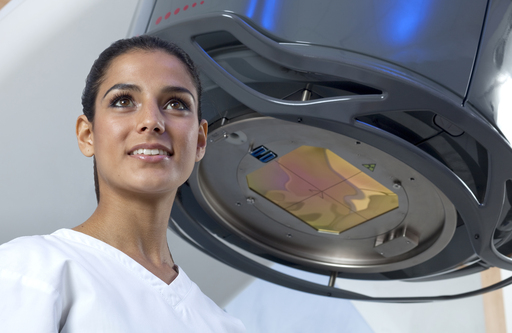
Using 160 high-resolution tungsten leaves and dramatically faster leaf movement, Elekta’s new Agility multi-leaf collimator (MLC) radiation therapy treatment for cancer patients recently received 510(k) clearance (K121328) from the U.S. Food and Drug Administration (FDA), enabling U.S. medical centers to use it for patients with cancer. 

An MLC is device made up of numerous, individual tungsten “leaves,” which shape beams of therapeutic radiation that are delivered from different angles around the patient. Using twice the number of leaves typical of many standard MLC’s, Agility precisely delivers radiation to the unique contours of the tumor, while reducing the risk of exposure to healthy tissue. 
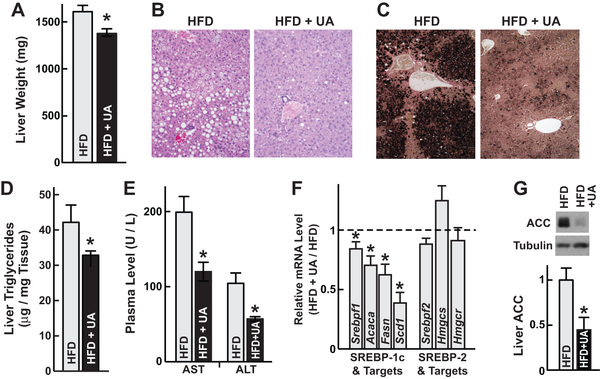
A new study shows that ursolic acid, a natural substance found in apple peel, can partially protect mice from obesity and some of its harmful effects. 
Americans are being beat by Asians again.  Asians do better on international standardized tests, their economies are better; heck, they are even robbing us of that last stronghold of American dominance - obesity. The Chinese have gotten a level of fat in one generation that it took Americans 200 years to accomplish.  Typical overachievers.

It seems European countries are discovering the issue Science 2.0 has discussed about America for many years. Granting student visas and then denying them work ones after their degrees under the guise of job protectionism means educating the best people and then sending them abroad to be competitors.

 The study, "Mobile Talent? The Staying Intentions of International Students in Five EU countries", published by the Research Unit of the Expert Council of German Foundations on Integration and Migration (SVR), compared European frameworks for international students and investigated the staying intentions of 6,239 non-EU international students in the UK, France, Germany, the Netherlands, and Sweden. 

Plant compounds from a South African daffodil may be used to treat depression, according to a University of Copenhagen study, where they tested those substance in a laboratory model of the blood-brain barrier.

Substances from the South African plant species Crinum and Cyrtanthus – akin to snowdrops and daffodils, respectively – have characteristics that enable them to negotiate the defensive blood-brain barrier, a key challenge in all new drug development.

Obviously you should not run out and start eating daffodils just yet.  The lab test does not show which compounds can be used in drug development. 
What does it take for Fritz Vahrenholt, a professor in the Department of Chemistry at the University of Hamburg, a former German environment minister and one of the fathers of the German environmental movement (and, unlike everyone at Desmogblog.com, who simply write character assassinations the moment people deviate from their worldview, has actually devoted a lot of time and money to replacing fossil fuels) to lose faith in the Intergovernmental Panel on Climate Change (IPCC)?

It took working with the IPCC.


