






With all the fuss surrounding whether the l'Aquila earthquake should have been predicted, the point is often missed that it didn't need to be.  As the recent Christchurch earthquake has shown, a city can survive relatively unscathed without an accurate prediction.  All it takes is proper preparation.

Chris Anderson and Michael Wolff have written in Wired magazine that, in their words, “the web is dead.” The web, as opposed to the Internet. Michael Wolff was recently on the Brian Lehrer Show on WNYC, our local public radio station, talking about the article. Here’s Brian Lehrer’s introduction:

At its peak around the year 2000, the web accounted for more than 50% of all Internet traffic in the United States.

Bantam Books must be happy. Prior to going on sale, Stephen Hawking's* new book 'The Grand Design' has attracted considerable media attention. (See for instance: CNN, BBC, Yahoo, Telegraph, and LA Times.)

What's this fuzz all about? 
I like to guide your attention to the work of Denis Sciama who in his article "On the origin of inertia" (see reference below) has put a very interesting view not only on the origin of inertia, but also on the origin of gravity. His approach is only very very indirectly related with entropy. However, his approach includes the influence of the whole of the universe.
A 19th century nursery rhyme called "What Are Little Boys Made Of?" and generally attributed to Robert Southey goes

"What are little boys made of?  What are little boys made of? Snips and snails and puppy-dogs' tails, that's what little boys are made of.
What are little girls made of? What are little girls made of? Sugar and spice and everything nice,
that's what little girls are made of."

But these days in Australia both genders, even only four weeks old, are made of sugar.  And salt and high-fat foods, despite health authorities recommending exclusive breastfeeding to six months of age.
This week is World Water Week. The big event takes place in Stockholm Sweden where Stockholm International Water Institute SIWI is organizing this yearly event. The World Water Week is an unique forum for the exchange of views and experiences between scientific, business, policy and civic sectors from around the globe.

One of the most common forms of self-medication in capitalist societies surely has to be retail therapy.  Is there really a problem that can't be solved by a new pair of shoes, or the latest iWhatever?  Interestingly, one of the problems people might be trying to overcome is the fear of death.

The insecurity and anxiety caused by the fear of death has some interesting effects on people.  When people are reminded of their inevitable demise, they become more rooted in their outlook on life, this is called Terror Management Theory.  For example, we start to see people with similar values and beliefs more positively, and people with different beliefs more negatively than we ordinarily would (1).  We also become more reluctant to use cultural symbols like flags in improper ways (2).

I have railed against this particular form of lawn care hokum ever since I first heard about it, but I think I might have narrowed down it's origin. The story goes like this.

Rumors float around the net saying that sugar can control weeds in your lawn. Guys like me say "no, it really can't." Internet responds with "you're in the pocket of the big chemical companies."
Coincidences in physics and in a sense infinite coincidences in mathematics are coincidences also because of the contingency around them: It could have been different. There is this type of coincidence that Tommaso was writing about that exemplifies contingency: We meet on the street wearing the same style of red jacked, both having a hole torn by some sort of mishaps.
Psychotropic medications -  psychostimulants like Ritalin,  antidepressants like Prozac and antipsychotics like Haldol - during pregnancy increase the probability of birth defects, according to a  University of Copenhagen study.  

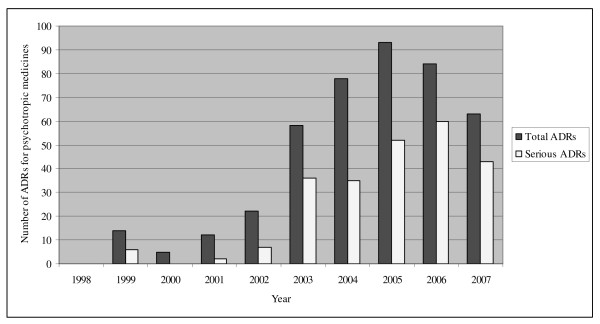
In Denmark, psychotropic medications were associated with 429 adverse drug reactions in Danish children between 1998 and 2007 -  more than half of the 429 cases were serious and several involved birth defects, such as birth deformities and severe withdrawal syndromes.

