You're sitting in a room filled with a gazillion air molecules - how likely is it that most of those air molecules will spontaneously end up in the corner of the room opposite of where you're sitting?
Most likely you're not too concerned about this scenario, because something like that, a massive fluctuation in the distribution of air molecules in the room, is extremely unlikely, to put it mildly.
When you have zillions of air molecules bouncing around in a room (zillions here being on the order of 10^28 molecules of the various gases that make up air), the fluctuations away from the average distribution are miniscule.
If you own a computer you have probably gotten a 'virus' but there have been no major outbreaks of mobile phone viral infection despite the fact that over 80 percent of Americans now use these devices. A team headed by Albert-Laszlo Barabasi, director of the Center for Complex Network Research at Northeastern University, set out to explain why this is true.
A class of drugs already approved as cancer treatments might also help to beat alcohol addiction. That's the conclusion of a discovery in flies of a gene, dubbed happyhour, that has an important and previously unknown role in controlling the insects' response to alcohol.
Animals with a mutant version of the gene grow increasingly resistant to alcohol's sedative effects, the research shows. The researchers report further evidence that the gene normally does its work by blocking the so-called Epidermal Growth Factor (EGF) pathway. That EGF pathway is best known for its role in cancer, and drugs designed to inhibit the EGF receptor, including erlotinib (trade name Tarceva) and gefitinib (trade name Iressa), are FDA-approved for the treatment of non-small cell lung cancer.
New research provides exciting genetic insight into a rare syndrome that first appeared in the medical literature in the mid 1800s with the case of Julia Pastrana, the world's most notorious bearded lady. The study, published by Cell Press in the May 21st issue of the American Journal of Human Genetics, reveals intriguing molecular clues about the pathogenesis of this mysterious condition that has captured the attention of the public since the Middle Ages.
Is there an advantage to being short? I think so, but I'm biased, being what the French call quite "petite." Good things come in small packages, I say.
But now at least one person with a presumably solid foundation in science backs me up. So when I hear yet another short joke (and I think I've heard 'em all), I can smile smugly to myself and know that all you leviathan, Brobdingnagian skyscrapers over 5' (or for the non-abnormal-American-measurementally inclined, 1.5 m) are actually at a disadvantage.
Later In Life
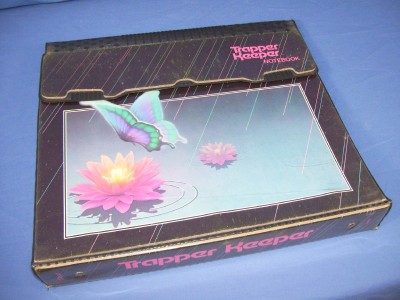
Like dolphins and unicorns, butterflies exist mostly to show artists what to draw on
Trapper Keepers. As such, you wouldn’t expect there to be a major difference between the genders. Natural selection should be working hard to keep all butterflies at maximum cuteness. Yet selection giving the males a slight advantage in the arms race to the Lisa Frank drawing board, and scientists want know why.
Practically every month in my Chemistry World there appears an article where a group of workers has synthesized some natural product with amazing ingenuity. But why, to use a Hogwartsian analogy, does one go to such great effort when the greenhouse is only a walk away from the potions department? So let us join Professor Sprout for a walk around the Hogwarts greenhouses.
Some plant families, such as the Cruciferae and the Labiatae are remarkably free from poisonous plants, whereas others such as the Araceae all seem to come with a toxic hazard warning sign.
Using ESO's Very Large Telescope, astronomers have succeeded in measuring the size of giant galaxy Messier 87 - or what they thought there should be. It turns out that its outer parts have been stripped away - and no one is yet sure how. To add to its woes, the galaxy also appears to be on a collision course with another giant galaxy in this dynamic cluster.
Scientists sometimes regret when the terms they use in a scientific way get a colloquial meaning. In physics, Peter Higgs has to like his name recognition but might edit out references to a '
God particle' if he had it to do over again, and in biology a week doesn't go by that biologists won't complain that people misunderstand the term 'junk DNA.'
Well, 'junk' had a meaning before biology and everyone knew it - junk DNA in biology isn't garbage yet it dominates the genome and seems to lack specific functions. Why nature would force the genome to carry so much excess baggage is a puzzle still unsolved.
Cambridge University researchers have discovered that whether someone is a 'people-person' may depend on the structure of their brain: the greater the concentration of brain tissue in certain parts of the brain, the more likely they are to be a warm, sentimental person. Interestingly, the orbitofrontal cortex and ventral striatum have previously been shown to be important for the brain's processing of much simpler rewards like sweet tastes or sexual stimuli.