We’re all aware of the severe genetic and unpleasant physical consequences that result from reproducing with a closely related relative. Aside from unfortunate aesthetics, inbreeding can also lead to the extinction of small organismal populations. This decrease of reproductive success is referred to as “inbreeding depression” and mechanisms that cause it are still being debated by biologists.
The Antarctic landmass is losing its frontier status. Housing thousands of decreasingly rugged inhabitants in heated, internet-ready comfort, it’s been so well-mapped that we even know
where to find the donuts. Underwater, however, is a different story. Harsh temperatures, currents, pressure and ice surfaces have kept the submerged landscapes of glaciers inaccessible to all but penguins and Morgan Freeman’s voiceover.
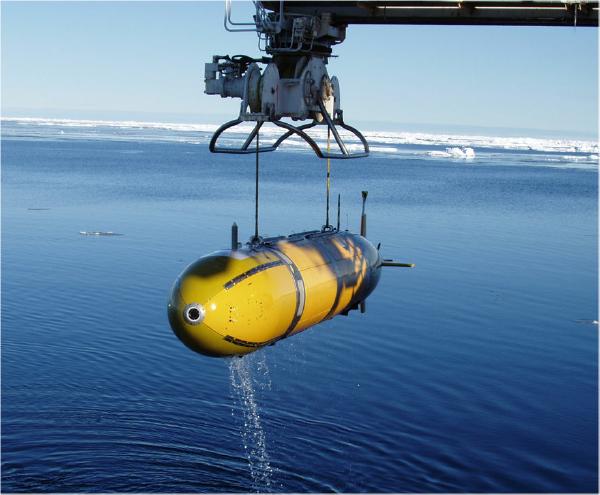
A joint US-British team has nominated a new Ernest Shackleford to explore the uncharted Antarctic underwater. But this time around, he’s a robot.
There is an old gag which asks: "Why don't polar bears eat penguins?" The answer is that polar bears inhabit arctic regions, whereas penguins inhabit antarctic regions, as shown
here.
There is a saying that the poles are where weather is made. Weather is a heat-driven system, the temperature difference between the poles and the equator, amongst other things, drives our weather. Air is constantly being either warmed or cooled in a planet-wide system, but air is warmed much more in the equatorial regions and cooled more in the polar regions. (Please note: this is a deliberate
oversimplification for purposes of explanation.)
In the days of Columbus, dead men could tell no tales. Today, dead men can tell us a lot and science has just taken that forensic interrogation to new heights.
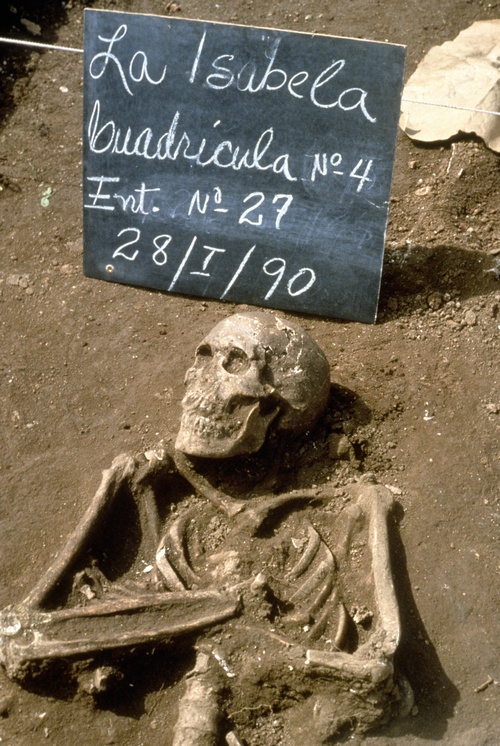
A team of researchers from the University of Wisconsin-Madison is extracting the details of the lives of crew members who remained on the island of Hispaniola after the second voyage of Christopher Columbus to America in 1493-94.
Scientists say they have detected giant twisting waves in the lower atmosphere of the Sun, shedding light on the mystery of the Sun's corona, the region around the Sun, extending more than one million kilometres from its surface, which has a vastly higher temperature than its surface. The findings of this investigation could help us understand more about the turbulent solar weather and its affect on our planet.
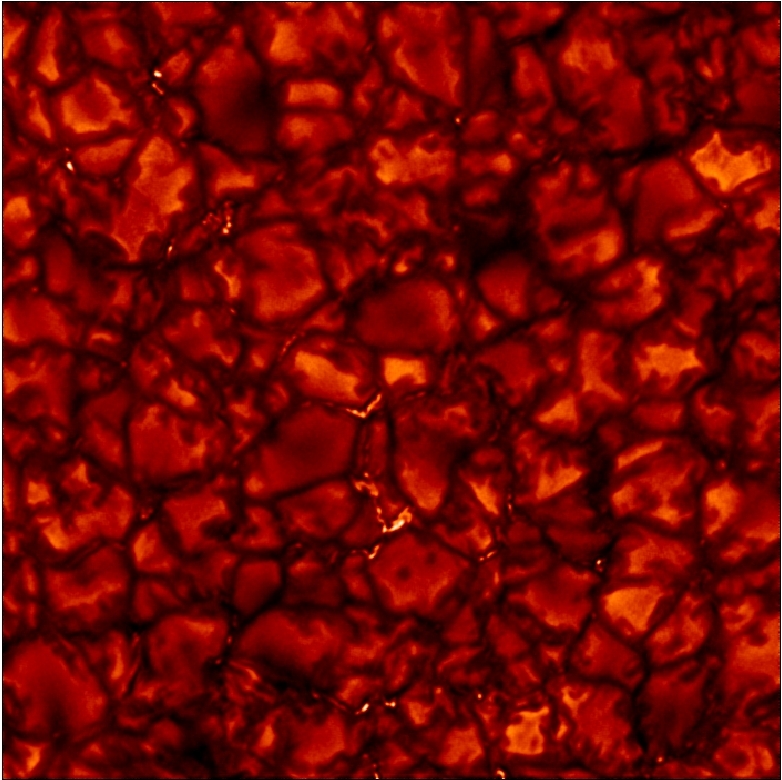
The massive solar twists, known as Alfvén waves, were discovered in the lower atmosphere with the Swedish Solar Telescope in the Canary Islands by scientists from Queen's University Belfast, the University of Sheffield and California State University Northridge.
New research on the reporting of medical treatments in the Australian media showed slight improvements in accuracy but the overall quality of health reporting remained poor, says a study of more than 1,200 health news stories published by Australian media outlets. It found that over the past four years there was only small improvement in quality of coverage of the availability of new treatments, the potential harm of interventions and accurate analysis of any benefits.
If you're Scottish- or Irish-born, you are twice as likely as natives to die an alcohol-related death if you move to England or Wales; surprising because most people assume if they die in Wales it will be from a beer bottle smashed over their head at a Cardiff game rather than the alcohol itself.
But it's not just a risk for natives of the British Isles; the research conducted by the University of Edinburgh and the Office for National Statistics also found that men born in India – but living in England and Wales – had similar rates of alcohol-related death as Scottish- and Irish-born people.
Tobacco isn't exactly famous for its health benefits, though the mental health effect of a Fonseca and a port after a nice steak is well-documented, but now scientists have succeeded in using genetically modified tobacco plants to produce medicines for several autoimmune and inflammatory diseases, including diabetes.
In a study published in the March issue of Cortex, researchers used a brain scanner to record the activity in each stage while people were in the process of drawing faces. The researchers found that the captured visual information is stored as a series of locations or action plans to reach those locations. It is as if the brain remembers key locations and then 'connect the dots' with a straight or curved line to achieve the desired image on the page.
Participants who had no particular expertise as artists were studied using an MRI scanner to measure levels of oxygen in the brain. They viewed black and white cartoons of faces and were asked to reproduce them using pencil and paper.
The bacterium Escherichia coli is part of the healthy human intestinal flora. However, E. coli also has pathogenic relatives that trigger diarrhea illnesses: enterohemorrhagic E.coli bacteria. During the course of an infection they infest the intestinal mucosa, causing injury in the process, in contrast to benign bacteria.