

Imaging lung cancer requires both precision and innovation and clinical positron emission tomography (PET) imaging reates advanced whole-body parametric maps, which allow quantitative evaluation of tumors and metastases throughout the body, according to research announced at the 2015 Annual Meeting of the Society of Nuclear Medicine and Molecular Imaging (SNMMI). 

During my 25-year-career in drug discovery research, when I told people what I did for a living, I ran into the same response over and over: "How can you work for such an evil industry?" 
Yet, after even brief discussions of what the jobs in profession were really like— that being, a fierce devotion to finding treatments for the worst diseases in the face of an overwhelming array of nearly impossible obstacles—virtually everyone I spoke with changed their opinions. 

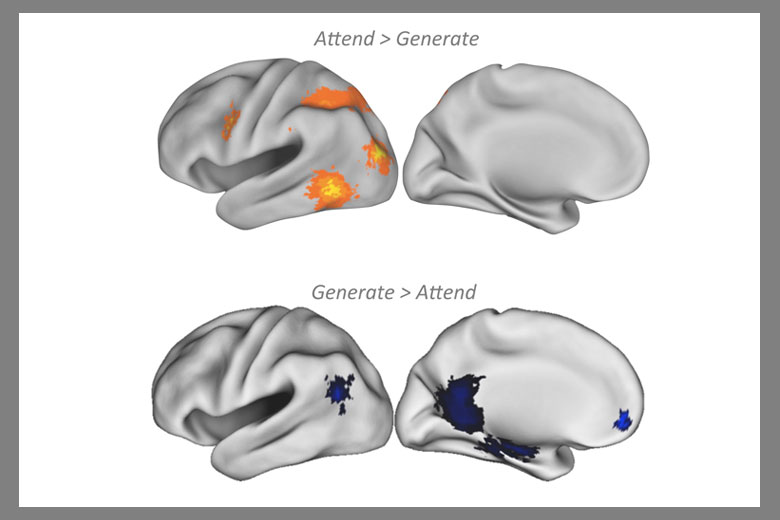
Real-time brain scans coupled with a machine-learning algorithm can reveal whether a person has memory of a particular subject, but with a little bit of concentration people can easily hide their memories from the computer.

Memory is obviously important, in areas like eyewitness testimony, medicine and even marketing. Programs that can read a person's brain scan data and surmise whether that person is experiencing a memory could be important for those reasons.

But with just a little bit of coaching and concentration, subjects are easily able to obscure real memories, or even create fibs that look like real memories, on brain scans. For cooperative subjects, things are good, but for high-stakes situations knowing they can be spoofed is important.

Everyone, it seems, has been talking about “dad bod” – what defines it, who possesses it and whether or not women actually love it.

It all began with an innocuous article on a college news website, penned by a Clemson University student named Mackenzie Pearson.

“The dad bod is a nice balance between a beer gut and working out,” she wrote. “While we all love a sculpted guy, there is just something about the dad bod that makes boys seem more human, natural, and attractive.”

Pearson’s post first made the rounds on social media, before receiving mainstream media attention.

Dr. Oz has done a lot of things right recently.

Electronic devices that can be injected directly into the brain, or other body parts, have been a staple of science fiction for decades - and they seem a little closer to reality if you visit Charles Lieber's chemistry lab at Harvard. 

A team of international researchers, led by Lieber, has developed a method for fabricating nano-scale electronic scaffolds that can be injected via syringe. Once connected to electronic devices, the scaffolds can be used to monitor neural activity, stimulate tissues and even promote regenerations of neurons.  

In collaboration with the United States Department of Agriculture, the University of the Basque Country Department of Analytical Chemistry has identified the volatile compounds in damaged walnuts that insects find attractive and which is threatening the harvests of these nuts in California.

These are the first studies carried out on walnuts which are designed to specify the components of the aroma and which can be used to control the moth pests in the most sustainable way, besides helping to cut the use of pesticides and control agents. 

Food wasted means money wasted which can be an expensive problem especially in homes with financial constraints. A new study from the Cornell Food and Brand Lab and the Getulio Vargas Foundation, shows that the top causes of food waste in such homes include buying too much, preparing in abundance, unwillingness to consume leftovers, and improper food storage.

"Fortunately," notes lead author Gustavo Porpino, PhD candidate at the Getulio Vargas Foundation and Visiting Scholar at the Cornell Food and Brand Lab, "most of the factors that lead to food waste, can be easily remedied by simple changes in food buying, preparing, and storing."

Northern Ireland recently changed the law to criminalize the act of paying for sex. This follows a trend set in Sweden, where selling sex is legal but buying it is criminalized.

I’m on the back seat of the lower deck of a number 37 bus, outside the red-brick and Portland stone clock tower of Lambeth Town Hall in Brixton, south London.  Although I know exactly where I am, I feel lost. I no longer know whether to trust what my eyes are telling me.

I’ve just been told by a leading vision scientist that I have no real depth perception. 

In other words, I have never seen in three dimensions the way most people do.