
It is believed by the social sciences that all people have bias - and a "bias blind spot," meaning that they are less likely to detect bias in themselves than others.

If so, how blind are we to our own actual degree of bias, and how many of us think we are less biased than others?

A new paper outlines a tool to detect gaps, a kind of implicit association test but for bias blind spots rather than making you feel racist, and it reveals that believing that you are less biased than your peers has detrimental consequences on judgments and behaviors, such as accurately judging whether advice is useful.

In many animal species, the chromosomes differ between the sexes - the male has a Y chromosome. This contains genes which result in the development of male characters and reproductive organs. If there is no Y chromosome, the organism will be a female.

But in birds and some other animals, it is the other way round and females have their own sex chromosome, the W chromosome. 

The ESO's Very Large Telescope has revealed what appears to be an aging star giving birth to a butterfly-like planetary nebula.

These observations of the red giant star L2 Puppis, from the ZIMPOL mode of the newly installed SPHERE instrument, also clearly showed a close stellar companion. 

The aviation industry is a major source of greenhouse gas emissions. In 2011 aviation contributed around 3% of Australia’s emissions. Despite improvements in efficiency, global aviation emissions are expected to grow 70% by 2020 from 2005. While the industry is seeking new renewable fuel sources, growing biofuels takes up valuable land and water that could be otherwise used to grow food.

But what if you could grow biofuels on land nobody wants, using just seawater and sunlight, and produce food at the same time?

Honest behavior is much like sticking to a diet - you have to be ready for temptation and consider the long-term consequences.

A recent paper says it is the first study to test how the two separate factors of identifying an ethical conflict and preemptively exercising self-control interact in shaping ethical decision-making.

In a series of experiments that included common ethical dilemmas, such as calling in sick to work and negotiating a home sale, the researchers found that two factors together promoted ethical behavior: Participants who identified a potential ethical dilemma as connected to other similar incidents and who also anticipated the temptation to act unethically were more likely to behave honestly than participants who did not.

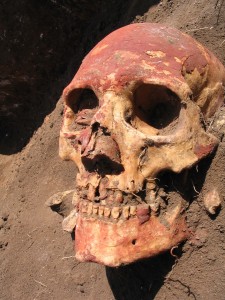
Wide-scale population migrations and changes took place in Europe and Asia during the Bronze Age that shaped the demographic structure of present-day Europeans and Asians, as revealed by an analysis of 101 genomes from ancient Eurasian humans.

A new study published in this week’s Nature presents one of the largest studies of ancient DNA samples to date.  The research provides insights into the prevalence of certain traits such as skin color or lactose tolerance, as well as data relevant to the understanding the spread of Indo-European languages.

Women aged 50-69 years who attend mammography screening reduce their risk of dying from breast cancer by 40 percent compared to women who are not screened - according to a major international review of the latest evidence on breast cancer screening. Overall, women who are invited to attend mammography screening have a 23 percent risk reduction in breast cancer death (owing to some attending and some not), compared with women not invited by routine screening programs.

In the UK, this relative risk translates to around eight deaths prevented per 1,000 women regularly attending screening, and five deaths prevented per 1,000 women invited to screening.

Cancer has overtaken cardiovascular disease, which includes heart disease and stroke, as the UK's No 1 killer--but only among men, reveals research published online in the journal Heart.

Cardiovascular disease is still the most common cause of death among women, and kills more young women than breast cancer, the figures show.

The researchers used the latest nationally available data (2012-13) for each of the four UK countries and the Cardiovascular Disease Statistics 2014 report compiled for the British Heart Foundation (BHF) to quantify the prevalence of cardiovascular disease, and find out how it's treated, how much it costs, and how many deaths it causes.

U.S. government-issued dietary recommendations continue to evolve over time but a new paper by scholars claims that the main source of dietary information used by the U.S. Government’s 2015 Dietary Guidelines Advisory Committee (DGAC) is scientifically flawed because the underlying data are primarily informed by memory-based dietary assessment methods (M-BMs) (e.g. interviews and surveys).(1)

In an editorial response nutrition experts suggest that the purported flaws are well-appreciated by nutritional researchers and can be mitigated by using multiple data sources, resulting in valid data.(2)
The discovery by an undergraduate student of tubes of plasma drifting above Earth has made headlines in the past few days.

Many people have asked how the discovery was made and, in particular, how an undergraduate student was able to do it.

The answer is a combination of an amazing new telescope, a very smart student and an unexpected fusion of two areas of science.