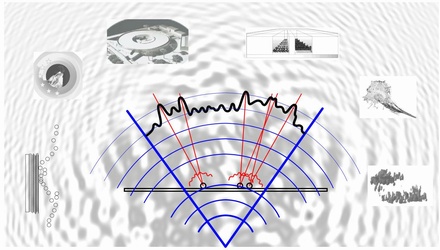
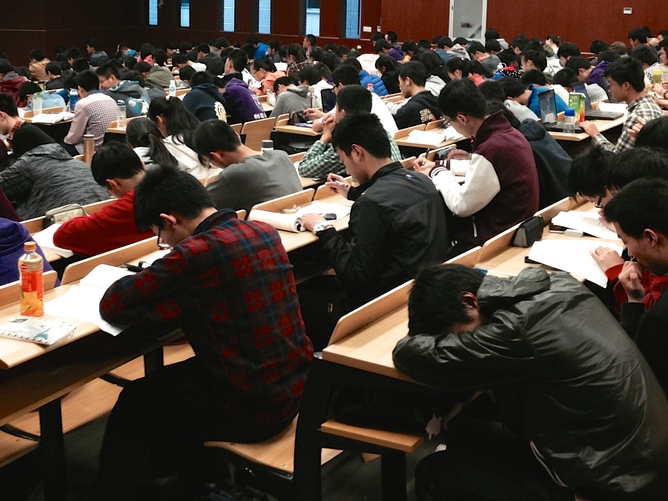
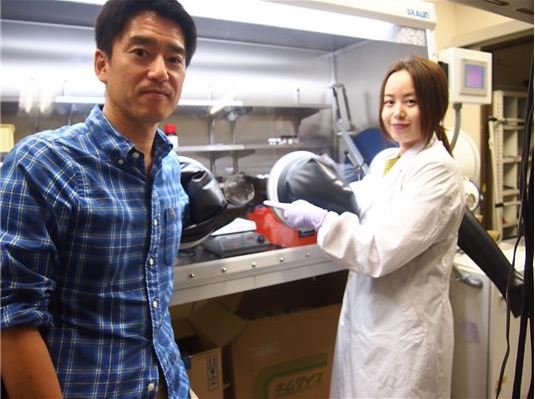
The capacity to recall specific facts deteriorates with age, but other types of memory do not, according to research conducted by Wilma Koutstaal (University of Minnesota) and Alaitz Aizpurua (UPV/EHU-University of the Basque Country), which concludes that the memory of older adults is not as deficient as has been thought until now. Elderly people remember fewer specific details than younger people and, in general, both groups retain concrete information about events experienced better than abstract information. The main difference is to be found in the capacity to remember more distant facts: youngsters remember them better.
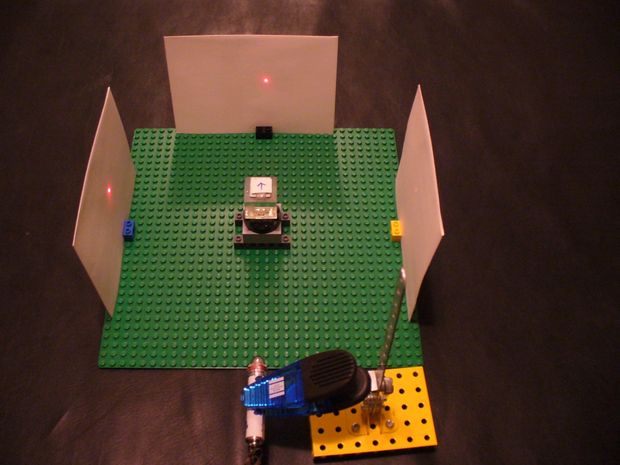
I finally took apart a broken computer projector. Some of the optics were burned or broken but I managed to salvage several lenses, mirrors, filters, and a curious little glass cube.
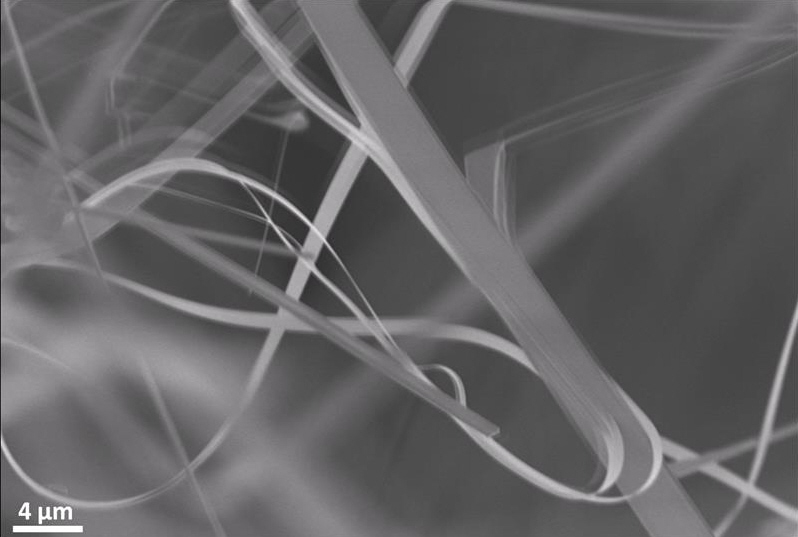
Scientists synthesizing nanoscale materials using simple and highly efficient flame technology have been able to “bake” nanostructures using tin oxide, which opens up a wide field of possible new applications.
Metal oxides in bulk form are generally brittle, which limits their desired utilizations. Their one-dimensional (1D) structures, such as belt-like nanostructures, exhibit much more application potential because of their high surface to volume ratio. This ratio induces extraordinary physical and chemical properties, including a high degree of bendability.
New research has shown that pH lowering of municipal water supplies, a common strategy used to control the release of soluble lead from plumbing materials, can affect corrosion of cast iron water mains, resulting in increased levels of both particulate iron and particulate lead in drinking water.
The results of intensive laboratory and field testing of samples from a municipal system following consumer complaints of "red water" and the link between iron corrosion and lead leaching are described in an article in Environmental Engineering Science.
A growing number of colleges and universities are emerging as multinational organizations – creating start-up versions of themselves in foreign countries.
Those vacationing in western France may drive past a campus of Georgia Institute of Technology. Similarly, those visiting Italy may come across a Johns Hopkins nestled in Bologna; or if you are a visitor to Rwanda, you may come across a Carnegie Mellon University campus.

There was something unusual about our recent research collaboration on the science of light, colors and the perception of rainbows: one member of the team wrote his best science in the 1220s.
The Ordered Universe Project sees humanities scholars and scientists come together to carefully read the 13th century scientific treatises of the English polymath Robert Grosseteste. It was set up in the hope that the work’s technical content might receive a deeper analysis than previous scholarship.

Humans can discriminate tens of thousands of odors. While we may take our sense of smell for granted, it adds immeasurably to our quality of life: the aroma of freshly brewed coffee; the invigorating smell of an ocean breeze or a field of wildflowers; the fragrance of a lover or the natural smell of a baby.
Our olfactory sense also warns us when milk turns rancid, when a baby’s diaper needs changing and when there’s a gas leak. In animals, the sense of smell is essential for detection of predators and other dangers, food sources and mates.
Esophageal cancer rates in men have increased by 50 percent since the early 1980s, with new United Kingdom cases reaching almost 6,000, according to the latest figures which show that the number of men diagnosed with esophageal cancer has rapidly risen from around 2,700 cases three decades ago to 5,740 cases in 2012.
Given the changes in population size this equates to a 50 percent increase from 15 to 23 cases per 100,000 people. In women, the increase is much smaller with around 10 percent more now developing the disease compared to the 80s. Now 2,802 women are diagnosed with esophageal cancer. Esophageal cancer rates in women for 2012 are 9 per 100,000.
Currently different data formats between research centers pose a challenge to oceanographic researchers, but a new project is going to make marine data sets more easily accessible to researchers worldwide.
The ODIP II project will use NERC’s vocabulary server to ‘translate’ between these different data semantics. ODIP II is a collaboration between the USA, Australia and the EU. By the time it is complete, in May 2018, it aims to have developed a means of seamlessly sharing and managing marine data and coordinating the existing regional marine e-infrastructures.
A Silicon (Si) quantum dot (QD)-based hybrid inorganic/organic light-emitting diode (LED) that exhibits white-blue electroluminescence has been created.
A hybrid LED is expected to be a next-generation illumination device for producing flexible lighting and display, and this is achieved for the Si QD-based white-blue LED.
The Si QD hybrid LED was developed using a simple method; almost all processes were solution-based and conducted at ambient temperature and pressure. Conductive polymer solutions and a colloidal Si QD solution were deposited on the glass substrate. The current and optical power densities of the LED are, respectively, 280 and 350 times greater than those reported previously for such a device at the same voltage (6 V).