



Office workers should be on their feet for a minimum of 2 hours daily during working hours, recommends the first ever UK guidance designed to curb the health risks of too much cumulative sitting time, and published online in the British Journal of Sports Medicine.

This daily quota should eventually be bumped up to 4 hours a day, breaking up prolonged periods of sitting with the use of sit-stand desks, standing based work, and regular walk-abouts, it says.

The guidance, which evaluates and distils the available evidence, was drawn up by a panel of international experts, at the behest of Public Health England and a UK community interest company (Active Working CIC).

University of Adelaide researchers have discovered cerebral palsy has an even stronger genetic cause than previously thought, leading them to call for an end to unnecessary caesareans and arbitrary litigation against obstetric staff.

In an authoritative review published in the American Journal of Obstetrics & Gynecology, members of the Australian Cerebral Palsy Research Group, based at the University of Adelaide's Robinson Research Institute, argue that up to 45% of cerebral palsy cases can have genetic causes.

I dissected a Tyrannosaurus rex in front of television cameras.

That may be the most surreal sentence I’ve ever written. So let me explain. I’m part of a team that built a life-sized model of Tyrannosaurus rex and then cut it up. The spectacle is a bloody, gory two-hour television special called T. rex Autopsy. The premise may seem absurd. But this is a whole new way of communicating science to the public, and it has been one of the highlights of my career.

I've talked before about how life on present day Mars could be vulnerable to Earth life. If only humans could be sterilized of other life, like a plant seed. But sadly, we can't do that, and it would kill us to try. Recent ideas, and experiments in Mars simulation chambers suggest that there may be liquid water habitats on the surface of Mars. They may be no more than droplets of water a few millimeters in diameter, but these still are, as Nilton Renno said, "Swimming pools for a microbe".

Unless you are a wealthy elite, an electric car is not a viable option because gasoline still rules when it comes to energy density, meaning electric has a more limited range, and solar energy is not close to replacing fossil fuels yet so the environment is not winning.
Archaeologists have found evidence of an ancient gold trade route between the south-west of the UK and Ireland, which would mean people were trading gold between the two countries as far back as the early Bronze Age, 2500 B.C.

The finding was made after measuring the chemical composition of early gold artifacts in Ireland and discovering that the objects were actually made from imported gold, rather than Irish. The gold is most likely to have come from Cornwall, which means the symbiotic link between Ireland and England is even farther back then believed.


Lunula and discs. Credit National Museum of Ireland
Physics at the UAB have found the “formula” to construct a quantum thermometer with enough precision to detect minute fluctuations in temperature in regions as small as the inside of a cell. The research appears today in the journal Physical Review Letters.

Researchers from the UAB and the University of Nottingham, in an article published today in Physical Review Letters, have fixed the limits of thermometry, i.e., they have established the smallest possible fluctuation in temperature which can be measured. The researchers have studied the sensitivity of thermometers created with a handful of atoms, small enough to be capable of showing typical quantum-style behaviours.

An advisory committee to the Food and Drug Administration (FDA) has recommended the approval of the drug, flibanserin, for premenopausal women who are distressed by a lack of sexual desire. The little pink pill has been hailed as “Viagra for women”.

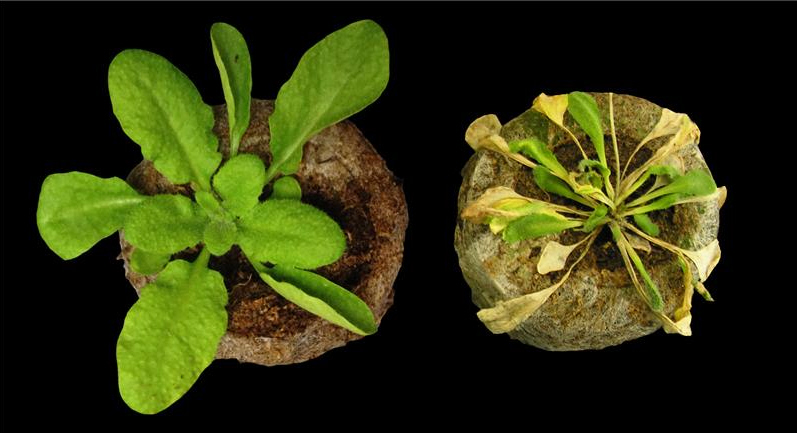
In the animal kingdom, predators use a full range of strategies, such as camouflage, speed and optical illusions, to catch their prey. Meanwhile, prey species resort to the same tactics to escape from their predators. Such tricks are also used at the molecular level, as discovered by researchers from the CNRS, INRA, CEA and INSERM in one of the most devastating bacterial plant pathogens in the world, which bypasses plant cell defenses by preventing an immune signaling from being triggered.

Even more surprising is the fact that plant cells have developed a receptor incorporating a decoy intended to catch the invader in its own trap. 

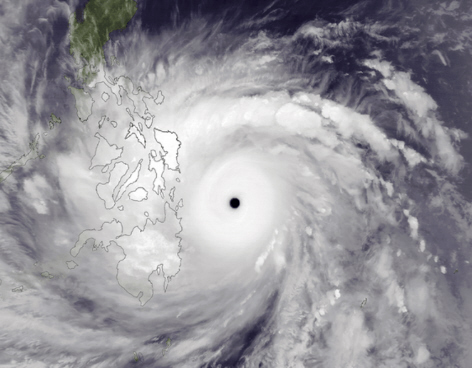
Every year, typhoons over the western North Pacific – the equivalent to hurricanes in the North Atlantic – cause considerable damage in East and Southeast Asia.

Super Typhoon Haiyan of 2013, one of the strongest ocean storms ever recorded, devastated large portions of the Philippines and killed at least 6,300 people. It set records for the strongest storm at landfall and for the highest sustained wind speed over one minute, hitting 315 kilometers (194 miles) per hour when it reached the province of Eastern Samar.


