Scientists have made an important step towards understanding how volcanic eruptions happen, after identifying a previously unrecognised potential trigger.
An international team of researchers from the University of Liverpool, Monash University and the University of Newcastle (Australia) think their findings could lead to new ways of interpreting signs of volcanic unrest measured by satellites and surface observations.
Dr Janine Kavanagh, from the University of Liverpool's School of Environmental Sciences and lead author of the research paper, said: "Understanding the triggers for volcanic eruptions is vital for forecasting efforts, hazard assessment and risk mitigation.
Serengeti
means means “endless plains” in the Maasai language, but Tanzania's Serengeti National Park, which extends into Kenya towards the Mau Forest, the largest virgin montane forests of Africa, faces huge pressures from population growth.
It's easy for western elites who already have homes and educations to lament encroachment of nature by humans living in remote areas without either, but the real world needs more practical solutions. A new EU program is attempting to help.
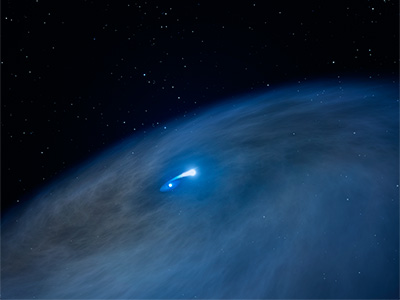
NaSt1, about 3,000 light years away, was discovered a few decades ago and identified as a Wolf-Rayet star, a rapidly evolving star that is much more massive than our Sun.
Wolf-Rayet stars lose their hydrogen-filled outer layers quickly, exposing a super-hot and extremely bright core where helium is fusing into heavier elements. Typically, Wolf-Rayet stars have two outward flowing lobes of material, but in this case, the Hubble observations revealed a pancake-shaped disk of gas encircling the star. This vast disk is more than 3 billion billion kilometers wide. It seems to have formed in the last few thousand years from an unseen companion star that snacked on its outer atmosphere.
The star is so weird that astronomers have nicknamed it “Nasty 1”.
Ubiquitous social media giant Facebook announced has launched a mobile app called Instant Articles. The app allows news stories provided by a number of partners to be read in their entirety by iPhone users.
Those who download the app will spared the inconvenience of clicking on a link in their usual newsfeed, which may take up to ten seconds to direct to another page.
When you mention rich ecosystems that are vital for life on Earth, people tend to think of rainforests, but ocean plankton are actually just as crucial. The microscopic beings that drift on the upper layer of the oceans are globally referred to as "plankton"; together they produce half of our oxygen, act as carbon sinks, influence our weather, and serve as the base of the ocean food web that sustains the larger fish and marine mammals that we depend upon or draw delight from.
"Beyond the cutting-edge science that was developed thanks to our collaborative work with the Tara Expéditions Foundation, this adventure is also about showing people all over the world how important the ocean is for our own well-being," says Eric Karsenti, director of Tara Oceans, from EMBL and CNRS.
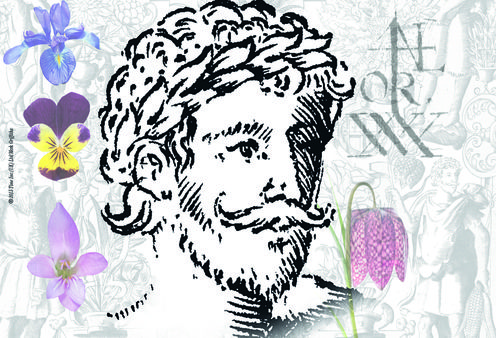
Historian
Mark Griffiths claims to have cracked a code in an Elizabethan book on botany to discover a true portrait of Shakespeare made within the bard’s own lifetime.
The find has been hailed as “the literary discovery of the century” by the editor of Country Life – the magazine in which the details of Griffiths' process will be revealed. Yet other scholars, including the Director of the Shakespeare Institute, professor Michael Dobson, remain skeptical.
If you want cheap medicine, Canadian taxpayers make it possible to get a great deal, but when it comes to new medicines, Canada is behind similar countries, according to a new report which ranks it 16th out of 18 comparable OECD countries.
Only 23% of 141 Health Canada-approved new medicines were included in public plans, ranking Canada 17 out of 18 there. Public drug plans in Canada make new medicines available only on a conditional, case-by-case basis, resulting in more administration, longer wait times for patients before beginning treatment, increased paperwork for physicians and no guarantee that patients will receive coverage.
The
report further notes that:
A remote galaxy shining with infrared light equal to more than 300,000,000,000,000 suns has been discovered using data from NASA's Wide-field Infrared Survey Explorer (WISE. The galaxy, belongs to a new class of objects nicknamed extremely luminous infrared galaxies, or ELIRGs.
The galaxy, known as WISE J224607.57-052635.0, may have a behemoth black hole at its belly, gorging itself on gas, but is certainly the most luminous discovered to-date.
Supermassive black holes grow by drawing gas and matter into a disk around them. The disk heats up to beyond-sizzling temperatures of millions of degrees, blasting out high-energy, visible, ultraviolet, and X-ray light. The light is blocked by surrounding cocoons of dust. As the dust heats up, it radiates infrared light.
The LHC has finally started to produce 13-TeV proton-proton collisions!
The picture below shows one such collision, as recorded by the CMS experiment today. The blue boxes show the energy recorded in the calorimeter, which measures particle energy by "destroying" them as they interact with the dense layers of matter that this device is made up of; the yellow curves show tracks reconstructed by the ionization deposits of charged particles left in the silicon detector layers of the inner tracker.
A new analysis of Ice Age birds has revealed that many of the birds were larger - despite what is commonly believed, the authors say it reflects the richness and greater productivity of the environment in the Ice Age.
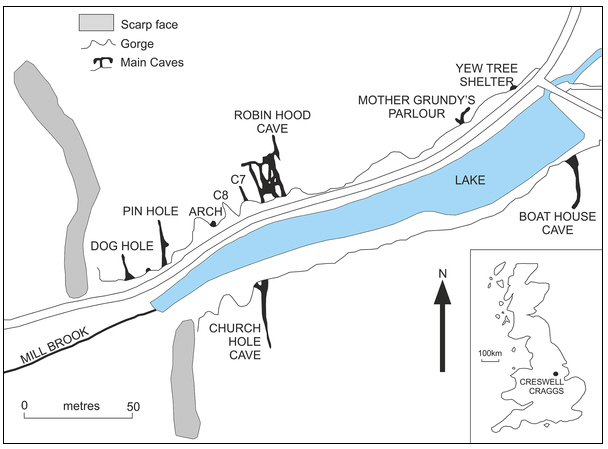
They picture an unusual mix of birds in one space, the Middle Palaeolithic (Marine Oxygen Isotope Stage 3) deposits of Pin Hole, Creswell Crags, Derbyshire in England, and a distinct Neanderthal Dawn Chorus.