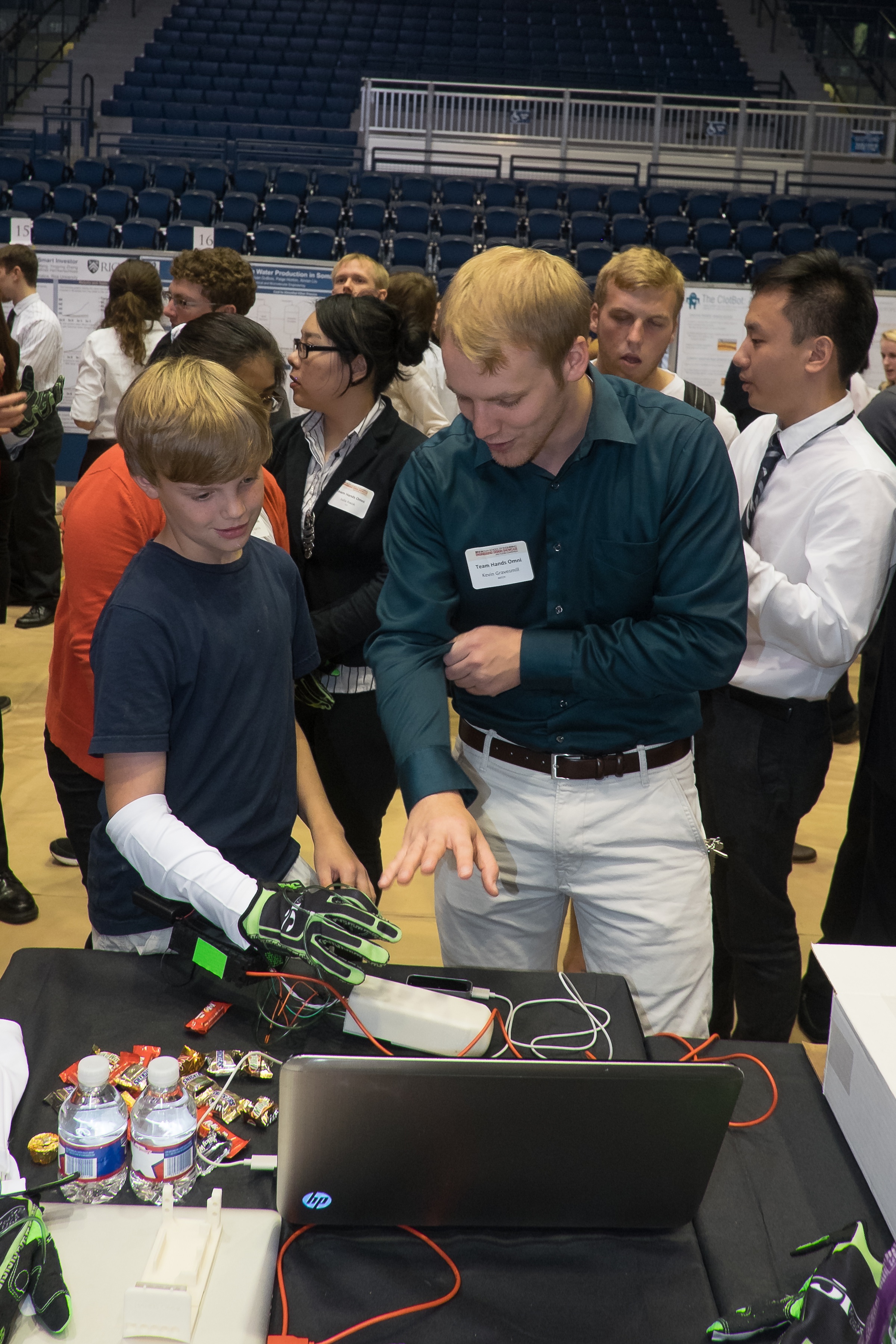


Forget vibrating joysticks on your Xbox, Rice University engineers have invented a glove that allows a user to feel what they're touching while gaming.

The Hands Omni provides a way for gamers and others to feel the environments they inhabit through the likes of three-dimensional heads-ups displays. The prototype glove, developed with Houston sponsor Virtuix and introduced at the George R. Brown School of Engineering Design Showcase, is intended to provide next-generation force feedback to the fingertips as players touch, press or grip objects in the virtual world. The project won the "People's Choice" award at Rice's recent Engineering Design Showcase. 

Invasive plants animals and plants spreading is not new but predicting the dynamics of these invasions is difficult - and of great ecological and socioeconomical interest. Scientists at Eawag and University of Zurich are now using computer simulations and small artificial laboratory worlds, to study how rapid evolution makes invaders spread even faster. 

Today the New York Times published an op-ed by Newt Gingrich where he calls for doubling the budget for the National Institutes of Health here in the US. 

Who can argue with that?
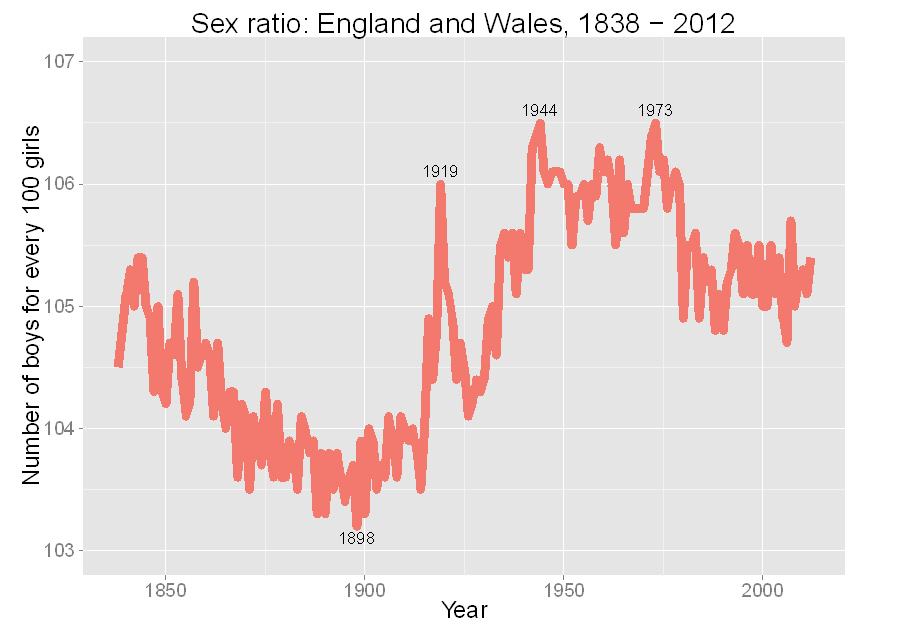
More boys are born than girls: this is a fact. In the western world the ‘sex ratio’ is around 105 boys for every 100 girls, but this changes through history.  And rather remarkably, it peaks at the end of wars: another fact.

So why are more boys born at the end of wars? Now we have to leave the comfort of facts, and are left with contested opinions.

Reliable official statistics on births in England and Wales have been available since the late 1830s, and the graph below shows the sex ratio from then until 2012. There are clear spikes at the end of the two World Wars, but also around 1973, while there is also a steady dip towards the end of the nineteenth century – we’ll come to that later.

Ghana has plenty of water. So why do its people buy plastic pouches from street vendors? Shaun Raviv investigates.

A new study of animal behavior suggests that evolution is hard at work when it comes to the acrobatic courtship dances of  male golden-collared manakins, a tropical bird species.

There are about 60 different species of manakins, most of which perform, to some degree, a physically complex display behavior to both court females and to compete with other males. The new study says the ability to detect testosterone in the body regulates the acrobatic courtship and competitive behavior - bird brawn.  

We are still trying to fully understand the extent of the damage caused by the Deepwater Horizon oil spill five years ago, one of the worst environmental disasters in US history.

Neutrinos are among the more mysterious elementary particles in the universe: Billions of them pass through every cell of our bodies every second, yet these ghostly particles are incredibly difficult to detect, because they don’t appear to interact with ordinary matter.

Scientists have set theoretical limits on neutrino mass, but researchers have yet to precisely detect it.

51 Pegasi b, about 50 light-years from Earth in the constellation of Pegasus, was discovered in 1995 and was the the first confirmed exoplanet to be found orbiting an ordinary star like our Sun. It is the archetypal Hot Jupiter -- a class of planets similar in size and mass to Jupiter but orbiting much closer to their parent stars.

Since that landmark discovery, more than 1,900 exoplanets in 1,200 planetary systems have been confirmed, but 51 Pegasi b now has another "first" - it has been directly detected in visible light.

While growing new organs from a patient's own stem cells is the future much of science is working toward, there are people who need replacements right now. Lots of people are signed up for organ donations in the case of death but willing donors is not the biggest obstacle.

It's time.

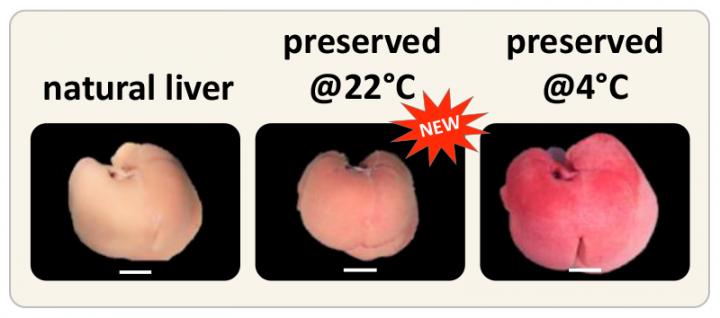
 Typically, donor organs have to kept in preservation solution at a static temperature of 4 °C and the clock begins ticking immediately. They have short preservation times; about 6 hours for hearts and lungs, 12 hours for livers, and 20 hours for kidneys.