



Evidence from human famines and animal studies suggests that starvation can affect the health of descendants of famished individuals, but how such an acquired trait might be transmitted from one generation to the next?

A new study involving roundworms finds that starvation induces specific changes in small RNAs and that these changes are inherited through at least three consecutive generations, apparently without any DNA involvement. The paper in Cell offers new evidence that the biology of inheritance is more complicated than previously thought.

Weddings are a lot of stress, primarily for women but, in 19 states, lots of men as well.

Math can ease some of the burden - at least when it comes to cutting the cake. But first let's show how it works with just two people. Believe it or not this topic has generated a substantial amount of literature in the last 20 years. A cake is, of course, a metaphor for a divisible, heterogeneous good to a mathematician, and there an 'adjusted winner' can be created.

Cigarette smokers are more likely to commit suicide than people who don't smoke. People with psychiatric disorders have higher suicide rates and tend to smoke, so the connection is so simple an epidemiologist could make it.

But psychiatrists now say that smoking itself may increase suicide risk and that bans and higher taxes on smoking cause suicide rates to drop. 

The Centers for Disease Control and Prevention says that in 2010, nearly 40,000 people killed themselves in the US and every death that occurs in the United States is recorded in a database managed by the National Center for Health Statistics. The authors classified each suicide death based on the state where the victim had lived, as well as how aggressive that state's tobacco policies were.

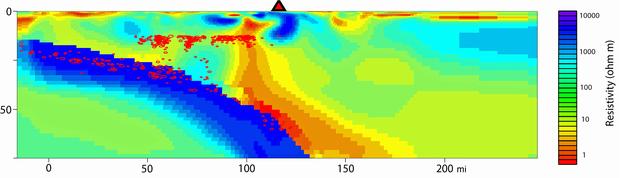
By measuring how fast Earth conducts electricity and seismic waves, researchers have created a detailed picture of Mount Rainier's deep volcanic plumbing and partly molten rock that will erupt again someday.

In an odd twist, the image appears to show that at least part of Mount Rainier's partly molten magma reservoir is located about 6 to 10 miles northwest of the 14,410-foot volcano, which is 30 to 45 miles southeast of the Seattle-Tacoma area.

But that could be because the 80 electrical sensors used for the experiment were placed in a 190-mile-long, west-to-east line about 12 miles north of Rainier. So the main part of the magma chamber could be directly under the peak, but with a lobe extending northwest under the line of detectors.

Niacin has been a mainstay cholesterol therapy for 50 years but it should no longer be prescribed for most patients due to potential increased risk of death, dangerous side effects and no benefit in reducing heart attacks and strokes, according to an editorial in the New England Journal of Medicine.

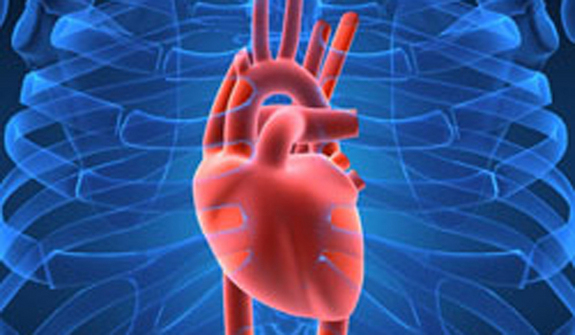
Cardiologists have developed a minimally invasive gene transplant procedure that changes unspecialized heart cells into 'biological pacemaker' cells that keep the heart beating. 

The laboratory animal research is the result of a dozen years of research with the goal of developing biological treatments for patients with heart rhythm disorders who currently are treated with surgically implanted pacemakers.

In the United States, an estimated 300,000 patients receive pacemakers every year.  If future research is successful, the procedure could be ready for human clinical studies in about three years.  

Investigators have identified a gene that underlies a very rare but devastating autoinflammatory condition in children. Several existing drugs have shown therapeutic potential in laboratory studies, and one is currently being studied in children with the disease, which the researchers named STING-associated vasculopathy with onset in infancy (SAVI).  

Autoinflammatory diseases are a class of conditions in which the immune system, seemingly unprovoked, becomes activated and triggers inflammation. Normally, the inflammatory response helps quell infections, but the prolonged inflammation that occurs in these diseases can damage the body.

The Affordable Care Act and data portability is forcing health care providers, and the vendors who service them, to accelerate development of tools that can handle an expected deluge of data and information about patients, providers and outcomes.

The volume of data is daunting - so are concerns about interoperability, security and the ability to adapt rapidly to the lessons in the data, writes Dana Gardner at Big Data Journal.

That is why Boundaryless Information Flow, Open Platform 3.0 adaptation, and security for the healthcare industry are headline topics for The Open Group’s upcoming event, Enabling Boundaryless Information Flow on July 21 and 22 in Boston, he notes.

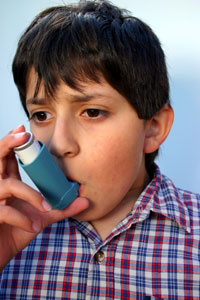
Corticosteroid drugs used in inhalers by children with asthma may suppress their growth, suggest two new systematic reviews published in The Cochrane Library which focus on the effects of inhaled corticosteroid drugs (ICS) on growth rates.

The authors found children's growth slowed in the first year of treatment, although the effects were minimized by using lower doses.

What 'separates us from the animals'. as the saying goes?

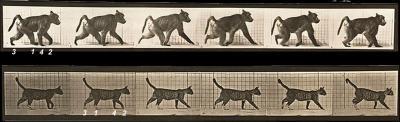
Not a lot. We're all animals, of course, but among primates there is an easy-to-spot difference: Humans tend to walk in lateral sequences, a foot down and then a hand on the same side and then moved in the same sequence on the other side, while apes and other non-human primates walk in a diagonal sequence, in which they put down a foot on one side and then a hand on the other side, continuing that pattern as they move along. 

What does that mean? It means quadripedalism, such as among the five Turkish siblings profiled in the 2006 BBC2 documentary "The Family That Walks on All Fours", does not mean anyone is devolving or evolving backwards.

