




Pediatric musculoskeletal Staphylococcus aureus bacterial infections have been evolving over the past decade, with more children diagnosed with the more virulent, methicillin-resistant Staphylococcus aureus (MRSA) today than 10 years ago. The result is longer hospitals stays, more surgeries and other related complications.

The researchers studied pediatric patients with culture-positive Staphylococcus aureus, including MRSA and the less toxic methicillin-sensitive Staphylococcus aureus (MSSA), between January 2001 and June 2010, at a major urban children's hospital.

It's counterintuitive but young and middle-aged fibromyalgia patients report worse symptoms and poorer quality of life than older patients, accordin to Mayo Clinic results.

Fibromyalgia is a non-specific disorder, 
characterized by widespread musculoskeletal pain with fatigue, sleep, memory and mood issues that most often strikes women. The researchers presented their findings at the American College of Rheumatology annual meeting and suggest the disorder plays out differently among different age groups. 

Living with Type 1 and Type 2 diabetes means constant awareness of blood glucose (sugar) levels to ensure they remain stable.

People do this at home using electronic devices that read sugar levels in a tiny drop of blood but a team of German researchers has devised a new, non-invasive method; infrared laser light applied on top of the skin measures sugar levels in the fluid in and under skin cells.  

"This opens the fantastic possibility that diabetes patients might be able to measure their glucose level without pricking and without test strips," said lead researcher, Werner Mäntele, Ph.D. of Frankfurt's Institut für Biophysik, Johann Wolfgang Goethe-Universität.

At some point the exact number of particles in a group becomes irrelevant.

But does when a collection of elements forms a "heap" ?

In recent experiments using ultracold atoms, Heidelberg physicists succeeded in observing the transition to a many-body system well described by an infinite number of particles - a problem philosophers call the sorites paradox. The essential question is when a collection of elements forms a "heap". 
A young woman, a student it seems from the looks of it, shuffles in bursts behind me, in small steps one foot just in front of the other, staring down, then she wiggles her head at the sky, then she shuffles on, stops, wiggles her head. The light turns green and I walk, just walk away as if I must, feeling guilty, fleeing the scene. I steal one more look, also because she is attractive. An easy mark for the fulfillment of desires – who would ever know if I took her in the dusk? I feel for her, feel pain, but then I envy her, too. She has an aim, perhaps. She has her way of dealing with her pains, perhaps she deals with them in this way, and I am here to suffer, not able to deal with mine nearly as efficient. Broken robots, but nature’s, never not “broken”.

On Oct. 23rd, 2013, the sun emitted a solar flare, classified as an M9.4 flare on a scale from M1 to M9.9 - near the very top of the scale for M class flares.

Solar flares are powerful bursts of radiation. Harmful radiation from a flare cannot pass through Earth's atmosphere to physically affect humans on the ground, but when they are intense enough they can disturb the atmosphere in the layer where GPS and communications signals travel. Such radiation can disrupt radio signals for as long as the flare is ongoing, anywhere from minutes to hours.

Crystals form the basis for the penetrating icy blue glare of car headlights - they could also be fundamental to the future in solar energy technology?

Manufactured alloy crystals, such as indium gallium nitride or InGaN, form the light emitting region of LEDs, for illumination in the visible range, and of laser diodes (LDs) in the blue-UV range.  

In an article recently published in the journal Applied Physics Letters, researchers revealed the fundamental aspect of a new approach to growing InGaN crystals for diodes, which promises to move photovoltaic solar cell technology toward record-breaking efficiencies.

3K3A-APC, an experimental drug, appears to reduce brain damage and eliminate brain hemorrhaging in older stroke-afflicted mice and stroke-afflicted rats with co-morbid conditions such as hypertension, according to a new study.

The paper finds that 3K3A-APC may be used as a therapy for stroke in humans, either alone or in combination with the FDA-approved clot-busting drug therapy tPA (tissue plasminogen activator). Clinical trials to test the drug's efficacy in people experiencing acute ischemic stroke are expected to begin recruiting patients in the U.S. in 2014.

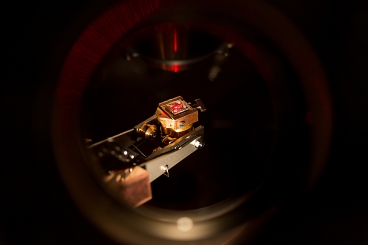
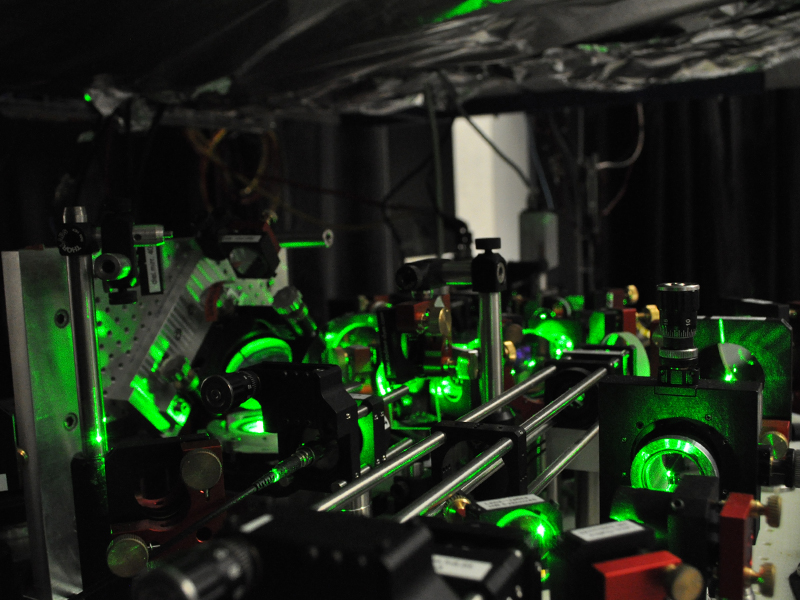
Researchers have made a step toward the creation of materials that can be 'tuned' just by shining a light on them - they have succeeded in producing and measuring a coupling of photons and electrons on the surface of an unusual type of material called a topological insulator. This type of coupling had been predicted by theorists but never observed.

Their method involves shooting femtosecond (millionths of a billionth of a second) pulses of mid-infrared light at a sample of material and observing the results with an electron spectrometer, a specialized high-speed camera the team developed.

Thermoelectric materials were discovered in the 19th century and have the remarkable property that heating them creates a small electrical current - but adopting them to the 21st century has been a challenge.

