The compounded effects of climate change and land development are taking a toll on California butterflies, says an analysis conducted by scientists from UC Davis and the University of Nevada, Reno. The new analysis, scheduled to be published online this week in the Proceedings of the National Academy of Sciences, gives insights into how a major and much-studied group of organisms is reacting to the Earth's warming climate.
Why are some people willing to take risks by gambling on "longshot" payoffs while, on the other hand, taking the opposite tack by buying insurance to reduce their risks? An international team of economists and molecular geneticists says the answer can be found in our genetic makeup.
In an article recently published online in PLoS ONE, researchers combined the tools of experimental economics and molecular genetics to examine the role of a well-characterized
gene, monoamine oxidase A (MAOA), in predicting whether subjects are more likely to buy the lottery or insurance (or both) under well-controlled laboratory conditions.
Writing in the
Proceedings of the National Academy of Sciences, researchers say the subtle but ongoing pressures of human evolution could explain the seeming rise of disorders such as autism, autoimmune diseases, and reproductive cancers. They suggest that certain adaptations that once benefited humans may now be helping such ailments persist in spite of – or perhaps because of – advancements in modern culture and medicine.
The team first presented their research at the Arthur M. Sackler Colloquium, co-sponsored by the National Academy of Science and the Institute of Medicine. Colloquium presentations described in the current paper include research suggesting that:
A new study conducted by scientists in France concludes that the alluring eye makeup worn by ancient Egyptians also may have been used to help prevent or treat eye disease by doubling as an infection-fighter. The study appears in the January 15 issue of Analytical Chemistry.
The researchers note that thousands of years ago the ancient Egyptians used lead-based substances as cosmetics, including an ingredient in black eye makeup. Some Egyptians believed that this makeup also had a "magical" role in which the ancient gods Horus and Ra would protect wearers against several illnesses. Until now, however, modern scientists largely dismissed that possibility, knowing that lead-based substances can be quite toxic.
A molecule called Alda-1 can repair Aldehyde dehydrogenase 2 (ALDH2), an often defective alcohol metabolism enzyme that affects an estimated 1 billion people worldwide, according to research published Jan. 10 in the advance online edition of Nature Structural and Molecular Biology. The findings suggest the possibility of a treatment to reduce the health problems associated with the enzyme defect.
After alcohol is consumed, it is metabolized into acetaldehyde, a toxic chemical that causes DNA damage. Aldehyde dehydrogenase 2 (ALDH2) is the main enzyme responsible for breaking down acetaldehyde into acetate, a nontoxic metabolite in the body. It also removes other toxic aldehydes that can accumulate in the body.
In an effort to be more environmentally conscious, the United States government is dolling out various rebates and tax credits to consumers who purchase more earth friendly, energy efficient appliances. While the aim of the rebate program may be admirable, economists from the University of Delaware say taxpayers will lose a significant portion of the $300 Million they are contributing to the federal government's appliance rebate program and the energy-saving program could actually increase energy usage. Their analysis is published in the 1st Quarter 2010 issue of the Milken Institute Review.
New research published in Nature Geoscience shows that water levels in the Bering Strait helped drive global climate patterns during ice age episodes dating back more than 100,000 years. The study, led by researchers at the National Center for Atmospheric Research (NCAR), found that the repeated opening and closing of the narrow strait due to fluctuating sea levels affected currents that transported heat and salinity in the Atlantic and Pacific oceans.
As a result, summer temperatures in parts of North America and Greenland oscillated between warmer and colder phases, causing ice sheets to alternate between expansion and retreat and affecting sea levels worldwide.
Concern Who It May
When should one use 'who', and when 'whom'? A simple enough question on the face of it, but in practice a path through a quagmire.
Generally, making a choice between 'who' and 'whom' in constructs does not lead to a significant change in meaning. But it may. Consider the stock phrase "to whom it may concern." Here, the term 'concern' means 'be of interest'. By way of contrast, in the phrase "concern who it may", 'concern' may mean 'trouble', 'worry', or 'annoy'. Annoy who it may!
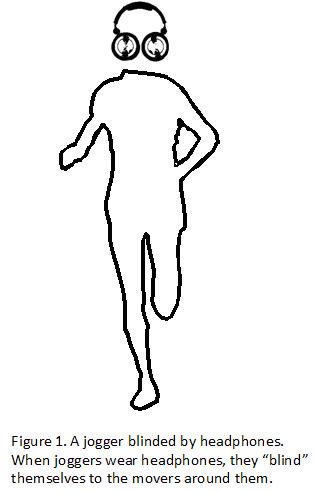
Joggers love their head phones. If you ask them why, they’ll tell you it keeps them motivated. The right song can transform what is by all rights an arduous half hour of ascetic masochism into an exhilarating whirlwind (or, in my case, into what feels like only 25 minutes of ascetic masochism).
Music-driven joggers may be experiencing a pleasurable diversion, but to the joggers and bikers in their vicinity, they’re Tasmanian Devils.