Using insect cells, scientists in Vienna have developed an alternative method for producing the H1N1 vaccine. The researchers say the discovery, detailed in the Biotechnology Journal, will aid the fight against influenza pandemics by speeding up production and making it easier to meet the demand for vaccines.
"Recent outbreaks of influenza highlight the importance of a rapid and sufficient vaccine supply for pandemic and inter pandemic strains," said co-author Florian Krammer from the University of Natural Resources and Applied Life Science in Vienna. "However, classical manufacturing methods for vaccines fail to satisfy this demand."
By studying unknown high-energy sources detected by NASA's Fermi Gamma-ray Space Telescope, radio astronomers have uncovered 17 millisecond pulsars in our galaxy. The discovery was made in less than three months, and such a jump in the pace of locating these hard-to-find objects holds the promise of using them as a kind of "galactic GPS" to detect gravitational waves passing near Earth.
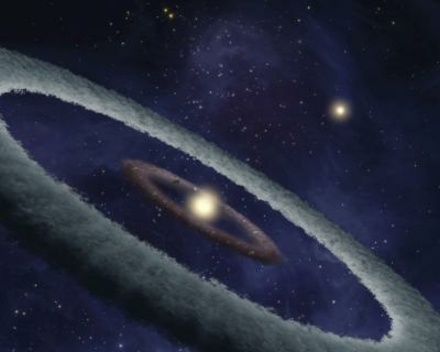
In their quest to find solar systems analogous to ours own, astronomers have determined how common our solar system is--not very. In a study presented today at the American Astronomical Society Meeting in Washington, DC, Ohio State researchers explained that approximately 10 percent of stars in the universe host systems of planets like our own, with several gas giant planets in the outer part of the solar system.
"Now we know our place in the universe," said Ohio State University astronomer Scott Gaudi. "Solar systems like our own are not rare, but we're not in the majority, either."