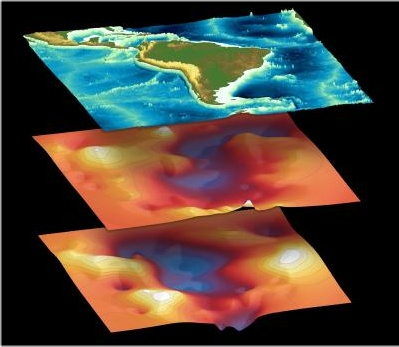
Back in 2005, when a massive 35-mile-long rift broke open in the Ethiopia desert some geologists controversially claimed that a new ocean was forming as two parts of the African continent pulled apart.
Currently, scientists from several countries have supposedly confirmed that the volcanic processes at work beneath the Ethiopian rift are nearly identical to those at the bottom of the world's oceans, and the rift may likely be the beginning of a new sea.
India has over 180 million of wasteland out of which 90 million ha is uncultivable. The degraded and denuded lands arise due to soil erosions as well as secondary salinizations. However Calotropis procera is a potential plant for bioenergy and biofuel production in semi arid regions of the country because it is able to grow on such lands. The plant has a growth potential of 2 dry tones to 40 dry tones per ha depending on the agro climatic conditions of it’s growth. The plant has high level of regeneration potential and could be harvested up to 4 times a year. The plant yields valuable hydrocarbons which could be converted into diesel substitutes. The bio-diesel derived from Calotropis procera is free from NOx gases, S02 and Suspended Particulate Matter (SPM) and has high cetane value.
Concern over the growing levels of greenhouse gases and climate change has been building up for the last decade. Any measure or project reducing the release of greenhouse gases would get a “credit”, regardless of the location of such measure or project since climate is a global phenomenon. The dependence of over 70 percent population in India on the biomass for their daily energy needs has accelerated the depletion of forest resources which according to some estimates now stand as low as 10 percent of the total area. At present there is hardly 0.4 percent forest below 25cm rainfall zone and 1.3 percent above 30 cm rainfall zone.
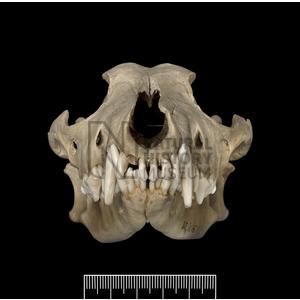
Charles Darwin described a canid on the Falkland Islands, off the east coast of Argentina, but it has long been extinct. Darwin called it Canis antarcticus, placing it in the same genus as the domestic dog, wolf and coyote
Since then, biologists have also puzzled over the Falklands wolf's ancestry, with suggestions that they were related to domestic dogs, North American coyotes, or South American foxes. The wolves were the size of a coyote, but much stockier, with fur the color of a red fox. They had short muzzles, just like gray wolves, and thick, wooly fur.
Researchers using measurements of the cosmic microwave background - a faintly glowing relic of the hot, dense, young universe - say their results provide support for the cosmological model of the universe - a prediction that dark matter and dark energy make up 95% of everything in existence while ordinary matter makes up just 5%.
Writing in The Astrophysical Journal, researchers on the QUaD telescope project have released detailed maps of the cosmic microwave background (CMB); they focused their measurements on variations in the CMB's temperature and polarization to learn about the distribution of matter in the early universe.
Dust samples collected by high-flying aircraft have found relicts from the ancient cosmos, according to scientists from the Carnegie Institution.
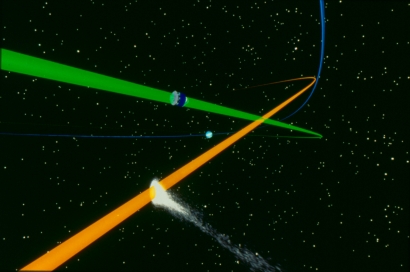
This stratospheric dust includes minute grains that likely formed inside stars that lived and died long before the birth of our sun as well as material from molecular clouds in interstellar space. This 'ultra-primitive' material likely drifted into the atmosphere after the Earth passed through the dust trail of comet Grigg-Skjellerup, giving scientists a rare opportunity to study cometary dust in the laboratory.
John Evans, a mathematician friend of mine in Cambridge England, came up with a formula that specifically allows one to estimate the relative complexity of nervous systems in the animal kingdom, from C. elegans to the human brain. It takes into account not just the number of neurons in the brain, but also the number of synaptic connections that link neurons to one another, and in a second version, the encephalization quotient.
The development of molecular techniques for genetic analysis has led to a great augmentation in our knowledge of crop genetics and our understanding of the structure and behavior of various crop genomes. These molecular techniques, in particular the applications of molecular markers, have been used to scrutinize DNA sequence variation(s) in and among the crop species and create new sources of genetic variation by introducing new and favorable traits from landraces and related crop species.
In December an important climate change meeting will take place in Copenhagen, Denmark: The United Nations Climate Change Meeting or the so-called COP15 climate meeting.