As many as 700,000 people in the UK suffer from a heart abnormality called arrhythmia, a potentially fatal condition, which the majority of Londoners have never heard of - according to a recent survey conducted by YouGov[1]. Many of the deaths associated with arrhythmias could be prevented due to advances in the identification and treatment of high risk patients.
A genetic link to caring about global warming? Al Gore has truly
jumped the shark, you may be thinking. But humans may be programmed by evolution to care about their environment, suggests research published today, because it impacts reproduction and fitness.
Dr Peter Sozou of the University of Warwick suggests that individuals may have an innate tendency to care about the long-term future of their communities, over timescales much longer than an individual's lifespan. This in turn may help to explain people's wish to take action over long-term environmental problems.
A new study demonstrates that when faced with a difficult decision, the human brain calls upon multiple neural systems that code for different sorts of behaviors and strategies. The research in the May 28th issue of Neuron provides intriguing insight into the mechanisms that help the human brain rise to the formidable challenge of adaptive decision making in the real world.
Are parasites evolving to be more or less aggressive depending on whether they are closely connected to their hosts or scattered among more isolated clusters of hosts? Research led by Geoff Wild, an NSERC-funded mathematician at the University of Western Ontario, with colleagues from the University of Edinburgh.
They decided to move the arguments from words to harder science and developed a formal mathematical model that incorporated variable patch sizes and the host parasite population dynamics. It was then run to determine the underlying evolutionary mechanisms.
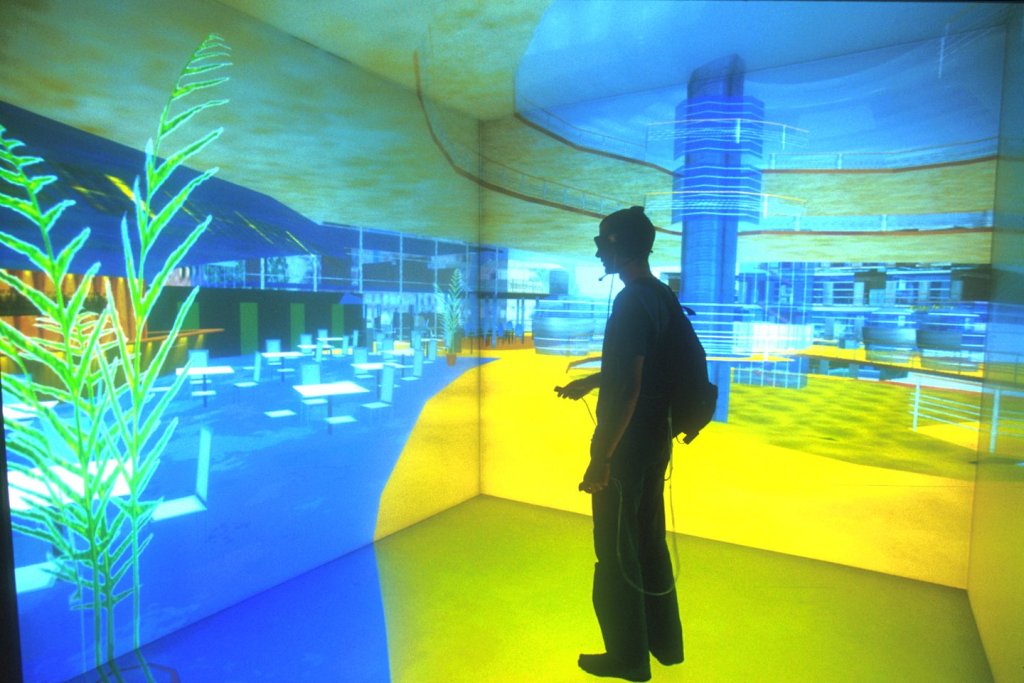
Far from being geeky and exotic, virtual reality could be the key to a new range of innovative products. European researchers and industrialists have come together to build a world-leading community ready to exploit that promise.
Made famous by the ‘holodeck’ in Star Trek: The Next Generation, virtual reality (VR) has long had the reputation of being slightly frivolous. Yet Europe’s VR industry is emerging as a world leader thanks to new efforts to coordinate developments on a continental scale.
Studies of climate evolution and the ecology of past-times are often hampered by missing information – lost variables needed to complete the picture and thought untraceable have made too many assumptions necessary. Scientists writing in in the June issue of New Journal of Physics have created a formula which they say will fill in the gaps in our knowledge and will help predict the future.
A new method of reconstructing missing data will shed new light on how and why our climate moved us on from ice ages to warmer periods as researchers will be able to calculate lost information and put together a more complete picture.
HOUSTON, May 26 /PRNewswire/ --
Endeavour International Corporation (NYSE-Amex: END) (LSE: ENDV) will participate in Oil and Gas Investment Symposium London hosted by the Independent Petroleum (Association of America (IPAA) (http://www.ipaa.org/meetings/Default.asp?Meeting=2009-06OGISLondon) on Tuesday, June 2, 2009. The event will be held in conjunction with Credit Suisse's London Oil and Gas Conference (http://www.csfb.com/conferences/).
J. Michael Kirksey, executive vice president and chief financial officer, is scheduled to speak on the company's business strategies and operational plans at 9:30 a.m. British Summer Time. A web cast of the presentation will be available by accessing Endeavour's Internet home page at http://www.endeavourcorp.com.
It is often envisioned that humans could return to a simpler, more rural way of life and thereby live a more environmentally friendly existence. This is not only unrealistic, but in examining the numbers it becomes clear just what a predicament our human population growth has put us in.
First let’s consider the raw numbers regarding human impact on the planet and see where that leaves us. There are about 57,500,000 square miles of land available on the entire surface of the earth. There are also about 6,671,226,000 people on the planet as of July 2007. A simple calculation shows that this results in about 116 people per square mile on the entire surface of the earth.
In general, science is like an episode of "LOST"; one question gets answered but that answer raises two more questions. The discovery of DNA and genes has answered many questions about who we are and why we are, but to what degree remains a mystery.
'Nature Versus Nurture' has been an argument for decades. Nature proponents state that genes are primarily responsible for everything, including our eventual personalities and behaviors, and that they can all be explained by certain sequences of DNA. The Nurture argument instead says that although genes and DNA play a part of our anatomy and other physical aspects, our environment, exposures and experiences are determines our personalities and behavior.
PALO ALTO, California, May 26 /PRNewswire/ --
- Passive Investment Includes Stake in Preferred Stock, Common Stock and Support for Facebook's Continued Global Growth
Facebook today announced that Digital Sky Technologies (DST), one of the leading internet investment groups globally with significant stakes in Eastern European and Russian internet businesses, has made a US$200 million investment in Facebook in exchange for preferred stock, representing a 1.96 percent equity stake at a US$10 billion valuation.