Dr. Rajendra Pachauri, Chair of the Intergovernmental Panel on Climate Change (The IPCC and Al Gore were joint winners of the 2007 Nobel Peace Prize) is calling on individuals to cut their carbon footprints by transforming their diets at a lecture hosted by Compassion in World Farming lecture in London tomorrow (Monday 8 September 2008).

Current global animal production is responsible for 18 per cent of all human-induced Greenhouse Gas (GHG) emissions, he says, with more than 60 billion farm animals reared each year. Th IPCC projects that figure will double by 2050.

An average household would reduce the impact of their greenhouse gas emissions by more if they halved their meat consumption than if they halved their car usage, he says.

A third of patients have unnecessary tubes (cannulae) inserted when they are in hospital, needlessly exposing them to serious complications such as infection and blood clots, research launched at the British Pharmaceutical Conference (BPC) in Manchester has shown.

Pharmacy researchers from Robert Gordon University in Aberdeen also showed that in 71% of patient records there was no documentation of cannula insertion and in 57%, no documentation of cannula removal.

Complications associated with intravenous (IV) cannula use include problems with veins (phlebitis), leakage of drugs into tissues around the site of the tube (extravasations), serious infection and blood clots.

The fight against fake medicines could soon be aided by a small, portable device that quickly measures the hardness of a tablet, revealing whether it is counterfeit, according to research presented at the British Pharmaceutical Conference (BPC) in Manchester.

The study tested a series of dummy paracetamol tablets made with varying degrees of real medicine, versus lactose (an ingredient used by counterfeiters to replace the active drug). Tests showed that the fake tablets were harder than the tablet with the correct amount of paracetamol, and were more difficult to crush.

LONDON, September 7 /PRNewswire/ --

One in four patients with diabetes are not receiving the appropriate cardiovascular medications, research launched at the British Pharmaceutical Conference (BPC) in Manchester has shown.

Diabetes and its complications are responsible for an estimated one in 17 deaths in the UK(1). Cardiovascular complications such as heart disease and stroke are major causes of mortality and morbidity among diabetics.

LONDON, September 7 /PRNewswire/ --

Research presented at the British Pharmaceutical Conference (BPC) in Manchester reveals that coating an artificial lens with antibiotics could significantly reduce the risk of post-operative infection, and even blindness, for cataract patients.

When scientific terms become part of the cultural fabric they often lose their meaning. Biology has had its share of modern misunderstandings with 'evolution' becoming colloquial rather than scientific, along with the general term 'theory', which today is used by anyone with a crackpot notion about particle physics, math or the end of the world due to a tunnel in Switzerland.

So it goes. That's why today we have advertising claims like 'the next evolution in cars' and then press releases about the 'missing link' in comets.

Hey, we don't shape the culture, we just try to cut through it. So this time we will talk about the 'missing link' between an Oort cloud and Halley's comet and discuss the 'evolution' of these mysterious space bodies, which will make biologists here irritated. Later on we can use terms like 'genesis' and 'creation' in their place so religious folks can feel slighted also.

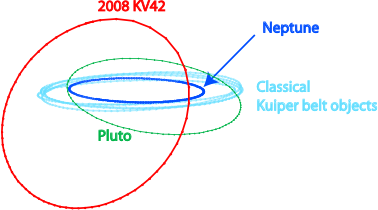
Why mention all that? Well, we run out of science terms to use when there is no previous explanation for an object, so we have to fall back on cultural ones in order to convey why something is important. In this instance, a team of scientists has found an unusual object whose backward and tilted orbit around the Sun is just baffling enough that it may tell us about the origins of some comets.

You heard me. Researchers from the Canada-France Ecliptic Plane Survey project have discovered an object that orbits around the Sun -- backwards. And it is tilted at an angle of 104 degrees, almost perpendicular to the orbits of the planets. Take a look:
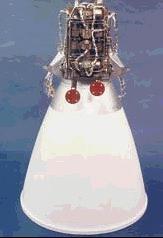
Engineers from NASA and Pratt & Whitney Rocketdyne successfully completed a series of hot-fire altitude tests using liquid methane on the RS-18 engine, which was last used to lift astronauts off the moon's surface 36 years ago and was originally flown with storable hypergolic propellants during the Apollo moon missions.

The tests, conducted at White Sands test facility in New Mexico, are part of the technology development for NASA's Constellation program, and gathered important data on ignition, performance measurement, and rapid start and stop.

The RS-18 engine has been modified to burn liquid oxygen and liquid methane, providing increased safety and performance to future space vehicles.

LONDON, September 6 /PRNewswire/ --

- Results Demonstrate Safety and Efficacy of First-in-Class Neurally Acting Anti-Migraine Agent (NAAMA) for the Treatment of Acute Migraine

ATLANTA, September 6 /PRNewswire/ --

- With Photo

Many people around the world are fighting a seemingly never-ending battle against rising seawater. The result of global warming, rising water levels threaten hundreds of millions of people. They have no choice but to build or extend barriers in the form of seawalls to protect their lives and property. Now, however, the rising cost of building materials such as steel has put a seawall solution beyond the means of most people and entire countries. A company in the United States may have the answer with an industrial strength plastic sheet piling that reduces the cost and is made from recycled material.

(Photo: http://www.newscom.com/cgi-bin/prnh/20080906/CLSA001 )

Almost 60% of British women use at least one herbal product during pregnancy, research launched at the British Pharmaceutical Conference (BPC) in Manchester has revealed.

In the first UK study of its kind, pharmacy researchers from the University of East Anglia found that despite the popularity of herbal products, almost half (49%) of the pregnant women were uncertain about the safety of the preparations and took them on the recommendation of family or friends rather than a healthcare professional.