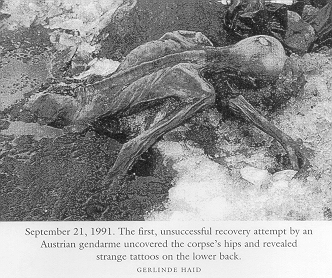







A famous Neolithic Iceman is dressed in clothes made from sheep and cattle hair, a new study shows. The researchers say their findings support the idea that the Iceman was a herdsman.

The social and cultural background of the Iceman, dubbed Oetzi, has been the subject of much debate since his mummified remains were discovered in an Alpine glacier in 1991. Although his clothes were known to be made of animal skins, their exact origin was uncertain. This new study focuses on hair samples taken from Oetzi's coat, leggings and moccasin shoes.

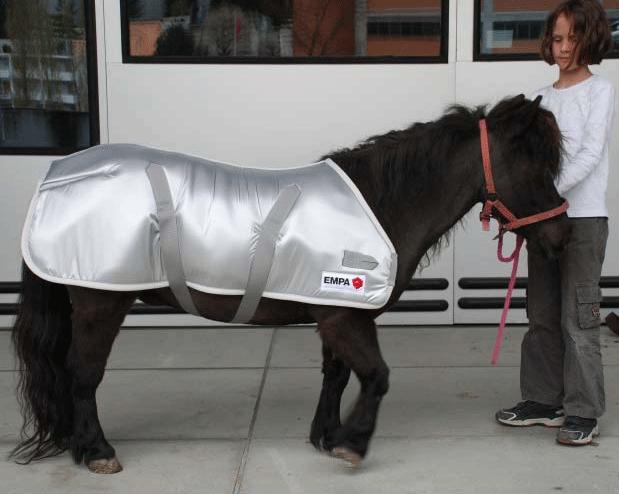
It's no secret that the heat and humidity throughout Olympic venues can be sweltering but the Swiss Equestrian Federation tournament horses have an advantage - special cooling blankets to ward off the Hong Kong heat.

And after the their event is over, “sweat blankets” will help them to dry off as quickly as possible – one to cover them as they return to the stables, and another to wear in their air conditioned quarters.

These special garments have been designed to support these sensitive (and valuable) champion horses in their own bodily efforts to regulate their temperature and prevent the dangerous 'post exercise chill effect', the unpleasant and unhealthy uncontrolled cooling which leads to the animals becoming chilled after exercise.

DUBLIN, Ireland, August 20 /PRNewswire/ --

Looking for a challenge? Get ready for an adventure! ORBIS Ireland invites runners to compete in the 2008 Great Ethiopian Run on November 23rd in the world's third highest capital, Addis Ababa. Running at 10,000 feet above sea level, participants will help save the sight of 60,000 Ethiopians at immediate risk from blindness due to trachoma.

An estimated 10 million Ethiopians, primarily women and children, suffer from trachoma, a highly infectious eye disease that is easily spread between infected and healthy eyes by flies, fingers or clothing. The infection thrives in areas where people have limited access to clean water and basic health care.

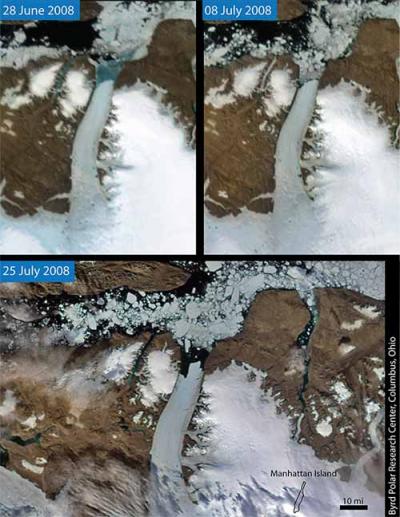
Researchers monitoring daily satellite images of Greenland's glaciers have discovered break-ups at two of the largest glaciers in the last month. They expect that part of the Northern hemisphere's longest floating glacier will continue to disintegrate within the next year.

A massive 11-square-mile (29-square-kilometer) piece of the Petermann Glacier in northern Greenland broke away between July 10th and by July 24th. The loss to that glacier is equal to half the size of Manhattan Island. The last major ice loss to Petermann occurred when the glacier lost 33 square miles (86 square kilometers) of floating ice between 2000 and 2001.

Petermann has a floating section of ice 10 miles (16 kilometers) wide and 50 miles (80.4 kilometers) long which covers 500 square miles (1,295 square kilometers).

GIBRALTAR, August 20 /PRNewswire/ --

- Forget What you Think you Know About Online Gaming and try Something Genuinely new.

An innovator, not an imitator, Casino.com brings a fresh approach to an industry which has rested on its laurels for too long.

With state-of-the-art technology and exhilarating game-ware, Casino.com turns the concept of online gaming on its head creating an online casino truly dedicated to the player.

There's also a very competitive instant Welcome Bonus of up to US$200 - and all players have to do get it is download our free easy-to-use software, make a deposit and start playing their favourite casino classics.

In fact, whatever their gaming tastes, there is something for everyone at Casino.com

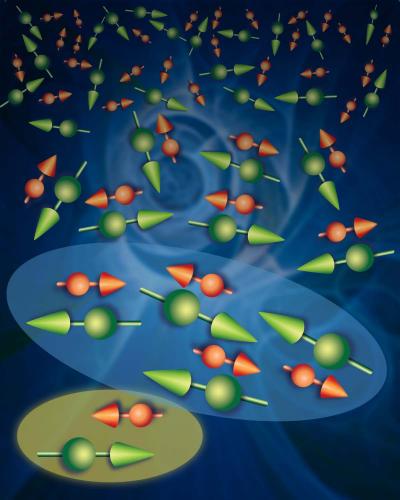
The semiconductor silicon and the ferromagnet iron are the basis for much of mankind's technology, used in everything from computers to electric motors.

Writing in Nature, an international group of scientists from the UK, USA and Lesotho report that they have combined these elements with a small amount of another common metal, manganese, to create a new material which is neither a magnet nor an ordinary semiconductor.

They then show how a small magnetic field can be used to switch ordinary semiconducting behavior (such as that seen in the electronic-grade silicon which is used to make transistors) back on.

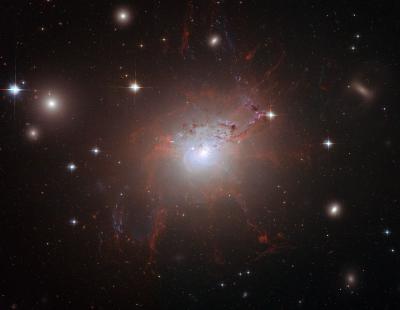
NGC 1275 is one of the closest giant elliptical galaxies and lies at the centre of the Perseus Cluster of galaxies. It is an active galaxy, hosting a supermassive black hole at its core, which blows bubbles of radio-wave emitting material into the surrounding cluster gas. Its most spectacular feature is the lacy filigree of gaseous filaments reaching out beyond the galaxy into the multi-million degree X-ray emitting gas that fills the cluster.

These filaments are the only visible-light manifestation of the intricate relationship between the central black hole and the surrounding cluster gas. They provide important clues about how giant black holes affect their surrounding environment.

Sweet, sour, salty, bitter, and savory were the five taste sensations you probably learned in school but a group of chemists in Philadelphia say a new one should be added — "calcium."

In a report today at the 236th National Meeting of the American Chemical Society, scientist Michael G. Tordoff, Ph.D., and colleagues with the Monell Chemical Senses Center in Philadelphia described research they say demonstrates that a taste for calcium exists in mice. With mice and humans sharing many of the same genes, the findings suggest that people also may have such a taste, which could have a range of practical applications.

University of Texas Medical School Assistant Professor C.S. Raman and colleagues say they have been able to manipulate flavor enzymes found in a popular plant model, Arabidopsis thaliana, by genetic means. The enzymes—allene oxide synthase (AOS) and hydroperoxide lyase (HPL)—produce jasmonate (responsible for the unique scent of jasmine flowers) and green leaf volatiles (GLV) respectively. GLVs confer characteristic aromas to fruits and vegetables.

That means not only that you could soon be enjoying a lemony watermelon or a strawberry-flavored banana but that fine tuning those flavor enzymes in fruits and vegetables could lead to environmentally-friendly pest control.

The structure of gold nanoparticles has been largely unknown for over a decade. A current study helps to understand the stability, composition as well as electronic, chemical and optical properties of the particles.

The research group, led by Professor Hannu Häkkinen of the Nanoscience Centre of the University of Jyväskylä, says the results of the study can be utilized in medicine, biomolecule research and nanoelectronics. With the help of gold nanoparticles it is, for instance, possible to destroy cancer cells.

The particles are able to attach themselves to cancer cells due to a biologically compatible molecular overlayer. With the help of laser it is possible to heat the particles so much that the attached cancer cells die. Particles can also be used as a tracer when looking at biomolecules with an electron microscope. Nanoelectronics, for its part, can use gold nanoparticles as components in electrical circuits.

