






'Erasing' drug-associated memories may prevent recovering drug abusers from relapsing, researchers at the University of Cambridge have said. The team, led by Professor Barry Everitt, was able to reduce drug-seeking behaviors in rats by blocking a brain chemical receptor important to learning and memory during the recall of drug-associated memories. Their research, which was funded by the Medical Research Council, was reported in the 13 August issue of The Journal of Neuroscience.

The Cambridge scientists found that by disrupting or erasing memories associated with drug use during recall, they could prevent the memories from triggering relapses and drug taking.

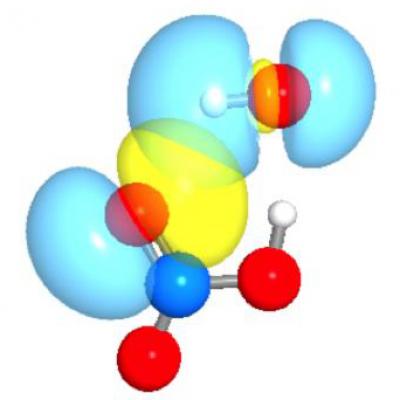
Researchers have discovered an unusual molecule that is essential to the atmosphere's ability to break down pollutants, especially the compounds that cause acid rain. It's the unusual chemistry facilitated by this molecule, however, that will attract the most attention from scientists.

Somewhat like a human body metabolizing food, the Earth's atmosphere has the ability to "burn," or oxidize pollutants, especially nitric oxides emitted from sources such as factories and automobiles. What doesn't get oxidized in the atmosphere falls back to Earth in the form of acid rain.

While invasive electrode recordings in humans show long-term promise, non-invasive techniques can also provide effective brain-computer interfacing (BCI) and localization of motor activity in the brain for paralyzed patients with significantly reduced risks and costs as well as novel applications for healthy users.

Two issues hamper the ease of use of BCI systems based on non-invasive recording techniques, such as electroencephalography (EEG):

LONDON, August 12 /PRNewswire/ -- Ideaworks3D Ltd, developer of the cross-platform Airplay(TM) SDK for advanced native mobile games and applications, today announced that Airplay SDK now supports Apple's iPhone and iPod Touch.

Airplay is a unique cross-platform technology for creating best-in-class native applications on mobile and handheld devices, enabling developers to build a single application binary and deploy it unmodified to all supported operating systems and devices.

Researchers testing the long-held theory that therapeutic massage can speed recovery after a sports injury have found early scientific evidence of the healing effects of massage.

The scientists have determined that immediate cyclic compression of muscles after intense exercise reduced swelling and muscle damage in a study using animals.

Though they say it's too soon to apply the results directly to humans in a clinical environment, the researchers consider the findings a strong start toward scientific confirmation of massage's benefits to athletes after intense eccentric exercise, when muscles contract and lengthen at the same time.

SUNNYVALE, California and TAIPEI, Taiwan, August 12 /PRNewswire/ --

- Leading ODM enhances mobile TV user experience with TV-centric handset design

Telegent Systems, the company that makes television mobile with its high-performance single-chip mobile TV solutions, together with Arima Communications Corp., a leading Taiwanese original design manufacturer (ODM) supplying solutions worldwide, today announced that Arima has selected Telegent's mobile TV solution for the free-to-air TV feature in selected handset models. The TV phones, which provide consumers with mobile access to local over-the-air broadcast television channels, are expected to be available to consumers by late summer of this year.

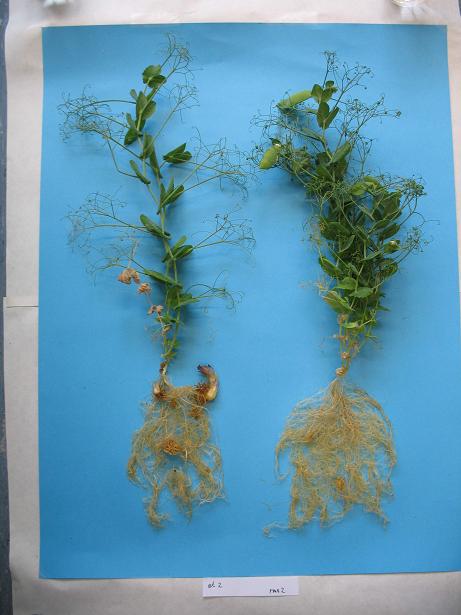
Scientists from the Wageningen University Laboratory of Plant Physiology and an international team of scientists have discovered a new group of plant hormones, the so-called strigolactones. This group of chemicals is known to be involved in the interaction between plants and their environment.

They now say that strigolactones, as hormones, are also crucial for the branching of plants. The discovery will soon be published in Nature and is of great importance for innovations in agriculture. Examples include the development of cut flowers or tomato plants with more or fewer branches. These crops are of major economic and social importance worldwide.

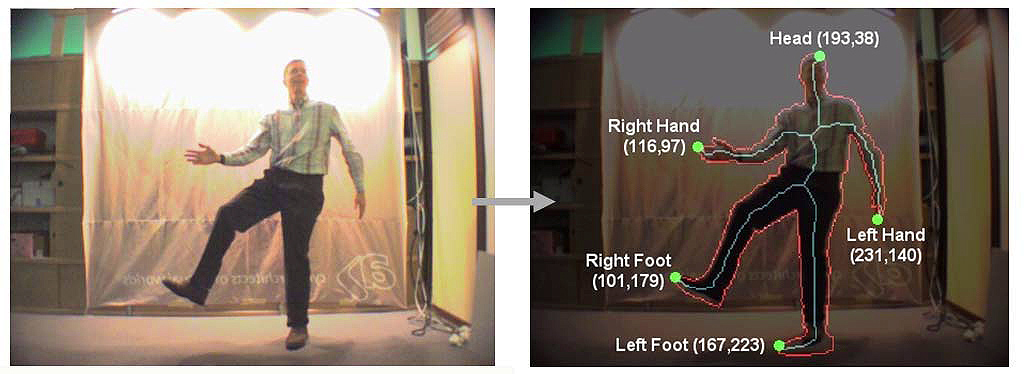
Researchers from the Polytechnic University of Catalonia (UPC) and the University of Lovaina (UCL) in Belgium, have presented a technique that, using two video cameras to capture human movement, makes it possible to recognize body movements and display them in three dimension on a computer, according to the journal Multimedia Tools & Applications.

The method can be applied to the development of interactive video games in which gestures are made with the hands and feet.

Engineer Pedro Correa, from the UCL Telecommunications and Teledetection Laboratory, told SINC that, together with professor Ferran Marqués's unit at the UPC, they have developed algorithms that tackle the problem of gesture recognition “in the least invasive way possible, since it does not require wearing any special suit or receivers, using a simple video camera to film the body's movement”.

Researchers at Johns Hopkins say they have compelling evidence that some people with HIV who for years and even decades show extremely low levels of the virus in their blood never progress to full-blown AIDS and remain symptom free even without treatment, probably do so because of the strength of their immune systems, not any defects in the strain of HIV that infected them in the first place.

They say this finding renews promise of vaccine against AIDS and disproves the theory of a defective virus.

The theory about these so-called elite suppressors published in the Journal of Virology comes from rigorous blood and genetic studies of a monogamous, married, African-American couple in Baltimore, in which the wife was infected through sex with her husband more than a decade ago.

Diamonds from Brazil have provided the answers to a question that Earth scientists have been trying to understand for many years: how is oceanic crust that has been subducted deep into the Earth recycled back into volcanic rocks?

A team of researchers from the University of Bristol and the STFC Daresbury Laboratory, have gained a deeper insight into how the Earth recycles itself in the deep earth tectonic cycle way beyond the depths that can be accessed by drilling. The full paper on this research was published in Nature.

The Earth’s oceanic crust is constantly renewed in a cycle which has been occurring for billions of years. This crust is constantly being renewed from below by magma from the Earth’s mantle that has been forced up at mid-ocean ridges. This crust is eventually returned to the mantle, sinking down at subduction zones that extend deep beneath the continents. Seismic imaging suggests that the oceanic crust can be subducted to depths of almost 3000km below the Earth’s surface where it can remain for billions of years, during which time the crust material develops its own unique ‘flavour’ in comparison with the surrounding magmas. Exactly how this happens is a question that has baffled Earth scientists for years.

