


Did you find a new bacterium and want recognition for it? For it to be recognized its name must be recorded in IJSEM, which is the single official international forum for the publication of new bacterial species names. The journal publishes research papers describing and naming almost all newly discovered bacteria. The names of newly discovered bacteria published in other journals are not valid until they have been checked and published in IJSEM.

The journal has officially validated the names of 9,263 species and genera since 1980. The list includes some important and ground-breaking discoveries. Earlier this year, scientists announced that they had made the first synthetic genome of a bacterium, dubbed Mycoplasma genitalium JCVI-1.0 but this would have been impossible without the work of earlier microbiologists.

Now they've decided to make researching the work of earlier microbiologists a lot easier by putting their archive up - for free. All issues of the journal dating back to volume 1, 1951 totalling over 25,000 pages have been scanned and made available online, providing an important resource for scientists, historians and the public.

Computing pundits claim that we are moving into a world of ubiquitous computing, a brave new world where your refrigerator and cupboards will be connected to your internet shopping accounts so that you never run out of milk or sugar again. Sensors around your home and workplace will respond to workloads, weather and even your mood by adjusting heating, lighting, and sound levels. Diagnostic devices built into door handles or the bathroom might alert your doctor or the emergency services to changes in your health.

But doing that means getting rid of your iPhone and anything else you learned how to use. Instead, this this emerging technology will only be woven into the fabric of society and our everyday living spaces when people, rather than computer screens and keyboards, are projected into the foreground.

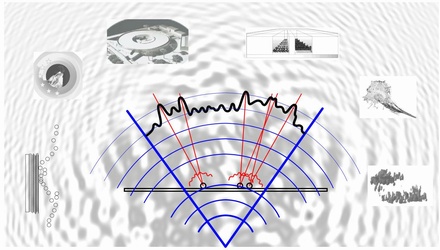
In chemistry, just as in life, threesomes do not break up neatly.

Open-minded thinkers may disagree and say that theoretically clean three-way splits can happen, but no one had actually witnessed one – until now.

A paper in the Aug. 8 issue of Science provides the first hard evidence for the simultaneous break-up of a molecule into three equal parts, called "concerted break-ups."

Do volunteers who take part in conservation efforts do it for the wildlife they are trying to protect or just to impress their friends and because they like the way wildlife looks on their property? A University of Alberta case study says it is not altruism that drives them.

A study of purple martin landlords, those who keep and monitor special birdhouses on their land, revealed that they were more motivated to take part in the conservation project for egoistic rather than altruistic reasons.

"Though there were areas of overlap, we found that common motivations for self-benefit included interaction with the birds, a sense of achievement, social interaction, personal stimulation and enjoyment," said Glen Hvenegaard, a co-author on the qualitative study and a professor of geography and environmental studies at the University of Alberta's Augustana campus in Canada.

"Big things come in small packages," the saying goes, and it couldn't be more true when discussing the mouse. This little creature has become a crucial part of human history through its contributions in understanding human genetics and disease.

In a review published in Disease Models & Mechanisms (DMM), genetics researchers from Yale University School of Medicine and Fudan University School of Life Sciences discuss the history and future of mice as a model organism.

They predict that the next frontiers in mouse genetics – such as creating mice expressing human genes to create "humanized" mice – will continue to provide scientists with new tools to not only decipher clinical mysteries, but also to test novel therapies and cures.

Controlling body weight is a complicated process but scientists investigating the brain's intricate neurocircuitry and its role in maintaining energy balance are forming a clearer picture of the myriad events that lead to weight gain ... and weight loss.

Writing in Nature Neuroscience, a study led by scientists at Beth Israel Deaconess Medical Center (BIDMC) identifies another piece of this complex puzzle, demonstrating that the neurotransmitter GABA --one of the master communicators among neurons – plays a role in controlling energy balance.

 Imagine winning a gold medal at the Beijing Olympics.  No really, go ahead, close your eyes and visualize it.  What did you see?  Were you standing on the medal platform looking out at the crowd, waving and taking in the scene through your own eyes, or were you a spectator in the crowd watching yourself getting the medal put around your neck?  This choice between "first-person" or "third-person" perspective actually has an effect on our motivation to achieve a future goal.

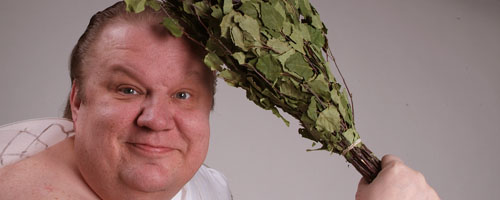
Sauna has long been a cottage industry in Finland and the entire Northern hemisphere, with Scandinavians and Russians claiming to have used saunas for cleansing and relaxation for over 2,500 years.

Saunas are the new Prius, with various studies claiming a positive influence on general health.

A recent study(1) conducted in 41 healthy volunteers and presented in Dermatology says that regular sauna also has a positive effect on skin physiology.

Anyone who has ever tried smoking probably remembers that first cigarette vividly - it likely brought either a nasty coughing fit or a rush of pleasure - a "buzz."

A new study links those first experiences with smoking, and the likelihood that a person is currently a smoker, to a particular genetic variation.

The new finding also adds to growing suspicion surrounding the role of a particular nicotine-receptor gene in smoking-related behaviors and in lung cancer. Other researchers have already linked variations in the same genetic region to smokers' level of dependence on nicotine, to the number of cigarettes smoked per day and to a far higher risk of lung cancer — the ultimate outcome of a lifetime of smoking.

Fingerprints don't get a lot of respect on television shows like CSI these days - but they are about to make a comeback.

A new technology developed at Purdue University can detect trace amounts of explosives, drugs or other materials left behind in fingerprints and can even distinguish between overlapping fingerprints left by different individuals - a difficult task for current optical forensic methods.

A team led by R. Graham Cooks, Purdue's Henry Bohn Hass Distinguished Professor of Analytical Chemistry, has created a tool that reads and provides an image of a fingerprint's chemical signature. The technology can be used to determine what a person recently handled.