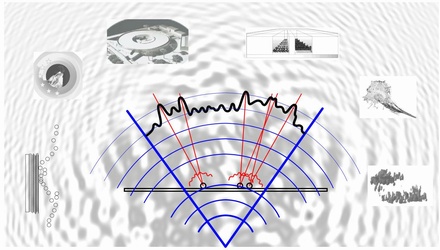






For almost a century, scientists have been puzzled by a process that is crucial to much of the life in Earth's oceans: Why does calcium carbonate, the tough material of seashells and corals, sometimes take the form of calcite, and at other times form a chemically identical form of the mineral, called aragonite, that is more soluble -- and therefore more vulnerable to ocean acidification?

High up in the high Andes mountains of Argentina, a population has adapted to tolerate the toxic chemical arsenic. 

For thousands of years, in some regions of the Andes, people have been exposed to high levels of it, because arsenic in volcanic bedrock is released into the groundwater.

How could this population adapt to tolerate arsenic, a potent killer of such ill repute that it's often the overused plot-driver of many murder mysteries? 


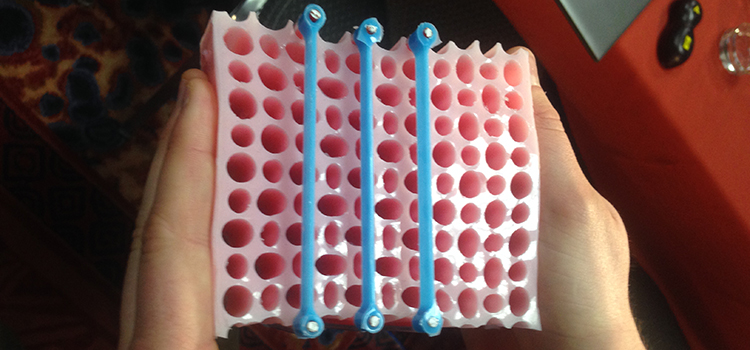
A “mechanically programmable” metamaterial held by Bastiaan Florijn, Leiden University. Photo credit: Ben P. Stein

By Ben Stein, Inside Science

(Inside Science Currents Blog) -- It’s rare when a scientific term is both cool sounding and precise, but the word “metamaterial” might just fit the bill. Although they are made from small, ordinary building blocks such as rods, circles or sticks, metamaterials have striking properties that often do not occur in the natural world.        

How much overdetection is acceptable in cancer screening? A UK survey discussed in The BMJ this week affirms what we always knew, that responses are all over the map, depending on how the questions are framed.

The article is part of a series on over-detection (over-diagnosis) looking at the risks and harms to patients of expanding definitions of disease and increasing use of new diagnostic technologies. Over-detection describes cancerous lesions that are picked up and treated but would never have caused symptoms or become fatal in a person's lifetime. This is typically seen if the cancers are so slow growing that they would not have been detected if screening had not taken place.

Male enigma moth, a new species discovered on Kangaroo Island. George Gibbs, Author provided

The discovery of a new family of moth is one of the most exciting finds in entomology in the past 40 years.

It was found not in some remote and unexplored region of Australia, but right in our backyard on Kangaroo Island in South Australia. The island that is only 100 kilometers from Adelaide and 13  kilometers from the mainland, that has been settled since 1836 and is one of the loveliest destinations for a holiday.

Synchrotron Light Source II (NSLS-II) at Brookhaven National Laboratory only achieved first light a few weeks ago and already collaborators at the X-Ray Powder Diffraction (XPD) beamline have tested a setup that yielded data on thermoelectric materials. The work was part of the commissioning activities for the XPD beamline, a process that fine-tunes the settings of beamline equipment to ready the facility for first scientific commissioning experiments in mid-March on its way to full user operations later in the year. 

The loss of a gene in male mice results in the premature exhaustion of their fertility. Their fundamental new insights into the complex process of sperm generation may have direct applications to a similar loss of fertility in men.

What the team discovered is that the loss of the gene that makes the protein TAF4b causes a deficit in the number of progenitor cells at an embryonic stage of a male mouse's reproductive development. Lacking those important precursor cells means that the mice struggle to develop a robust stem cell infrastructure to sustain sperm production for the long term. The affected mice are fertile at first, but quickly deplete the limited sperm supply that they can generate.

It is almost inevitable that we will develop genetic mutations associated with leukaemia as we age, according to research published today in Cell Reports. Based on a study of 4219 people without any evidence of blood cancer, scientists estimate that up to 20 per cent of people aged 50-60 and more than 70 per cent of people over 90 have blood cells with the same gene changes as found in leukaemia.

A team of Spanish scientists, which includes several researchers from the University of Granada, has confirmed that there is a relation between the levels of certain environmental pollutants that a person accumulates in his or her body and their level of obesity. Subjects with more pollutants in their organisms present besides higher levels of cholesterol and triglycerides, which are important risk factors for cardiovascular disease.

This is a study published in the prestigious journal Environmental Pollution, which has counted with the participation of researchers from the University of Granada, the San Cecilio and Virgen de las Nieves university hospitals, and the Andalusian School of Public Health, all of them members of the Granada Biohealth Research Institute.

If you're one of the nearly half a million Americans living with multiple sclerosis (MS) - a slowly disabling disease of the central nervous system - you are likely dependent on disease-modifying drugs to prevent symptoms such as vision problems, balance issues and weakness. Often, these treatments have been developed through pharmaceutical industry-sponsored clinical trials (ISCT) in collaboration with academic or private practice physicians who care for MS patients.

But what do patients know, or want to know, about their physician's financial relationship with the pharmaceutical company sponsoring such research?

