







Gine Roll Skjaervoe at the Norwegian University of Science and Technology's (NTNU) Department of Biology has studied church records from the period 1750-1900 and looked at life history variables: how old were women when they had their first child, and their last? How many years passed between the birth of each child, and how many of these children survived? How many of these children were in turn married and had children?

All told, she studied information from more than 9,000 people listed in the church records she examined.

A man-made form of insulin delivered by nasal spray may improve working memory and other mental capabilities in adults with mild cognitive impairment and Alzheimer's disease dementia, according to a pilot study led by researchers at Wake Forest Baptist Medical Center.

The study's subjects were 60 adults diagnosed with amnesic mild cognitive impairment (MCI) or mild to moderate Alzheimer's dementia (AD). Those who received nasally-administered 40 international unit (IU) doses of insulin detemir, a manufactured form of the hormone, for 21 days showed significant improvement in their short-term ability to retain and process verbal and visual information compared with those who received 20 IU does or a placebo.

The debate over policy implications of climate science can have no clear winners - everyone claims science is on their side and that scientists on the other side are misguided. Though both sides are experts at framing - CO2 is good for us in any quantity, skeptics are all dupes of Big Oil - one was clearly taking it to the next level: In 2000, Professor Paul Crutzen, who won the 1995 Nobel Prize in Chemistry with Mario Molina and Sherwood Rowland for work on ozone, said humankind's impact was so drastic it has changed the actual geology of Earth and since then environmentalist have been promoting Crutzen's new Epoch - the Anthropocene - as a distinct chapter in the Earth's geological history.
Scientists have extracted DNA from mysterious marsupial megafauna that roamed Australia over 40,000 years ago -  Australia's extinct giant kangaroos.

The team extracted DNA sequences from two species: a giant short-faced kangaroo (Simosthenurus occidentalis) and a giant wallaby (Protemnodon anak). These specimens died around 45,000 years ago and their remains were discovered in a cold and dry cave in Tasmania.

Relatively good preservation conditions in the cave allowed enough short pieces of DNA to survive so researchers could reconstruct partial "mitochondrial genomes" - genetic material transmitted from mother to offspring and widely used to infer evolutionary relationships.

A molecule known as coenzyme A plays a key role in cell metabolism by regulating the actions of nitric oxide. according to a new study.

Cell metabolism is the ongoing process of chemical transformations within the body's cells that sustains life, and alterations in metabolism are a common cause of human disease, including cancer and heart disease. Their findings about the mechanisms of action for coenzyme A, as well as discovering a new class of enzymes that regulate coenzyme A-based reactions. 

Chemical analysis of some of the world’s oldest rocks has provided the earliest record yet of Earth's atmosphere and shows that the air 4 billion years ago was very similar a billion years later, when the atmosphere, though it likely would have been lethal to oxygen-dependent humans, supported a thriving microbial biosphere that ultimately gave rise to the diversity of life on Earth today.

Until now, researchers have had to rely on widely varying computer models of the earliest atmosphere's characteristics.

Dinosaurs once flourished in Europe but when an asteroid hit 66 million years ago, they died quickly, according to a new study.

That an asteroid killed off the dinosaurs is widely held, but until recently dinosaur fossils from the late Cretaceous, the final period of dinosaur evolution, were almost exclusively found in North America. This raised questions about whether the sudden decline of dinosaurs in the American and Canadian west was merely a local story.

The new study synthesizes research on European dinosaurs over the past two decades. Fossils of late Cretaceous dinosaurs are now commonly discovered in Spain, France, Romania, and other countries. 

According to the European Monitoring Centre on Drugs and Drug Addiction, cocaine is the second most commonly used illegal addictive in Europe, after cannabis.  A discovery related to the mechanism behind a dopamine transporter could help in the development of future medical treatment against cocaine addiction.  


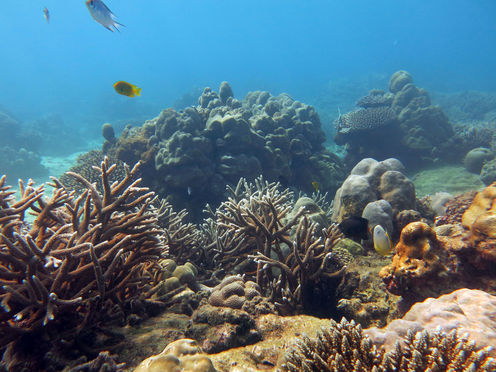
After mass bleaching in 1998, more than half of coral reefs in the Seychelles have slowly recovered. Nick Graham

By John Pandolfi, The University of Queensland

Coral reefs are the poster child for the damage people are doing to the world’s oceans. Overfishing, pollution and declining water quality have all taken their toll on reefs around the world. Perhaps the most famous example is Australia’s Great Barrier Reef, where half of the coral cover has disappeared over the past 25 years.


Picture this scenario: A politician is appointed to run NASA who thinks its budget is too high and then half its money and a third of its workforce is on its way to evaporating. Public support for a mission to Mars is nonexistent.

It must be in late 2015, after anti-science Republican Senator Ted Cruz of Texas has control of NASA, if you read science media (and then whatever Huffington Post and Slate are).


