








2014: the year crystallography went mainstream. CSIRO, CC BY-SA

By Mark Lorch, University of Hull

’Tis the season for listicles rounding up the stories of the year.

So with, the authority vested in me, here is a selection of six top, bottom and forgotten science stories of 2014.

Hutchinson-Gilford progeria syndrome is a genetic condition in children that is characterized by dramatic, rapid appearance of aging. Affected children typically look normal at birth and in early infancy but grow more slowly than other children and develop characteristic facial appearances seen in some elderly people, along with hair loss, aged-looking skin and a loss of fat under the skin - subcutaneous fat. First described in 1886, it occurs in about 1 in 4 million newborns worldwide.

There is a disease killing honeybee populations around the world but you won't be surprised to find that environmental groups never mention it.

It's called American foulbrood disease and it doesn't get much attention because groups can't use it in fundraising campaigns due to it being completely natural. Science is setting out to cure it just the same, and researchers have found a toxin released by the pathogen that causes American foulbrood disease -- Paenibacillus larvae (P. larvae) -- and developed a lead-based inhibitor against it.


Puffed rice with a bit of poison. Shutterstock

By Andy Meharg, Queen's University Belfast

There are two sides to rice: the grain that feeds half the world – and the primary carcinogenic source of inorganic arsenic in our diet.

Arsenic is a natural occurring element that is ubiquitous in the environment. It is present primarily as inorganic arsenic, which is highly toxic.

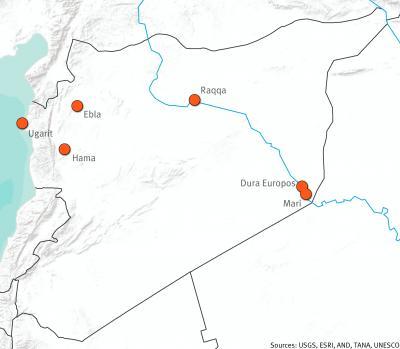
It's no secret that war is tough on innocent buildings so it is no surprise that four of six major archaeological sites in Syria have been heavily looted and damaged, according to an analysis of high-resolution satellite images. 

The report analyzes 6 of the 12 sites that Syria has nominated as World Heritage Sites: Dura Europos, Ebla, Hama's Waterwheels, Mari, Raqqa, and Ugarit. Images from 2014 show numerous pits throughout three sites where ancient cities once stood. The pits generally do not appear in similar images from 2011, when the conflict in Syria began. 

Apologizing for the silence of last week, due not so much to Christmas holidays but to my working around the clock to write a grant proposal, I wish to show you today a graph which describes very well the complexities of modern day frontier theoretical calculations. That graph is the collection of some of the Feynman diagrams that have to be calculated in order to evaluate a property of the electron called its "anomalous magnetic moment".
A solid 12 years after most of its audience stopped watching "The West Wing", I decided to start - all 154 episodes. In the interest of transparency, I disclose I skipped two - one was a retrospective and one was nothing but a debate between two characters  that no one could care much about who were running for president to succeed the sitting president played by Martin Sheen. Real debates are boring enough but a fictional one written by one political side is really tedious.

We don't often think of snakes as flying creatures - a lack of wings does not lend itself to flying imagery - but some snakes can glide as far as 100 feet through the air, jumping off tree branches and rotating their ribs to flatten their bodies and move from side to side.

New research from a George Washington University professor investigates the workings behind the flight and whether they can be applied to mechanical issues.

A nationwide project to study the genetic causes of rare developmental disorders has found 12 causative genes that were unidentified before. The Deciphering Developmental Disorders (DDD) nationwide genome-wide diagnostic sequencing program sequenced DNA and compared the clinical characteristics of over a thousand children to find the genes responsible for conditions that include intellectual disabilities and congenital heart defects, among others. 

Bisphosphonates are medications commonly used to treat osteoporosis and other bone conditions but a new analysis suggests that women who use bisphosphonates also have about half the risk of developing endometrial cancer as women who don't use the drugs. 

Endometrial cancer, which arises in the lining of the uterus, accounts for nearly 50 percent of gynecologic cancers diagnosed in the United States, and it is the fourth most common malignancy in women and the eighth most common cause of cancer death.

While bisphosphonates are known to prevent bone loss, preclinical studies have shown that the medications also have antitumor effects, including the ability to keep tumor cells from multiplying and from invading normal tissues.

