






Cold and damp is bad, no matter what you may have heard recently about it making no difference. The common cold virus reproduces itself more efficiently in the cooler temperatures found inside the nose than at core body temperature, confirming the popular-yet-recently-contested notion that people are more likely to catch a cold in cool, damp conditions. 

Scientifically it is known that the rhinovirus, the  most frequent cause of the common cold, replicates more readily in the slightly cooler environment of the nasal cavity than in the warmer lungs but, the focus of prior studies has been on how body temperature influenced the virus as opposed to the immune system, said study senior author and Yale professor of immunobiology Akiko Iwasaki. 
The obesity paradox - where obese people remain quite healthy - defies convenient epidemiological and nutritional thinking. But age catches up to us all.

Everyone gets less healthy over time - age is the biggest risk factor for cancer, heart disease and just about everything else - but a new study in the Journal of the American College of Cardiology tracked the health of more than 2,521 men and women for 20 years, aged between the ages of 39 and 62, and found that more than 51 percent of the healthy obese participants became unhealthy obese over the 20-year study period, while only 11 percent lost weight and became healthy non-obese.
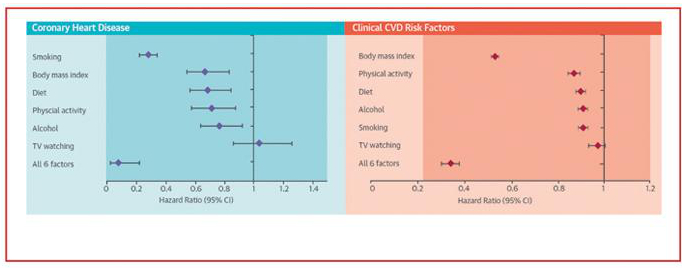
A  study that  followed participants in a study of nurses established in 1989, which surveyed more than 116,000 participants about their diets and other health habits every two years, resulted in 69,247 women being followed for two decades and concluded that three-quarters of heart attacks in young women could be prevented if women closely followed six healthy lifestyle practices.

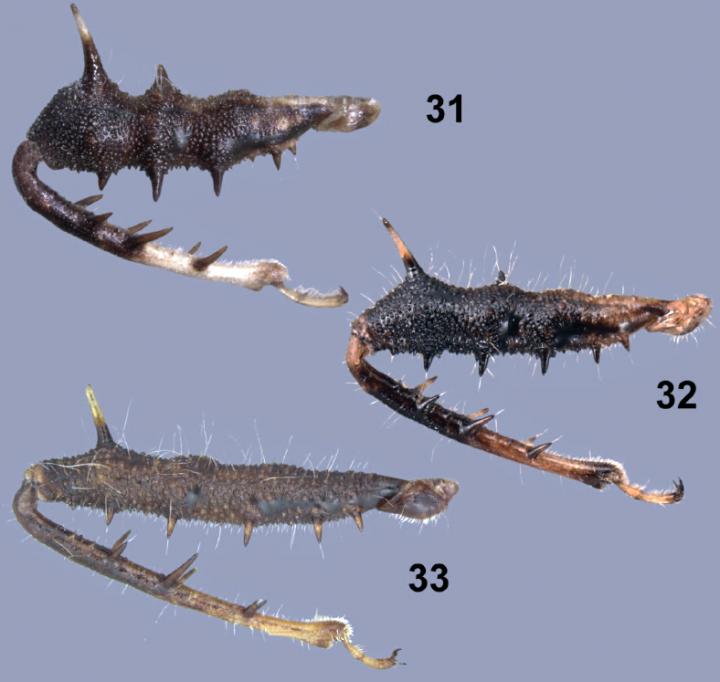
In 2006,  Dr. J. E. McPherson, professor emeritus at Southern Illinois University, was working with colleagues on a key to the nymphs of three midwestern species of assassin bug in the genus Sinea (i.e., S. complexa, S. diadema, and S. spinipes).

To test their key for accuracy, they asked several others to check it by comparing it with insects in their collections or laboratories.

All of them found the key to be satisfactory, except for one - Dr. Scott Bundy from New Mexico State University, who found discrepancies in specimens that had been collected in New Mexico and identified as S. complexa.

The village of Nichoria in Messenia was located near the palace of Pylos during the Greek Bronze Age, when Greece was considered a Superpower of the Mediterranean. The region thrived on its trade and economic stability, culture, and art and architecture, including great monuments, palaces and writings. The collapse of the Bronze Age (beginning around 1,200 BC), including the abandonment of cities and the destruction of palaces, is known as the Greek Dark Age. 

Nichoria remained through both the Late Bronze Age and the Greek Dark Age, and scholars have suggested that it turned to cattle ranching during the region's collapse. That made sense, the remains of cattle bones are prevalent among bone fragments in the soil. 

The death of a three-year-old child caused by drinking unpasteurized milk late last year invited much commentary about food safety and regulation. But little has been said about the man who gave his name to the process that makes dairy products, and many other foods, safe for mass production: Louis Pasteur (1822-1895).

Many consumers today feel out of touch with how their food is produced and are disturbed by a lot of what they hear about it through their social networks or other sources of information.

If it is necessary to assign fault for this phenomenon, I think we could blame Jethro Tull.

Ian Anderson and Martin Barre of the more modern Jethro Tull


If we want to maximize creativity, tying cash to creative output is a bad idea. tanakawho/Flickr

By Dan Hunter, Swinburne University of Technology

Imagine you were asked to write a law that encouraged creativity.

What would it look like? Whatever your answer, it’s pretty clear that it wouldn’t look like copyright.

Which is weird, right? Because copyright is supposed to be the law that spurs creativity. The problem, it turns out, is that the central features of copyright are directly opposed to the things that support creativity.

Neutrinos almost never interact, 10,000,000,000,000 neutrinos pass through your hand every second but fewer than one actually makes contact with any of the atoms inside us. 

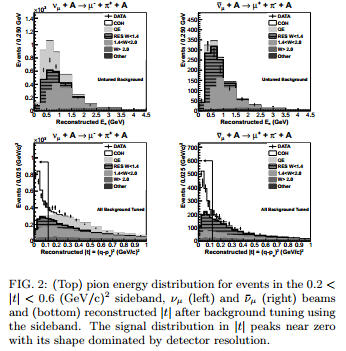
When neutrinos do interact with another particle, it happens at very close distances and involves a high-momentum transfer.  Mostly. Physicists have found evidence that these tiny particles might be involved in a weird reaction, even for neutrinos. A paper in Physical Review Letters shows that neutrinos sometimes can also interact with a nucleus but leave it basically untouched - inflicting no more than a "glancing blow" - resulting in a particle being created out of a vacuum.

The following is a guest post by David Orban, CEO at Dotsub, faculty and advisor at Singularity University, and trustee of Network Society Research.

When I implanted an NFC chip in my left hand about two months ago at the Singularity University Summit Europe in Amsterdam, I followed the tradition of our species that a hundred thousand years or more ago decided to become a cyborg.

