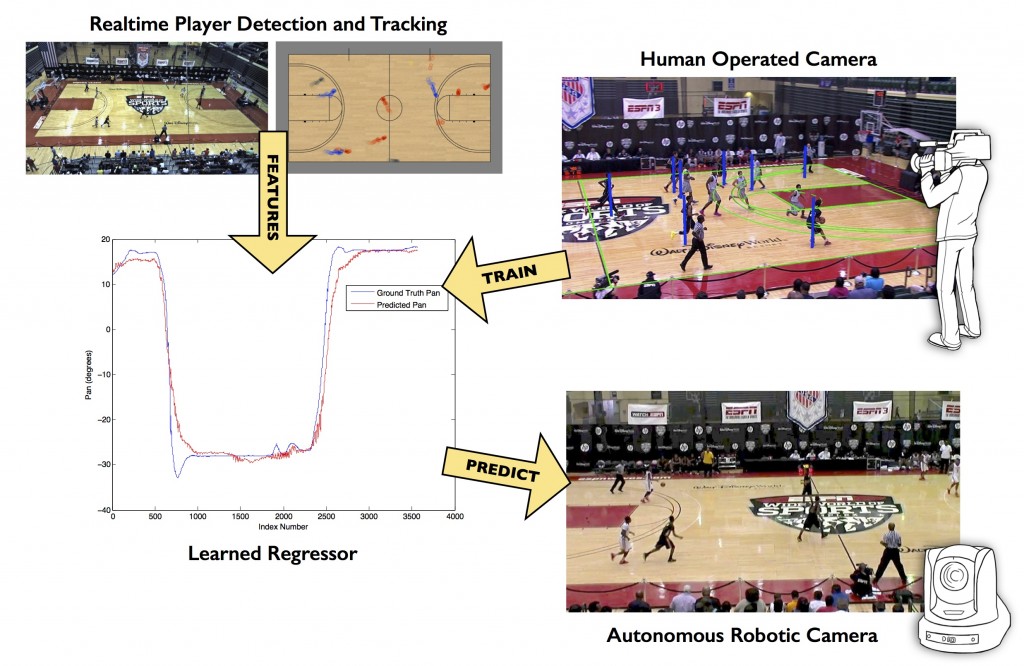
Automated cameras make it possible to broadcast sporting events but the choices lack the creativity of a human camera operator or director. The camera just goes back and forth following the ball.

Disney Research engineers have now made it possible for robotic cameras to learn from human operators how to better frame shots of a basketball game. Instead of tracking a key object, as legacy systems do, the new work is designed to mimic a human camera operator who can
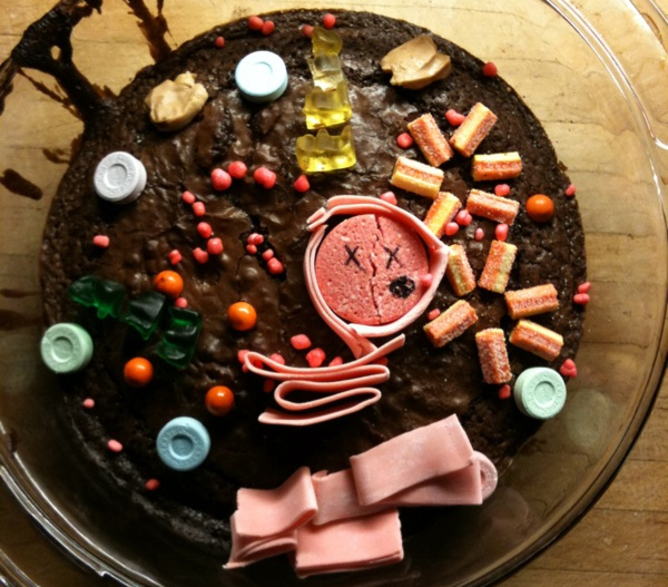
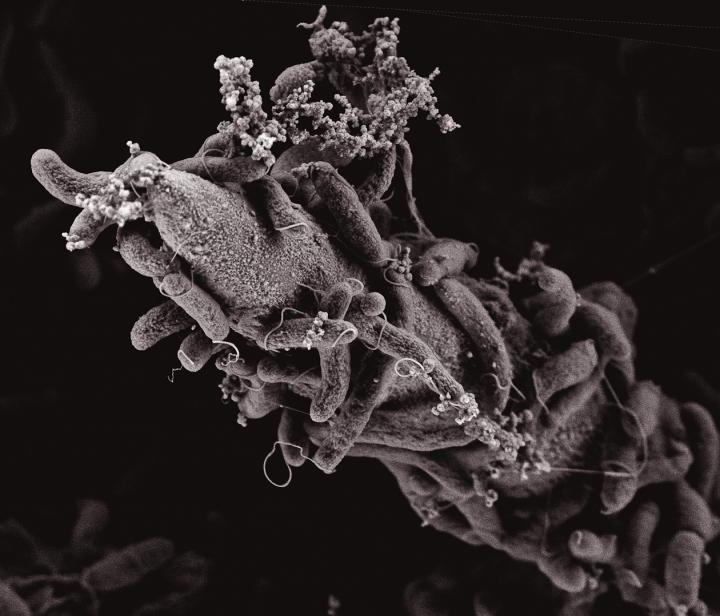
Ribosomes: squiggly and yummy. crobin, CC BY
By Robert Root-Bernstein, Michigan State University and Meredith Root-Bernstein, Aarhus University

In the Western world - well, outside Italy - people are told to reduce their anger or suffer its ill effects, such as stress, but new research using surveys from the US and Japan suggests that anger may actually be linked with better health. 

Displays of anger are strange to people in the West, especially stoic Americans. You can chop off the arm of an American and in many cases they will tell you to have a nice day. A recent incident on a Korean Air flight bound for Seoul illustrates the distinction. Heather Cho, former vice president of Korean Air and daughter of Korean Air Chairman Cho Yang-ho, went into a rage when she was improperly served a bag of macadamia nuts by the chief flight attendant.

Researchers have identified mutations which occur at four specific sites in what is known as the "hTERT promoter" in more than 75 percent of glioblastomas and melanomas.  

Telomerase is an enzyme largely responsible for the promotion of cell division. Within DNA, telomerase activation is a critical step for human carcinogenesis through the maintenance of telomeres. However, the activation mechanism during carcinogenesis - why cancer gets turned "on" - is not yet wholly understood. What is known is that transcriptional regulation of the human telomerase reverse transcriptase (hTERT) gene is the major mechanism for cancer-specific activation of telomerase.

Since the discovery of how DNA encodes genetic information, evolutionary biology has focused on genes. One popular hypothesis - the "selfish gene" theory - states that cells and organisms exist simply as packages to protect and transmit genes.

The selfish gene is by no means accepted and a new paper gives biological 'selfishness' itself a twist, and proposes that if anything is "selfish" it must be the ribosome. That might change everything the public thinks they know about the evolution of life and, in fact, the function of ribosomes themselves.

White fat and brown fat have been well documented regarding metabolism but new research has introduced data that may be important this winter and this new year: each type of fat may change into the other, depending on the temperature.

In particular, cold temperatures may encourage "unhealthy" white fat to change into "healthy" brown fat.

A new study finds that fructose is bad.  Biologists who fed mice sugar in doses proportional to what many people eat found that the ratio of fructose and glucose in high-fructose corn syrup was more toxic than than random variations found in sucrose (table sugar). They conclude that the precisely-determined fructose reduced both the reproduction and lifespan of female rodents. 

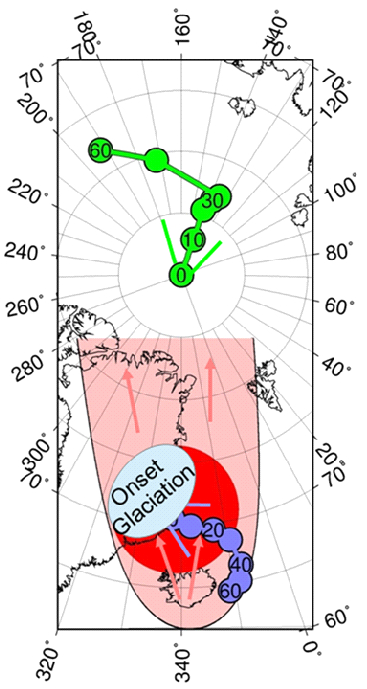
The ice on Greenland formed due to processes in the deep Earth interior of the Arctic, large-scale glaciations that began about 2.7 million years ago. Prior to that, the northern hemisphere was so warm it was mostly without it, and that period lasted for 500 million years.

The big question geologically is why the glaciation of Greenland only developed so recently. 

It's because of the interaction of three tectonic processes. Greenland literally had to be lifted up, so that the mountain peaks reached into sufficiently cold altitudes of the atmosphere. Greenland also needed to move sufficiently far northward, which led to reduced solar irradiation in winter. Then a shift of the Earth axis caused Greenland to move even further northward.


Cholera is characterized by acute watery diarrhea resulting in severe dehydration and occurs  when the bacterium Vibrio cholerae infects the small intestine.

How does it happen?