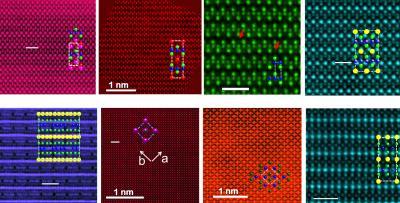


New measurements of atomic-scale magnetic behavior in iron-based superconductors are challenging conventional wisdom about superconductivity and magnetism. 


Emiliania huxleyi, up close and personal. Alison R. Taylor, CC BY

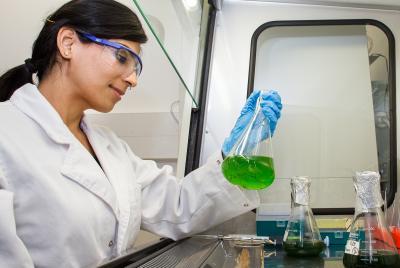
Water is abundant and so is sunlight, and using them to create hydrogen makes sense for a cleaner energy future, where biological systems powered by sunlight can manufacture hydrogen to use as fuel.

The way that plants produce hydrogen by splitting water has been poorly understood but answers are getting closer. A research team created a protein which, when exposed to light, displays the "electrical heartbeat" that is the key to photosynthesis. 

The system uses a naturally-occurring protein and does not need batteries or expensive metals, meaning it could be affordable in developing countries. 

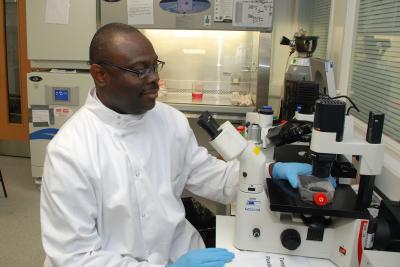
Alzheimer's disease can be slowed and some of its symptoms curbed by punicalagin, a natural compound, found in pomegranate, according to a  study in Molecular Nutrition and Food Research.

Alzheimer's affects up to 44.4 million people globally. 

The two-year project headed by University of Huddersfield scientist Dr. Olumayokun Olajide also found that the painful inflammation that accompanies illnesses such as rheumatoid arthritis and Parkinson's disease could be reduced.

Preparing the documents needed for an exam for a career advancement, to a scientist like me, is something like putting order in a messy garage. Leave alone my desk, which is indeed in a horrific messy state - papers stratified and thrown around with absolutely no ordering criterion, mixed with books I forgot I own and important documents I'd rather have reissued rather than searching for them myself. No, I am rather talking about my own scientific production - pubished articles that need to be put in ordered lists, conference talks that I forgot I have given and need to be cited in the curriculum vitae, refereeing work I also long forgot I'd done, internal documents of the collaborations I worked in, students I tutored, courses I gave.

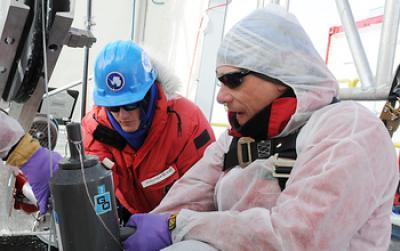
Humans don't want to live above the West Antarctic ice sheet but microbes can certainly live below it, according to a new study. Even half a mile below it.

The waters and sediments of a lake 2,600 feet beneath the surface of the West Antarctic ice sheet support "viable microbial ecosystems", according to recent results. Given that more than 400 subglacial lakes and numerous rivers and streams are thought to exist beneath the Antarctic ice sheet, such ecosystems may be widespread and may influence the chemical and biological composition of the Southern Ocean, the vast and biologically productive sea that encircles the continent.

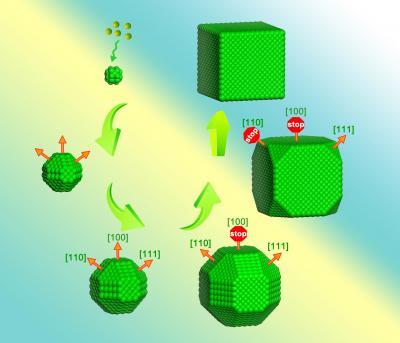
The first direct observations of how facets form and develop on platinum nanocubes reveals that a nearly 150 year-old scientific law describing crystal growth breaks down at the nanoscale.

The researchers behind a new study used transmission electron microscopes and an advanced high-resolution, fast-detection camera to capture the physical mechanisms that control the evolution of facets – flat faces – on the surfaces of platinum nanocubes formed in liquids.

Understanding how facets develop on a nanocrystal is critical to controlling the crystal's geometric shape, which in turn is critical to controlling the crystal's chemical and electronic properties.

Researchers have developed a new process which will greatly simplify the process of sorting plastics in recycling plants by enabling automated identification of polymers and facilitating rapid separation of plastics for re-use.

Thanks to effective vaccination, polio is nearly eradicated and only a few hundred people are stricken worldwide each year.

But researchers in PNAS have reported alarming findings: a mutated virus was able to resist the vaccine protection to a considerable extent in the Congo in 2010. The pathogen could also potentially have infected many people in Germany. 

Most consumers have an idea of their favorite pizza and it may have nothing at all to do with taste. The imagery on television commercials is gooey cheese stretching from the pie to the slice.

Marketers have always known that cheese matters and now science is backing that up. Writing 
in the Journal of Food Science, scholars went beyond the standard trope of having golden cheese with that dark toasted-cheese color scattered in distinct blistery patches across the surface and a bit of oil glistening in the valleys and honed in on the various aspects that impact the total pizza experience.

