





Christine de Pisan instructs her son, Jean de Castel, c.1413. Source: Wikimedia Commons

By Juanita Feros Ruys, Senior Research Fellow and Associate Director of the Medieval and Early Modern Centre at University of Sydney

Algae is a bad thing in your poor, but in the ocean they are the ultimate source of all organic matter that marine animals depend upon.

Using a combination of satellite imagery and laboratory experiments, researchers have evidence showing that algae is
sucking up climate-warming carbon dioxide from the atmosphere and sinking it to the bottom of the ocean. 

And for that, we can thank one other thing people dislike: viruses.

Global warming has been implicated in many things, it is certainly being implicated in the latest drought in California, the worst since 2002, which was the worst since the early 1990s -and now it is being linked to a change in tectonic plates.

Scientists at Scripps Institution of Oceanography at U.C. San Diego say that the loss of water is causing the entire western U.S. to rise up like an uncoiled spring.

By Karin Heineman, Inside Science

When tornadoes hit, they are often quick, deadly and come without warning.

In 2013, more than fifty people were killed during tornadoes.

“We have tornadoes at daytime, we have tornadoes at night,” said Dev Niyogi, a climatologist at Purdue University in West Lafayette, Indiana.

Now, researchers at Purdue say there are certain areas that may be more likely than others to be hit by tornadoes.

“The region just around the city becomes a hotspot for where a tornado can occur,” explained Niyogi.

To sexually objectify someone is to focus on their body in terms of how it can provide sexual pleasure rather than viewing that person as a complete human being with thoughts and feelings.

Objectification has long been considered a problem in the media - stories of Mad Men star Jon Hamm invariably mention that he doesn't wear underwear - but how does it affect individual romantic relationships? 

New surveys hope to tell us, but since they are by social psychologists and the paper is in Psychology of Women Quarterly, a feminist, scientific, peer-reviewed journal, they only find that objectification of a female partner's body is related to higher incidents of sexual pressure and coercion. 


By Agus Santoso, Senior Research Associate at UNSW Australia.

It looks like it’s all over bar the shouting for the chance of this year bringing on a “super” El Niño. Or is it?

No one knows why Hypospadias, a birth defect where the urethral opening is abnormally placed, became more common among Swedish boys in recent decades. Before 1990, it happened in 4.5 per 1,000 boys, and after that increased to 8 per 1,000 boys.

Researchers looked at past attributed causes (in epidemiology, they find two curves that go the same direction and attribute causation), such as low-birth weight, being born a twin, or being born from in vitro fertilization (IVF) to conceive, but the curves did not match.

Maybe it was less reported in 1973. No one can say. So they created a new cause out of thin air: endocrine disruptors.
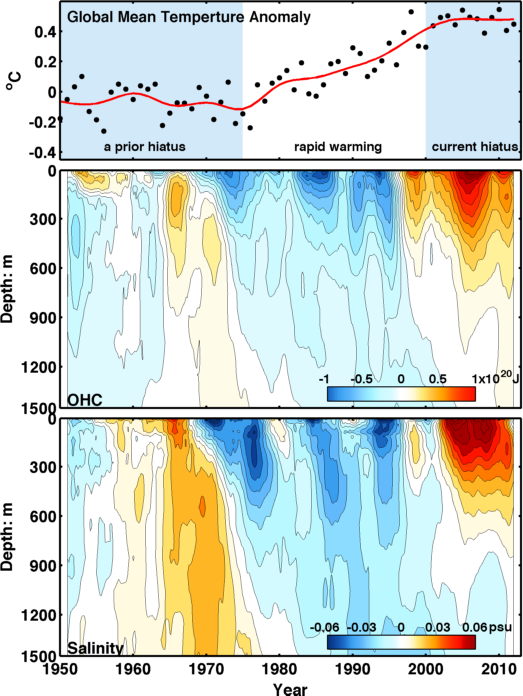
Though the end of the 20th century looked like we were going to see runaway temperatures around the globe, that hasn't really happened despite countries like China and Russia and Mexico and India continuing to belch CO2 into the atmosphere.

More than a dozen hypotheses have been proposed for the so-called global warming hiatus, ranging from air pollution to volcanoes to sunspots and now the University of Washington has entered the fray, saying that the heat absent from the surface is plunging deep in the north and south Atlantic Ocean, and is part of a naturally occurring cycle. 

A study has identified a protein that appears to play a key role in protecting people infected with Mycobacterium tuberculosis — the bacterium that causes tuberculosis — from developing the active form of the disease. The protein, interleukin-32, was discovered to be one biomarker of adequate host defense against TB.

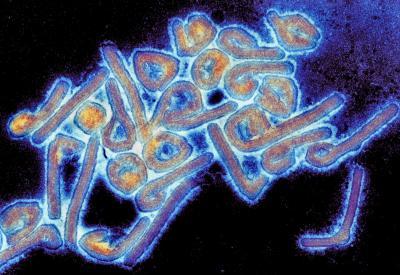
Tekmira Pharmaceuticals and collaborators at the University of Texas Medical Branch at Galveston, have protected nonhuman primates against Marburg virus, also known as Angola hemorrhagic fever.

There are currently no vaccines or drugs approved for human use and no post-exposure treatment that has completely protected nonhuman primates against MARV-Angola, the most deadly Marburg viral strain, with a mortality rate of up to 90 percent. This virus, which is in the same family as Ebola, has a rapid disease course (seven to nine days) in nonhuman primates. There have been two recent imported cases of MARV HF to Europe and the United States, further increasing concern regarding the public health threat posed by this deadly virus.

