






Paid editors on Wikipedia – should you be worried?

By Kim Osman, PhD Candidate at Queensland University of Technology

Whether you trust it or ignore it, Wikipedia is one of the most popular websites in the world and accessed by millions of people every day. So would you trust it any more (or even less) if you knew people were being paid to contribute content to the encyclopedia?

Calcium buildup in the coronary arteries of chronic kidney disease patients may be a strong indicator of heart disease risk, according to a new study in the Journal of the American Society of Nephrology (JASN). Researchers at the Johns Hopkins Bloomberg School of Public Health assert that coronary calcium outperforms two other commonly used measures of subclinical atherosclerosis in predicting the risk of heart disease among individuals with kidney disease.

Approximately 50 percent of all patients with chronic kidney disease (CKD) die from cardiovascular disease, but some previous studies concluded that conventional risk factors for predicting heart disease -- such as blood pressure and lipid levels -- were not as useful in CKD patients.

When America invaded both Iraq and Afghanistan, critics of President George Bush insisted that Muslim countries were not ready for democracy and he would fail. 

Were they right? Does Islam only lend itself to dictatorships?

The record in the past hundred years is not good. What was once a cradle of scientific thought hasn't produced anything meaningful since the new fundamentalism took hold. But sociologists say Muslims may be ready than western liberals think.   


By James Smith, Research Fellow in Fisheries at UNSW Australia

It may sound overly simple, but just five processes can define us as animals: eating, metabolism, reproduction, dispersal and death.

They might not seem like much, but, thanks to a mathematical model from scientists at Microsoft Research, we know that these five processes are the key to all ecosystems.

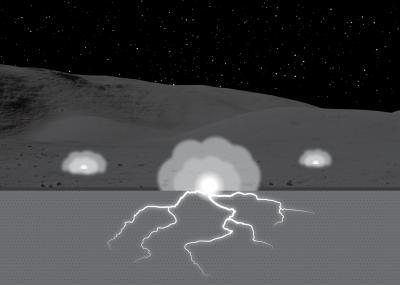
The moon is a tranquil place but an article in the Journal of Geophysical Research-Planets suggests that periodic storms of solar energetic particles may have significantly altered the properties of the soil in the moon's coldest craters through the process of sparking - it just took eons.

The article proposes that high-energy particles from uncommon, large solar storms penetrate the moon's frigid, polar regions and electrically charge the soil. The charging may create sparking, or electrostatic breakdown, and this "breakdown weathering" process has possibly changed the very nature of the moon's polar soil, suggesting that permanently shadowed regions, which hold clues to our solar system's past, may be more active than previously thought.

The recently published genome of Brassica napus — commonly known as canola — paves the way for improved versions of the plant, which is used widely in farming and industry. 

Young girls with an intense, red, itchy rash on their outer genital organs - vulvitis - may be at increased risk of developing urinary tract infections, according to new research from Wake Forest Baptist Medical Center. 

Vulvitis is not a disease, but rather inflammation of the the vulva. It is the most common gynecological condition in pre-menstrual girls and is the greatest reason for referral to a pediatric gynecological specialist. 

The treatment may be as simple as better hygiene and avoiding potential irritants such as bubble baths and swimming pools.

Across Australia, catch Mars and Saturn around 8 pm local time.Source: Museum Victoria/Stellarium

By Tanya Hill, Museum Victoria

By Mark Lawler, Queen's University Belfast

Personalized medicine is the ability to tailor therapy to an individual patient so that, as it’s often put, the right treatment is given to the right patient at the right time. But just how personal is it?

While the phrase might conjure up images of each patient getting their own individual therapeutic cocktail – this isn’t actually the case. Designing an individually tailored package would be too labour intensive and (at least currently) too expensive. Instead, the answer lies in understanding the genetics of patients and disease.

