
Microseconds after the big ban happened the universe was a superhot, superdense primordial soup of “quarks” and “gluons,” particles of matter and carriers of force.

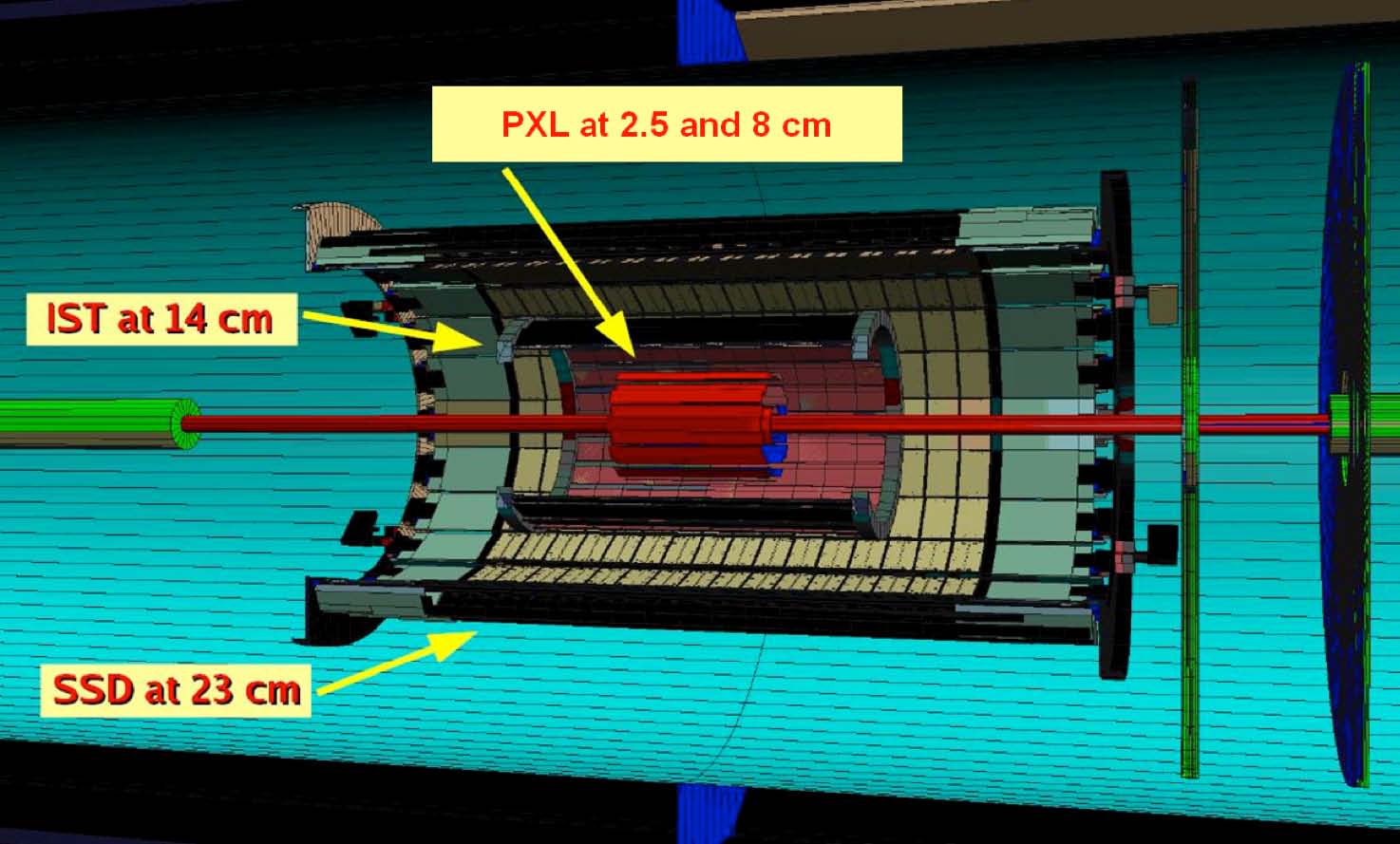
The quark-gluon plasma cooled almost instantly but it set the stage for the universe we know today and to better understand how the universe evolved, a quark-gluon plasma is being reproduced in giant particle accelerators like the Relativistic Heavy Ion Collider (RHIC) at Brookhaven National Laboratory (BNL), where the Solenoidal Tracker at RHIC ("STAR") experiment has been collecting and analyzing data for the past decade.

In 2011, a tsunami hit Japan. While the damage to a nuclear power plant got all of the media attention, with activists claiming mutant pregnancies in California a short while later, the environmental damage caused by the tsunami itself should be more of a concern.

The amount of debris in the ocean is growing exponentially and the driftage generated by the 2011 tsunami gave scientists Nikolai Maximenko and Jan Hafner a unique chance to learn about the effects of the ocean and wind on floating materials as they move across the North Pacific Ocean. 

Are you worried you are losing your memory and wonder if you might have Alzheimer's coming?

You have a good chance of being correct. Self-reported memory complaints predict clinical memory impairment later in life rather well, according to a new paper. Erin Abner, Ph.D, an assistant professor at the University of Kentucky's Sanders-Brown Center on Aging, asked 3,701 men aged 60 and older a simple question: "Have you noticed any change in your memory since you last came in?" 

That answers told a rather accurate medical tale. "It seems that subjective memory complaint can be predictive of clinical memory impairment," Abner said. "Other epidemiologists have seen similar results, which is encouraging, since it means we might really be on to something."

A highly sexed mouse-like marsupial from Queensland's Springbrook National Park, the Black-tailed Antechinus , has been identified as a new species.
It's the third new species in the genus Antechinus Dr. Andrew Baker's research team has discovered in the past two years, all from south-east Queensland.

This one has a strange life. Males are unlikely to survive to see the birth of their children, the stress of mating seems to be too much for them.

Baker said he suspected the rare, Black-tailed Antechinus was a separate species when he and his team came across it last May because it had distinctive yellow-orange markings around its eyes and on its rump, and a black tail and feet.

When women enter menopause, estrogen levels drop and that is linked to increased risk of cardiovascular disease, but research from  University of Copenhagen’s Centre for Team Sport and Health finds that interval-based team sport can make up for this estrogen loss.

Estrogen, the primary female sex hormone, is an important guardian of the female vascular system. Thus, s oestrogen levels fall during menopause, the risks of increased blood pressure and development of cardiovascular disease increases.  Team sports improve the condition of women, reduces blood pressure and thus protects the cardiovascular system.  

Bacteria and other microbes can be genetically engineered to perform a variety of valuable jobs, from producing safer, more effective medicines and sustainable fuels to cleaning up air, water and land.

Cells from eukaryotic organisms can also be modified for research or to fight disease. To achieve these and other worthy goals, the ability to precisely edit the instructions contained within a target’s genome is a must. A powerful new tool for genome editing and gene regulation has emerged in the form of a family of enzymes known as Cas9, which plays a critical role in the bacterial immune system.
Recent Planck spacecraft observations of the Cosmic Microwave Background (CMB) – the fading glow of the Big Bang – have highlighted a discrepancy between cosmological results and  predictions from other types of observations. The CMB is the oldest light in the Universe, and its study has allowed scientists to accurately measure cosmological parameters, such as the amount of matter in the Universe and its age. But an inconsistency arises when large-scale structures of the Universe, such as the distribution of galaxies, are observed.

The body temperature of cold-blooded (ectothermic) animals, including insects, is ultimately determined by ambient temperature, and that impacts the speed and efficiency of their vital biological processes also.

But is it changes in average temperature or frequency of extreme temperature conditions that have the greatest impact on species distribution? A group of Danish and Australian researchers decided to examine a number of insect species to find out.

Researchers have used fishing line fiber and sewing thread to create inexpensive artificial muscles.
 
The inexpensive, artificial muscles generate far more force and power than human or animal muscles of the same size and could be used in medical devices, humanoid robots, prosthetic limbs, or woven into fabrics.

"In terms of the strength and power of the artificial muscle, we found that it can quickly lift weights 100 times heavier than a same-sized human muscle can, in a single contraction," says University of British Columbia Electrical and Computer Engineering professor John Madden. "It also has a higher power output for its weight than that of an automobile combustion engine."

A common space weather phenomenon on the outskirts of Earth's magnetic bubble, the magnetosphere, has a much different effect on Venus.

 The giant explosions, called hot flow anomalies, can be so large at Venus that they're bigger than the entire planet - and they can happen multiple times a day. 
Earth is protected from the constant streaming solar wind of radiation by its magnetosphere.

Venus, on the other hand, is a barren, inhospitable planet, with an atmosphere so dense that spacecraft landing there are crushed within hours. Venus has no magnetic protection.

