


As is well known to readers of this blog, I do not have much sympathy for philosophers like Alvin Plantinga. That’s not because the guy’s not smart (he certainly is), nor because he hasn’t published interesting philosophical arguments (he certainly has). But people like Plantinga still stride what should by now be an impossibly uncomfortable divide and ever widening gap between serious philosophy and theology.

Dolphins can recognize the whistles of former tank mates even after being separated for more than 20 years; that's the longest social memory known outside people.

This adds to evidence that dolphins have a level of cognitive sophistication comparable to few other species, including chimpanzees and elephants. Dolphins' talent for social recognition may be even comparable or more long-lasting than facial recognition among humans, since human faces change over time but the signature whistle that identifies a dolphin remains stable over many decades. 

"This shows us an animal operating cognitively at a level that's very consistent with human social memory," said Dr. Jason Bruck of the University of Chicago's program in Comparative Human Development. 

Women are given a 'due date' for their baby that is calculated as 280 days after the onset of their last menstrual period. 

Yet it's unlikely to be anything more than a guide. Only 4 percent of women deliver at 280 days and only 70% deliver within 10 days of their estimated due date, even when that date is calculated with the help of ultrasound. In the real world, the length of pregnancy can vary naturally by as much as five weeks 

Researchers have been able to pinpoint the precise point at which a woman ovulates and a fertilised embryo implants in the womb during a naturally conceived pregnancy, and follow the pregnancy through to delivery. Using this information, they have been able to calculate the length of 125 pregnancies. 

An article in BMJ reports on the first instance of probable person-to-person transmission of the new avian influenza A (H7N9) virus, which was recently identified in Eastern China.  As of June 30th 2013, 133 cases had been reported, resulting in 43 deaths. 

Most cases appear to have visited live poultry markets or had close contact with live poultry 7-10 days before illness onset. Currently no definite evidence indicates sustained human-to-human transmission of the H7N9 virus.

A RIKEN research team says that an enzyme called Rines regulates
Monoamine oxidase A (MAO-A), a major brain protein controlling emotion and mood, making it a potential drug target for treating depression.

Monoamine oxidase A is an enzyme that breaks down serotonin, norephinephrine and dopamine, neurotransmitters well-known for their influence on emotion and mood. Nicknamed the "warrior gene", a variant of the MAOA gene has been associated with increased risk of violent and anti-social behavior.

While evidence points to a link between MAO-A levels and various emotional patterns, however, the mechanism controlling MAO-A levels in the brain has remained unknown.

In a new study, researchers show that is possible to restore immune function in spinal injured mice.

People with spinal cord injury often are immune compromised, which makes them more susceptible to infections. Why spinal cord injury patients become immune-suppressed is not known, but the paper says that a disorder called autonomic dysreflexia,  a potentially dangerous complication of high-level spinal cord injury characterized by exaggerated activation of spinal autonomic (sympathetic) reflexes, can cause immune suppression. 

Autonomic dysreflexia can cause an abrupt onset of excessively high blood pressure that can cause pulmonary embolism, stroke and in severe cases, death.

If you have to have light at night, a new study suggests that the color can make a big difference in how (un)healthy it is - and the answer is counter-intuitive.

Though the color blue is believed to have a calming effect, a study involving hamsters found that blue light had the worst effects on mood-related measures, followed closely by white light. The best? Red.  

Hamsters exposed to red light at night had significantly less evidence of depressive-like symptoms and changes in the brain linked to depression, compared to those that experienced blue or white light. Total darkness is still best.

In the next few months, something big is going to happen - but don't worry if you miss it, in about 11 years, it will happen again.

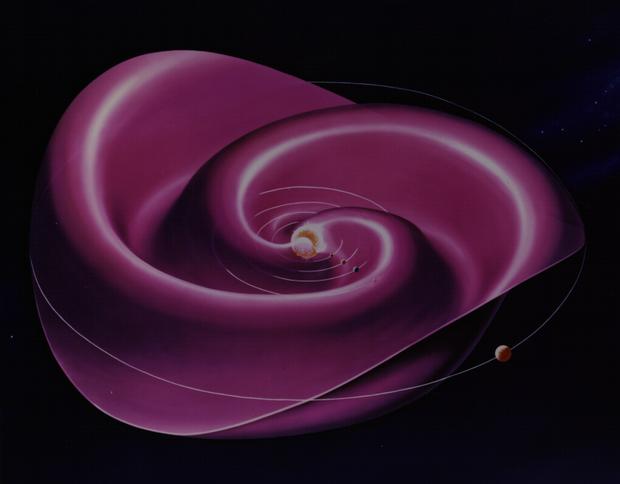
The sun's vast magnetic field is about to flip.

The sun's magnetic field changes polarity approximately every 11 years, at the peak of each solar cycle as the sun's inner magnetic dynamo re-organizes itself. The coming reversal will mark the midpoint of Solar Cycle 24, which means half of 'Solar Max' will be behind us, with half yet to come. 

Over 12 billion years ago, a star exploded and blasting its remains outward in twin jets at nearly the speed of light. Its glow was a million times brighter than its entire galaxy.

After traveling across space for 12.7 billion years, that flash was seen by astronomers on a planet that didn't even exist when the explosion happened - Earth. By analyzing this light, astronomers learned about a galaxy that was otherwise too small, faint and far away for even the Hubble Space Telescope to see.

I've just returned from a week on Kauai.  It is known as "The Garden Isle" of the Hawaiian chain, but recently that garden has been heavily sown with seeds of fear, suspicion, and conspiratorial narratives.

On Wednesday, the 31st of July, there was a marathon session of the County Council during which hundreds of people lined up to give testimony about Bill 2491 from 1 pm until midnight.  Angst was a common theme. The activist speakers made hyperbolic assertions about heartless corporations perfectly willing to sicken the entire population of the island and destroy the environment. Many non-agricultural residents expressed their palpable fear for the safety of their families.


