




"I think I can safely say that nobody understands quantum mechanics," spoke American physicist, educator and quote machine Richard Feynman — underlining the idea that even leading scientists struggle to develop an intuitive feeling for quantum mechanics. 

One reason for this is that quantum phenomena often have no counterpart in classical physics, as we see in quantum entanglement: Entangled particles seem to directly influence one another, no matter how widely separated they are. It looks as if the particles can 'communicate' with one another across arbitrary distances. Albert Einstein, famously, called this seemingly paradoxical behavior "spooky action at a distance."

In animals that reproduce by internal fertilization, as humans do, the penis is invaluable, from an evolutionary point of view. 

Yet birds have evolved to not need them. Developmentally speaking, birds' penises have gone. Land fowl, which have only rudimentary penises as adults, have normally developing penises as early embryos. Later in development, however, the birds turn on a genetic program that leads their budding penises to stop growing and then wither away.

A Tool For Etymologists

Advances in science frequently generate new words and phrases.  Accordingly, a good source of etymological information can often help pin down the era in which a new discovery was made.  Similarly, a knowledge of the history of discovery can help to pin down the era in which a word or phrase was coined.

Astronomers can look back in time by gathering light from distant stars that was sent billions of years ago. Another way to learn about the past is to study similar stars to our own, but at a much younger age.

New work  studying the young star TW Hydrae, located about 190 light-years from Earth in the southern constellation Hydra the Water Snake, suggests that our Sun was both active and "feisty" in its infancy, growing in fits and starts while burping out bursts of X-rays.

In one sense, I am happy that there is enough interest in the concept of “junk DNA” (and by extension, my area of research in genome size evolution) that the subject gets regular media attention.

Studies have shown that religious people are actually helped by faith in stressful situations.

Oxford University psychologists suggest atheists are also helped by belief during times of crisis; the explanatory and revealing power of science increases in the face of stress or anxiety, they have found.

The social psychologists argue that a 'belief in science' may help non-religious people deal with adversity by offering similar comfort and reassurance that religious people get from spirituality.

Karlsruhe's Institute of Technology, Freie Universität Berlin and the University of Geneva set out to determine whether and how far laser light and plasma can influence cloud formation.

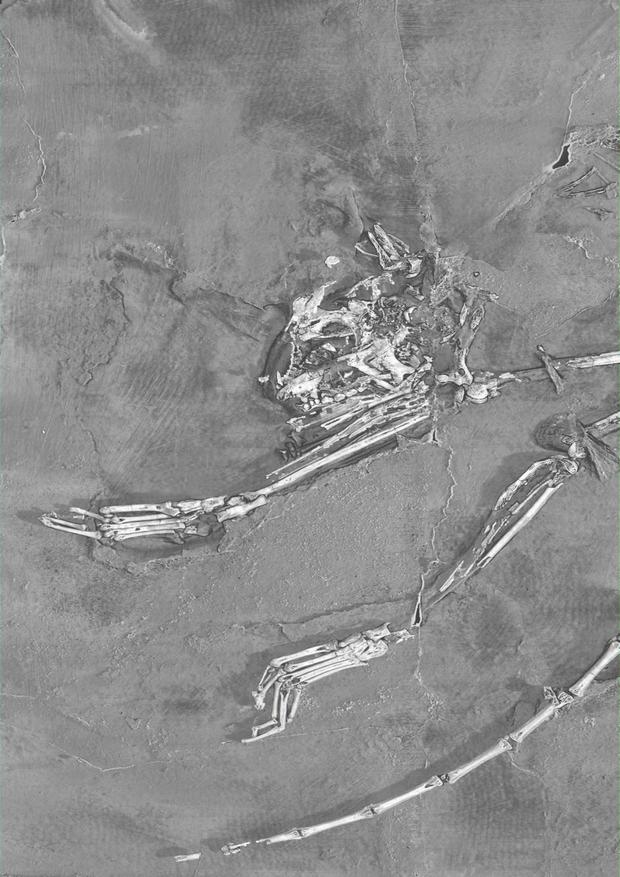
The world’s oldest known fossil primate skeleton, unearthed from an ancient lake bed in central China’s Hubei Province, near the course of the modern Yangtze River, represents a previously unknown genus and species that has been named Archicebus achilles, according to the paper in Nature

The new fossil takes its name from the Greek arche (meaning beginning or first; the same root as archaeology) and the Greek kebos (meaning long-tailed monkey). The species name achilles (derived from the mythological Greek warrior Achilles) highlights the new fossil’s unusual ankle anatomy.

You're an animal, says Dominique Lestel, a French philosopher who opposes the separation of human and animal life.  

In a new paper, Lestel reminds sociology readers that we are animals and says animals profoundly influence our culture – perhaps more so than they had initially thought.

Western thought that the human species is highly developed and that sets the human species apart. Lestel instead advocates animality (our animal nature) and says humanization is an ongoing performative practice, rather than a historical threshold that was crossed long ago.

A Georgia State University researcher says the Clean Air Act signed by President Richard Nixon in 1970 led to climate change - in a good way. 

Jeremy Diem, an associate professor in the Department of Geosciences, analyzed summer rainfall data from nine weather stations in the Atlanta metropolitan area from 1948 to 2009, and discovered that precipitation increased in the late 1970s after drops in the 1950s and '60s.

Cause: Passage of the Clean Air Act of 1970, he says. Pollution had been higher in the earlier decades. Some studies have found a general correlation between air pollution and rainfall, with higher concentrations of particulates in the air suppressing rainfall, they conclude.


