






It's rare that a government commission won't take the opportunity to increase its authority and its importance.  It's good job security and makes people feel relevant, even if it's not only unnecessary but being resisted by virtually everyone outside the commission, like in the case of the FCC trying to take over the Internet.

Yet The Presidential Commission for the Study of Bioethical Issues, created by executive order in 2009, released its report on synthetic biology yesterday and said, just this once, things are okay without more rules.

This is the last of the four part series about the Edge discussion between Lee Smolin and Leonard Susskind.

I previously discussed the physics and the philosophical issues. You will have by now understood who won the battle in my eyes. However, I would like to use this final opportunity to stress that we have yet again a clear showcasing of that it is, as so often, sufficient to merely analyze the style of argumentation in order to figure out who is not to be trusted.
A million years is a blink of an eye in evolution but that doesn't mean newer genes matter less in life itself.    
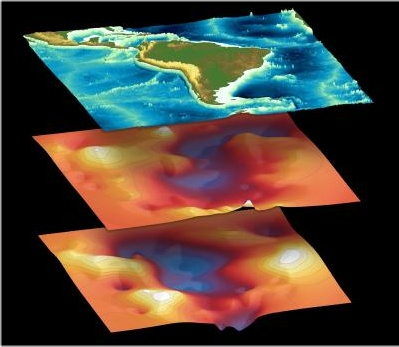
A geophysicist has made the first-ever measurement of the strength of the magnetic field 1,800 miles underground - inside Earth's core.

The magnetic field strength is 25 Gauss, they say, 50 times stronger than the magnetic field at the surface that makes compass needles align north-south, the middle range of what geophysicists predicted, but it puts constraints on the identity of the heat sources in the core that keep the internal dynamo running to maintain this magnetic field.
While you sit there, I am simultaneously providing this blog post, this podcast, and this AGU talk.  All on the same topic-- how can we get scientists to provide science for public consumption.

The podcast poses these problems for you, the readers of science:

  • Who writes the science on the web?

  • What is their agenda?

  • Why don't scientists write it?
From the other side, my AGU talk tries to solve it for scientists.  It's rooted in the way that science careers are made and lost.
Today we find a study published which indicates that children that consume caffeine may sleep less.  Besides the fact that this is an obvious and expected finding, it is interesting to note that this is the result of parents being surveyed during routine visits to the doctor.

So, besides the fact that the sleep requirements may vary significantly over the age group studied (5-12 year olds), we are now accepting, as scientific, data on the correlation between caffeine consumption and hours of sleep based on the anecdotal evidence of parents during a doctor's visit.  
While Christmas shopping today with my sister and little 3 year old niece, I noticed something that rather disturbed me. And as difficult as it is for me to say this—it was Barbie.

Claire and Barbies
OMG. So many Barbies!
Metabolic engineering may rescue our energy future. A new strain of yeast that is more efficient at fermenting galactose might make red seaweed a viable future biofuel.

Producers of biofuels made from terrestrial biomass crops have had difficulty breaking down recalcitrant fibers and extracting fermentable sugars. The harsh pretreatment processes used to release the sugars also resulted in toxic byproducts, inhibiting subsequent microbial fermentation.

But perhaps marine biomass can be more easily degraded to fermentable sugars, leading to production rates and range of distribution higher than terrestrial biomass.
An asteroid the size of a Volvo exploded over Sudan's Nubian Desert in 2008 and initial research was focused on classifying the meteorite fragments soon after they were strewn across the desert and tracked by NASA's Near Earth Object astronomical network. Now in a series of 20 papers published in Meteoritics and Planetary Science and the diversity of these fragments introduces as many questions as it does answers.
Humans are essentially unsatisfied creatures - if you take a starving dog out of the rain and feed him, he will love you forever.   After a few weeks of nice treatment, many humans will decide they deserved to be taken out of the rain and maybe even that they are doing you a favor.

So it goes with wealth.   Money does buy happiness, contrary to folk wisdom - it just doesn't last.  In the case of entire nations that get a better standard of living, after about a decade happiness is no longer rising with wealth.   Let's not kid ourselves, people in wealthier nations are happier, on average, than people in poor ones, but it does not rise forever.


