




In a new study, cancer biologists show that restoring the protein p53's function in mice with early lung cancer has no effect in tumor development but restoring p53 function later may prevent more advanced tumors from spreading throughout the body. 
Some of the universe's most massive galaxies may have formed billions of years earlier than current scientific models predict, according to findings in the Astrophysical Journal

That conclusion was drawn because newly identified galaxies were five to ten times more massive than our own Milky Way. They were among a sample studied at redshift 3≤z<4, when the universe was between 1.5 and 2 billion years old.
Physicists from the University of Bonn have developed a completely new source of light, a Bose-Einstein condensate consisting of photons, something not known to be possible, which may potentially be suitable for designing light sources resembling lasers that work in the x-ray range. 

By cooling Rubidium atoms deeply and concentrating a sufficient number of them in a compact space, they suddenly become indistinguishable. They behave like a single huge "super particle." Physicists call this a Bose-Einstein condensate.
This holiday season, starting today when you bite into the cranberry sauce and the tartness smacks your tongue as hard as that snide comment from your sister, consider the power of sour.
Neurobiology researchers at the University of Southern California have made a surprising discovery about how some cells respond to sour tastes.

Of the five taste sensations — sweet, bitter, sour, salty and umami — sour is arguably the strongest yet the least understood. Sour is the sensation evoked by substances that are acidic, such as lemons and pickles. The more acidic the substance, the more sour the taste.
Some researchers have proposed that, because people can get through money certain things they can get through acceptance, money might act as a substitute for social acceptance. Since social distress and physical pain seem to have similar underlying mechanisms, a few interesting experiments have been done to test this idea. One study reports six experiments, which I'll summarise briefly here.

A recent National Science Foundation Distinguished Lecture series featured Michael Goodchild, a world-renowned geographer and director of the University of California, Santa Barbara's Center for Spatial Studies. On November 17, Prof.

Science told us that vitamins are good. The polluted environment and the stress of modern living result in more free radicals than evolution has prepared us for; supplementing is fine. I swallowed it – literally! Science tells us that supposedly “natural” supplements are also just out of molecules and that I am an esoteric mystic if I look into any childish natural stuff.
In my post about the somewhat wretched dating website HotOrNot.com, I wrote about researchers' determination that all humans value the same standards of beauty.

Really, no matter if you're hot or plain, you recognize a set standard of hotness—your self-image is subject to your creative delusions, but there's an inviolable piece of humanity that knows the truth about others. And so the obvious question is what about poultry? Specifically, are turkeys turned on by hot models?

Today, of all days, I'm sure you can see the importance of this research.
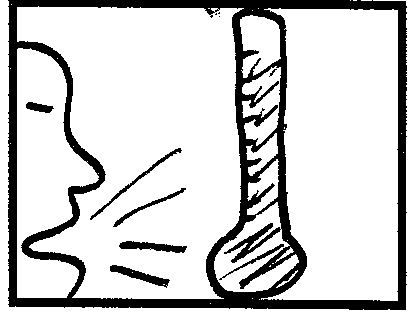
We know the mouth is a useful orifice for venting our feelings: if we're "hot," speaking our anger can help us "cool off". And so the bigger the mouth, the better the cooling, right? Actually, yes.

When our brain gets hot, we cool it through the mouth, and the best way to cool through the mouth is by yawning.

Researchers showed this by cooking parakeets.

Okay, they stopped short of actually cooking them, but they found that when temperature increased, the parakeet yawn rate doubled (there was no description of researchers' yawn rates).
“Extraordinary measures” is a heart-wrenching movie about a parent’s quest to save the lives of two dying children with Pompe disease. Starring Brandon Fraser (John Crowley) as the venture capitalist fathering the two children, and Harrison Ford (Robert Stonehill) as the aloof researcher with the science to curing Pompe, the story beautifully illustrates the many difficulties and challenges behind transforming basic science into a usable drug.


