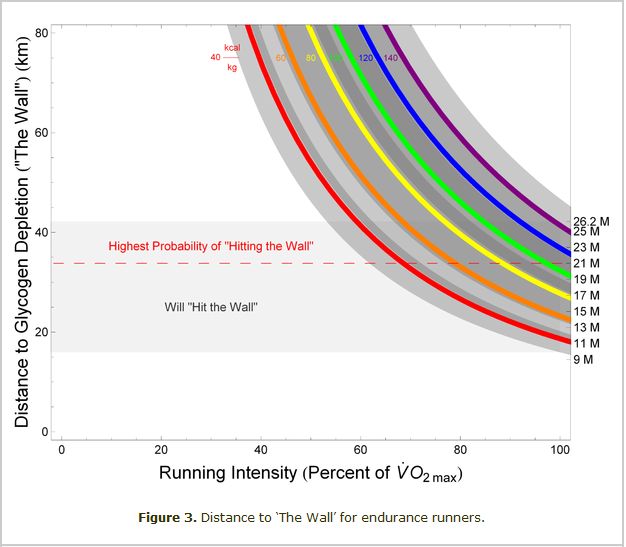
A numerical model can't help you finish a marathon, that will take a lot of running, but math can at least help you be the most efficient your body can be.
The best part about the night before a marathon is 'carb'ing up' the night before with a healthy pasta dinner but marathoners in training long before that make many mistakes with their diet, assuming "I'm in training" means they can eat twice as much of anything.
A new study in rats says growing up with lots of sisters makes a male less sexy to females, because the sex ratio of a male rat's family while young influences his sexual behavior and therefore how female rats respond to him later.
Early life obviously affects later behavior but how early and how much of an impact and how can it be quantified in a less 'soft' fashion. There are correlation studies that even conclude the position of a fetus in the uterus matters and that a female fetus that spends the pregnancy sandwiched between two brothers grows up to be more masculine because she's been exposed to their hormones.
Lithium-ion batteries are commonly regarded as promising for the cars of the future (at least until hydrogen fuel cells are ready for prime time) but environmentalists interested in electric or hybrid vehicles are concerned about the acid rain caused by battery manufacturing and high replacement cost for the batteries, which will last about the same as a standard car battery but are a terrific expense.
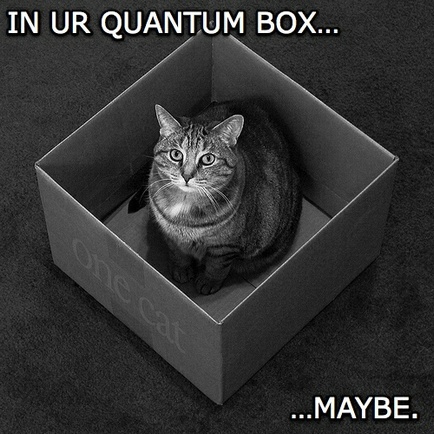
Anthropomorphizing, the process, as Twain might say, of “underestimating the animal by assigning to him human traits,” has had a good year. The reasons range from the continuing dominance of the Obama dog, Bo, on Fox News (Bo: “Socialist or simple anarcho syndiclist?”), to the rise of kitty cat “jammers” for tabby sleepover night. Not kidding. On the sleepover thing.
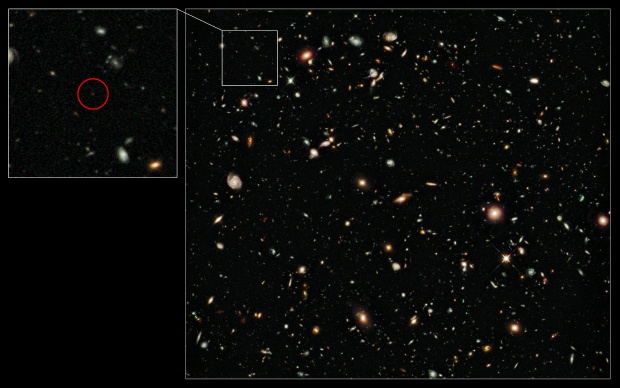
Astronomers report they have measured the distance to the most remote galaxy and have found that they are seeing it when the Universe was only about 600 million years old (a redshift of 8.6), making those the first confirmed observations of a galaxy whose light is clearing the opaque hydrogen fog that filled the cosmos at this early time.
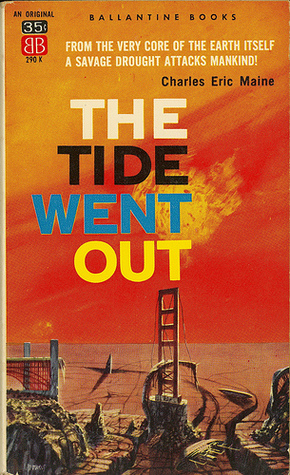
A Nuclear Eco-Catastrophe
One of the most recognized markers of cellular aging is the progressive accumulation of damage in the DNA, a molecule that cannot tolerate the alteration of the genetic information coded in its bases.
comScore, Inc. , a leader in measuring the digital world, today released a study of Internet usage in Russia based on August 2010 data from the comScore Media Metrix service and the data revealed that Russians are the heaviest social networkers worldwide in terms of time spent per user and that Yandex is the leading property in the Russian Federation.
Russia #1 Worldwide in Time Spent on Social Networking Sites
In August 2010, 34.5 million Russian Internet users (74.5 percent of the online population) visited at least one social networking site.
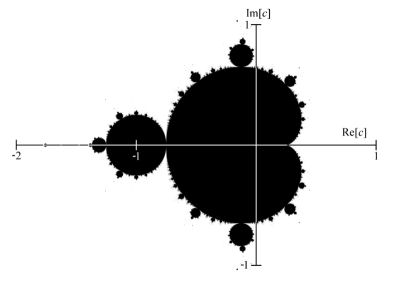
Benoit Mandelbrot died on 14 October 2010 in a hospice in Cambridge, Massachusetts, at the age of 85. His name is synonymous with the study of fractals, a term he himself coined in the 1970s.
Fractals: Form, Chance and Dimension was published in English in 1977 (the original French came out two years earlier) but the book that sealed Mandelbrot's fame as an original thinker was the 1982 classic, The Fractal Geometry of Nature. It is one of those rare books that can be read both by professionals and lay readers. It also helps that it is copiously illustrated so that even if the mathematics may appear esoteric just relax and enjoy the visual candy.
Leopards have but tigers have stripes. Why the difference? British Nobel laureate Rudyard Kipling, author of "The Jungle Book" and other stories, suggested the difference was because the leopard moved to an environment "full of trees and bushes and stripy, speckly, patchy-blatchy shadows". Was he right or was that a just-so story?
Experimental psychologists (nee behavioral ecologists(!)) from the University of Bristol wanted to know and they investigated the flank markings of 35 species of wild cats to understand what drives the evolution of such variation. They captured detailed differences in the visual appearance of the cats by linking them to a mathematical model of pattern development.