



It's a known aspect of the human condition that people tend to diminish the negative impact of something they do while recognizing the negative impact of things they don't do as common sense.   In Hollywood, director Rob Reiner thinks cigarettes should be censored from movies but has no problem with teenage sex in films.    Some blame junk food advertising for obesity but may think violence on TV has no impact.

A new study in the the Oxford Journal Social Cognitive and Affective Neuroscience says that violent films, TV programs and video games desensitize teenagers to violence and blunts their emotional responses to aggression.    Do you believe it?  Probably not if you like violent video games.
Stem cell therapies hold promise as a cure for diseases but not without some risk, since faulty regulation of stem cells leads to a huge range of human diseases.   Even before birth, mistakes made by the stem cells are a major cause of congenital defects and cancer can also be caused by the body losing control of stem cell function.

Guiding stem cells along the correct pathways and reversing their mistakes is one target of cancer research and scientists from Tufts University say they have identified a novel and readily modifiable signal by which an organism can control the behavior of stem cell offspring. 
Cells and tissues grow, develop and interact in a 3-D world, why not study them that way?  The methods of culturing and studying human cells have traditionally been carried out on flat impermeable surfaces and those techniques have obviously produced a steady stream of critical insight into cell behavior and the mechanisms of infection and disease,  but those cell cultures have limitations inreproducing the tissue environment in vivo.

Researcher Cheryl Nickerson and her team at the Biodesign Institute at Arizona State University highlight an innovative approach for studying cells in 3-D in order to better understand disease onset and progression, particularly the responses of host cells to infectious pathogens. 
Sure, high energy physics costs billions these days (and watch out for birds - and lightningbut table-top experiments with tuned lasers and sensitive detectors can also continue to achieve the precision necessary for exploring the basic laws of physics at the heart of relativity and quantum mechanics.

Skimming by Earth as close as 11 million miles on October 20, the apparently young Hartley 2 comet will be nearly visible to the unaided eye. With binoculars, it will appear even better as a fuzzy, green blob, and a backyard telescope will offer excellent viewing.

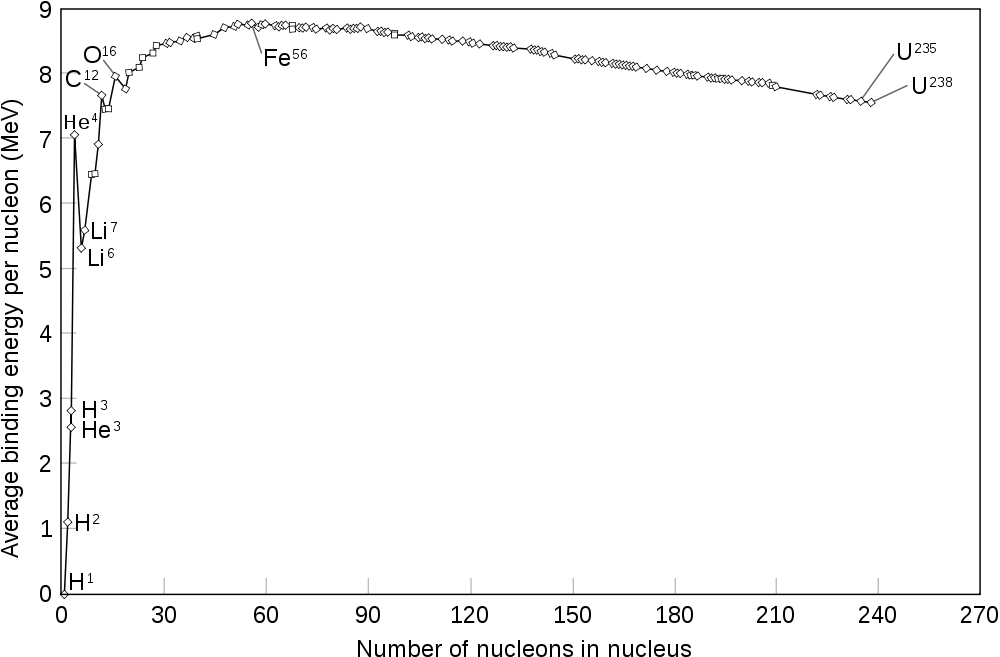
To get a basic understanding of nuclear reactions, a high school level knowledge of a few basic concepts will suffice. In this regard, I'll start with a short recap of some concepts that will be used.

Structure of the atom

A basic atomic model will suffice for our discussion. In general, we can consider the atom to be composed of protons and neutrons tightly bound within the nucleus of the atom surrounded by electrons. The nucleus comprises almost the entirety of the mass of the atom, while the orbiting electrons make up the size of the atom.

Nuclear reactions
Arthur Clarke's Childhood's End was my main pick for 1953 in our survey of post-apocalyptic sci-fi, but John Wyndham's Kraken Wakes is another great apocalypse novel from the same year. (It was published as Out of the Deeps in the US. Apparently Americans weren't expected to know what Kraken means, until the second Pirates of the Caribbean movie, because now China Mieville can publish a novel just called Kraken and people purchase it.)

During the recession, a number of people have begun to value work less (unless finances force them to value work much, much more) -  time away from family, less leisure time and fewer self-improvement activities have begun to get noticed.

In other words, the human condition that causes us to devalue something until we no longer have it is in full force.   A new study also indicated that recession-related stress tends to manifest differently in men and women.

Wayne Hochwarter, the Jim Moran Professor of Business Administration in the Florida State University College of Business, and research associates Tyler Everett and Stuart Tapley, decided to find out how attitudes toward work had changed during recent times.
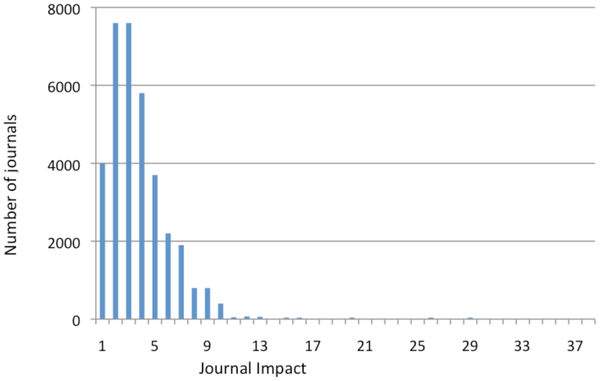
If you like to read science studies you are most likely to get them through one of two avenues; the long-standing business model has been that a print journal gets the study and does the work formatting it and lends their 'goodwill' to it with marketing - in return, they hold copyright and subscribers pay to read it.   A more recent approach has been companies that instead charge the scientists to publish the study but reading it is free - open access versus toll access, proponents claim, though in a practical sense someone is either paying to read or someone is paying to publish.
People will pay more for an iPhone, or any product, if it is owned by someone the consumer has 'positive' envy of, such as a friend or celebrity they like, according to a new study in the Journal of Consumer Research.

But it works the other way also; those with 'malicious' envy or contempt of someone who has a product would instead buy, for example, a BlackBerry instead of an iPhone.  The researchers say their discoveries about the motivations that result from different kinds of envy could be key to understanding marketing in the future.


